
-
 Get to know the dedicated professionals behind our success
 -

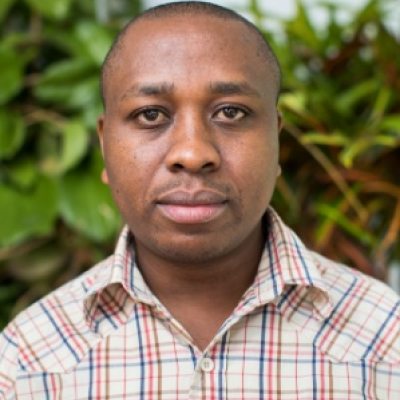
Biography
Dr. Barnabas A. Tarimo is a Lecturer in the Institute of Marine Sciences (IMS) at the University of Dar es Salaam, Tanzania. He holds a Ph.D. in Marine Ecology from Stockholm University, Sweden, an M.Sc. in Marine sciences from the University of Dar es Salaam (specialized in the conservation and management of coastal and marine resources), and a B.Sc. in Aquaculture from Sokoine University of Agriculture (SUA).
Dr. Tarimo’s research focuses on the dynamics of coastal and marine ecosystems, particularly shallow water fish spawning grounds, fish larvae distributions in seagrass-mangrove and Deep-Sea areas, and the impacts of climate change and human activities on marine biodiversity. His work integrates field-based ecological monitoring, Mesocosm experiments, laboratory analyses and community survey approaches to promote the sustainable use of ocean and coastal resources.
He has published several articles in peer-reviewed journals and contributed to national reports on ecosystem surveys in marine waters of Tanzania and Fish, Fisheries and Aquaculture Standards of Zanzibar. Dr. Tarimo also collaborates with local fishing communities and other collaborators to teach the Ocean literacy for kids.
At the University of Dar es Salaam, he teaches undergraduate and postgraduate courses in Applied Oceanography in Fisheries, Fish biology and Taxonomy, Fisheries Sampling Techniques, Fish biology and Taxonomy and Marine Parks and Reserves. He also supervises graduate students conducting research on Fish larvae and zooplankton, fish catch composition, fishing gears and sea turtle other aquatic biodiversity.
Beyond academia, Dr. Tarimo is an active member of the Western Indian Ocean Marine Science Association (WIOMSA) and serves as a chairperson of the Fish, Fisheries and Aquaculture Standards Technical Committee (TCFA6) of ZBS & Coordinator of research and knowledge exchange of IMS.
Research Interest
Malesa FM, Tarimo B, et al. (2022). Structural complexity of seagrass and environmental variables as a determinant of fish larvae assemblages in tropical coastal waters: Implications for seagrass management and conservation. WIO WIO Journal of Marine Science Special Issue 1 / 2022 91-105.
Contacts
Email:
Projects
Multiscale connectivity at species and community levels to achieve conservation goals under climate change in the Western Indian Ocean (MESCAL) (2024 - 2027). Funded by COSTECH and SIOMPA. PI
Enhancing resilience of Tanzanian coastal communities: Towards sustainable fisheries and a healthy marine environment (ECOFISH); 2024–2027. A cooperation between Tanzanian and Danish institutions. Collaborative research project.
Enhancing Coastal Resilience: Integrating Cost-Effective Technologies and Nature-Based Solutions for Climate Change Mitigation and Adaptation in Tanzania (ENCORE-TZ) 2024–2028. Funded by COSTECH. Collaborative research project.
Publications
Ngisiange, N., Tarimo, B., Daudi, L. et al. Seasonal fish larvae abundance and composition in seagrass habitats of coastal East Africa (2024). Scientific Reports 14, 11203 https://doi.org/10.1038/s41598-024-62012-3
Tarimo B, Winder M, Mtolera MSP, Muhando CA and Gullström M (2022). Seasonal distribution of fish larvae in mangrove‑seagrass seascapes of Zanzibar (Tanzania). Scientific Reports4196(12), https://doi.org/10.1038/s41598-022-07931-9
Tarimo, B (2022). Patterns of fish larvae and zooplankton distribution in mangrove-seagrass seascapes of East Africa. (PhD Thesis, Department of Ecology, Environment and Plant Sciences, Stockholm University). Patterns of fish larvae and zooplankton distribution in mangrove-seagrass seascapes of East Africa. (PhD Thesis, Department of Ecology, Environment and Plant Sciences, Stockholm University). http://urn.kb.se/resolve?urn=urn:nbn:se:su:diva-209685</diva>