

Innovate for Impact: Minister Ulega Urges UDSM Engineers to Cut Infrastructure Costs and Transform Tanzania’s Future
By Renancy Remmy, CMU
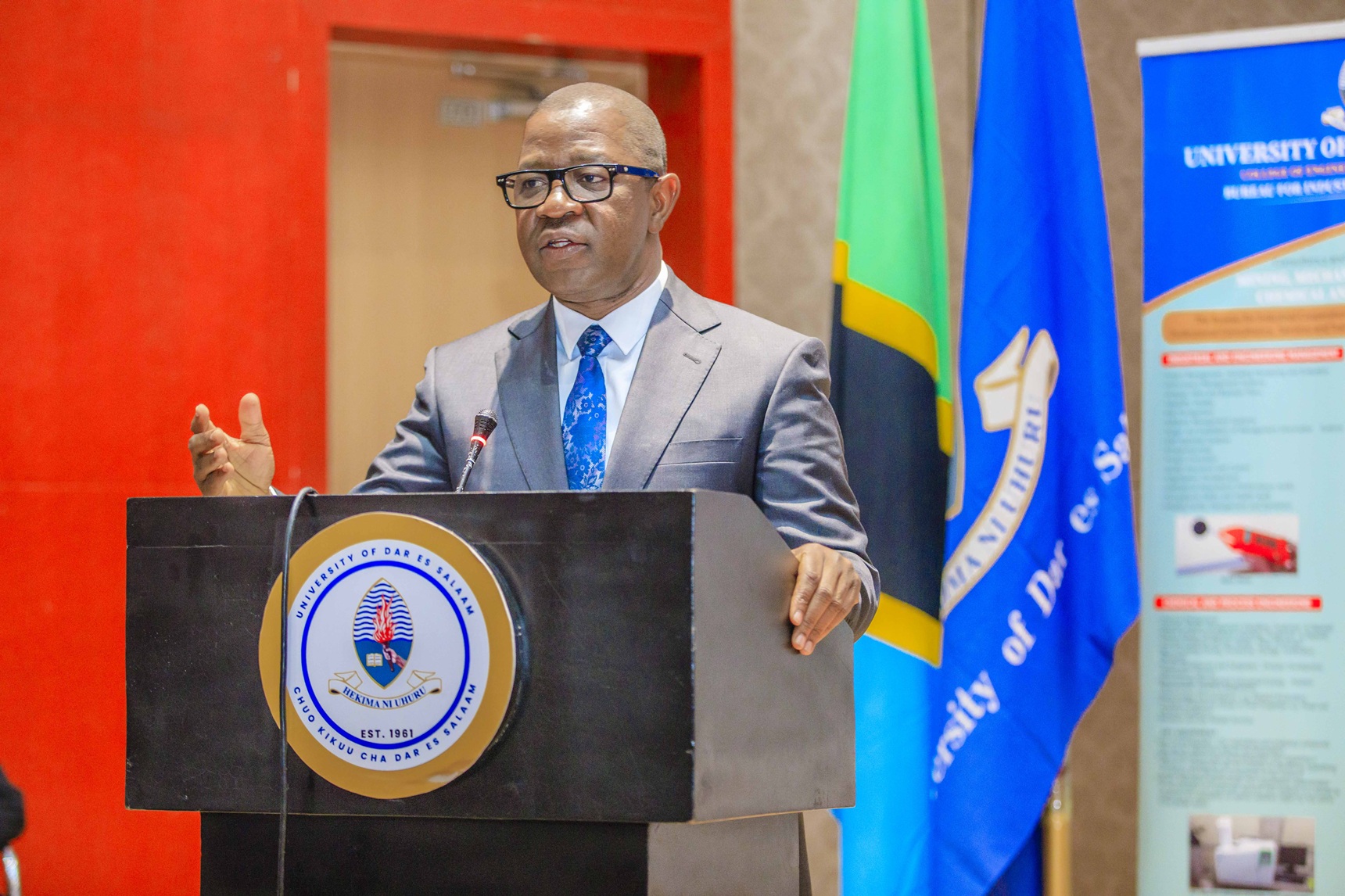
The Minister for Works, Hon. Abdallah Ulega, has urged engineering students to develop practical, cost-effective, and research-driven solutions that will significantly reduce Tanzania’s infrastructure costs and accelerate national development.
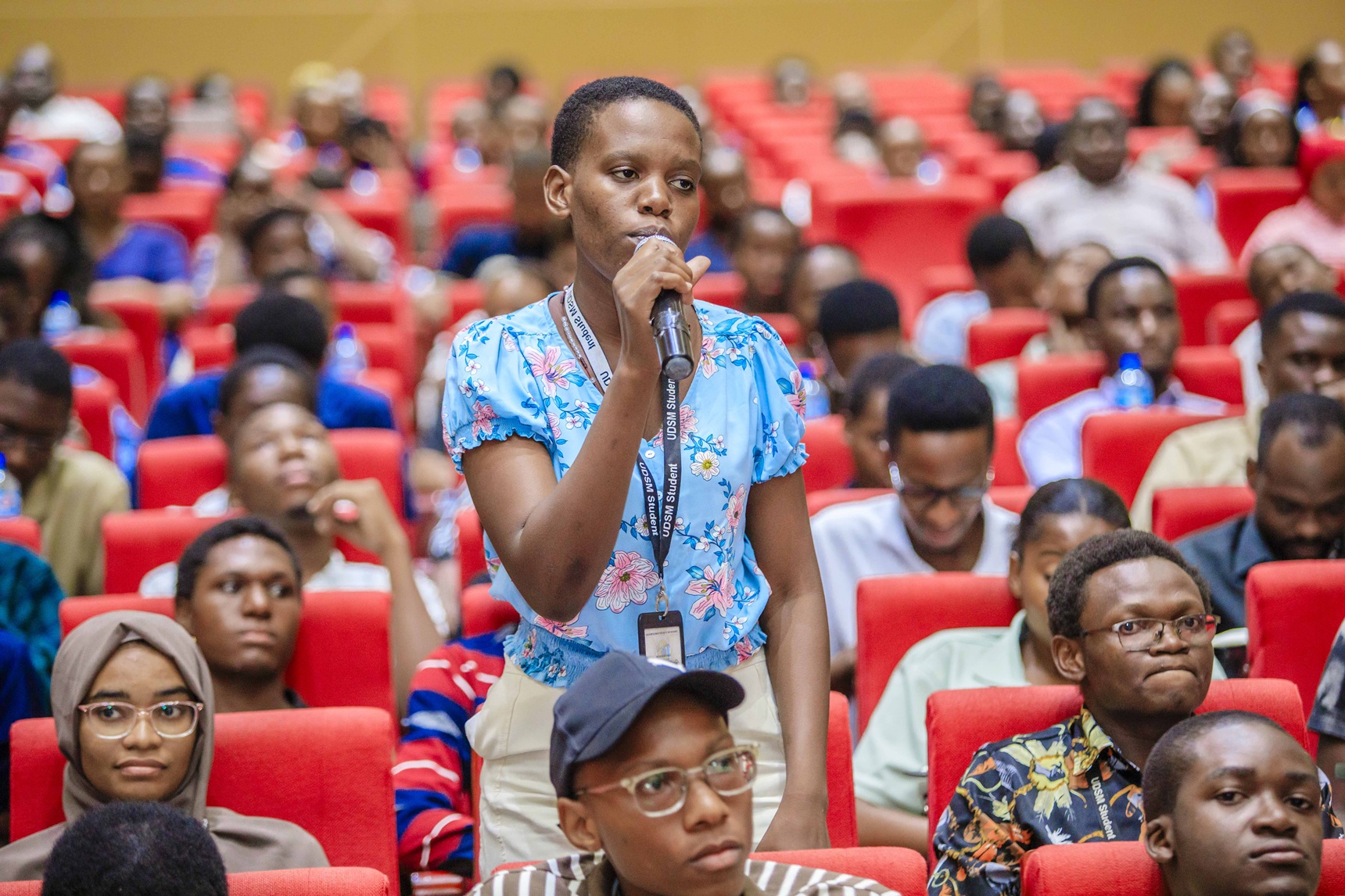
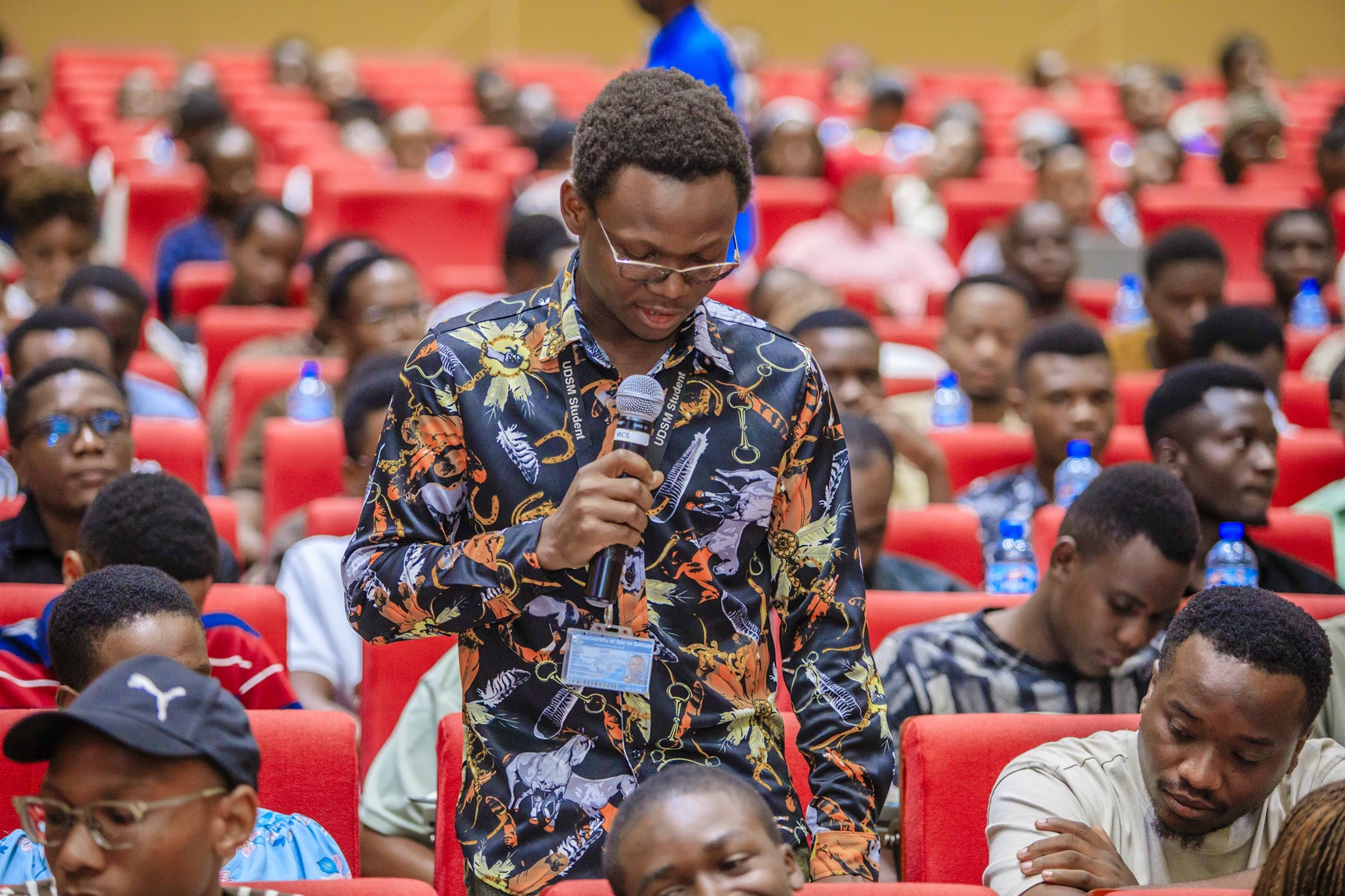
The call was made during a high-level engagement hosted by the University of Dar es Salaam on 23 February 2026 at the New Library Auditorium, where innovation took centre stage in discussions on the country’s infrastructure transformation.
Addressing students from the College of Engineering and Technology (CoET), the Minister emphasized that a substantial portion of the national budget is allocated to constructing and maintaining rural roads, urging young engineers to rethink conventional approaches.
“A significant share of our budget goes into rural road construction and maintenance. I challenge you to design innovative solutions that will reduce costs while maintaining quality and durability,” he said.
To translate the challenge into action, Hon. Ulega announced a competition with a total prize of 10 million Tanzanian shillings for the top three students or teams presenting viable and scalable proposals.
He further encouraged students to explore smart solutions for urban traffic congestion through intelligent transport systems, as well as affordable and sustainable housing models to respond to rapid urbanization.
Reflecting on his own journey as a former UDSM student from humble beginnings, the Minister urged students to believe in their potential.
“I once lived the ordinary life of a student on this campus. Through discipline, hard work and commitment, it is possible to rise to national leadership. Your background does not determine your destiny,” he remarked.
Donates 100 streetlights to enhance safety and improve lighting
As a gesture of support to the University community, the Ministry donated 100 streetlights to enhance safety and improve lighting across various areas of the campus.
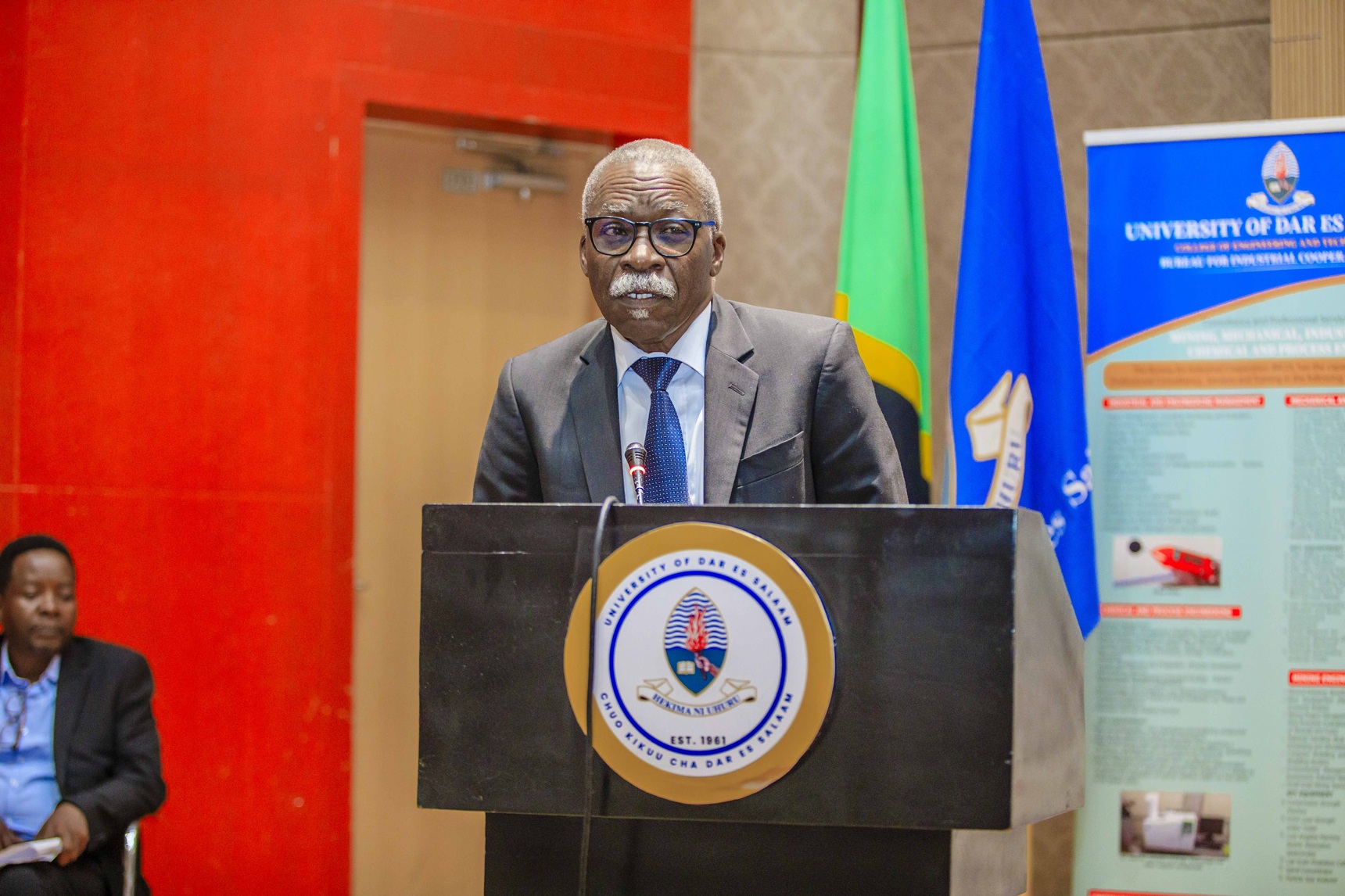
Delivering remarks on behalf of the Vice Chancellor, Prof. Rose Upor, Deputy Vice Chancellor (Academic), reaffirmed the University’s commitment to its core mandates of teaching, research and public service.
“Our partnership with the Ministry of Works is longstanding and impactful. Many of our experts and alumni are actively engaged in supervising and implementing major infrastructure projects across the country,” she noted.
She emphasized continued investments in modern laboratories and competence-based training to strengthen practical learning and professional readiness, reinforcing the University’s role as a bridge between academia and industry.
Earlier, while welcoming the Minister, Dr. Innocent Macha, Principal of CoET, underscored the strategic importance of engineering education in advancing Tanzania’s development agenda. He noted that the College offers ten undergraduate programmes serving critical sectors including infrastructure, energy, water, construction, manufacturing and technological innovation.
“Our goal is to produce engineers who are not only technically competent but capable of generating innovative solutions to 21st century challenges such as climate change, resilient infrastructure and digital transformation,” Dr. Macha stated.
He highlighted that through the Bureau for Industrial Cooperation (BICO), the College is implementing over forty consultancy projects and has contributed to major national initiatives.
“Such initiatives include the Julius Nyerere Hydropower Project, Busisi Bridge, the Standard Gauge Railway and the East African Crude Oil Pipeline, particularly in materials testing, quality assurance and professional advisory services”, he said.
Emphasis on professionalism, compliance and proactive engagement
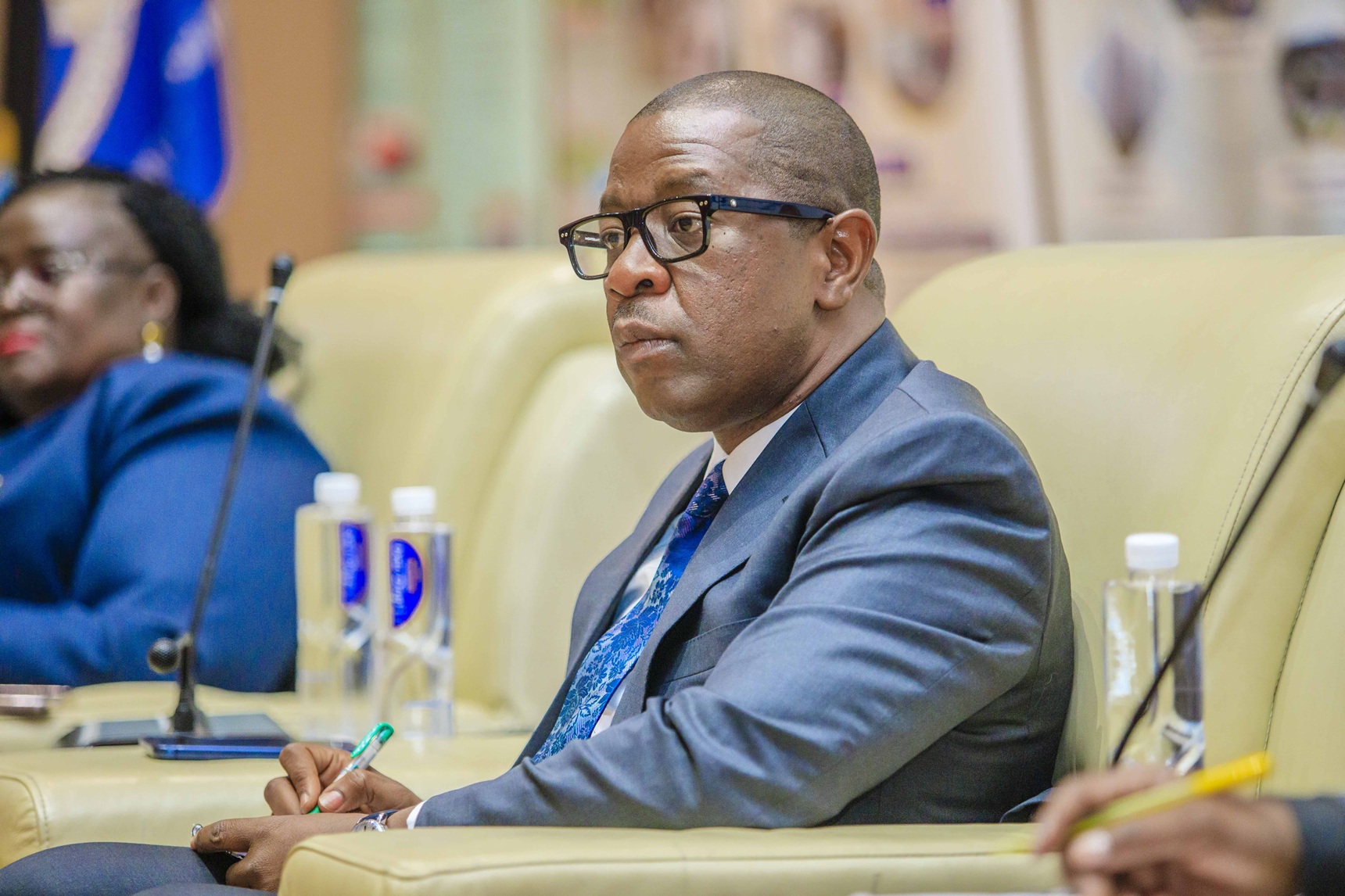
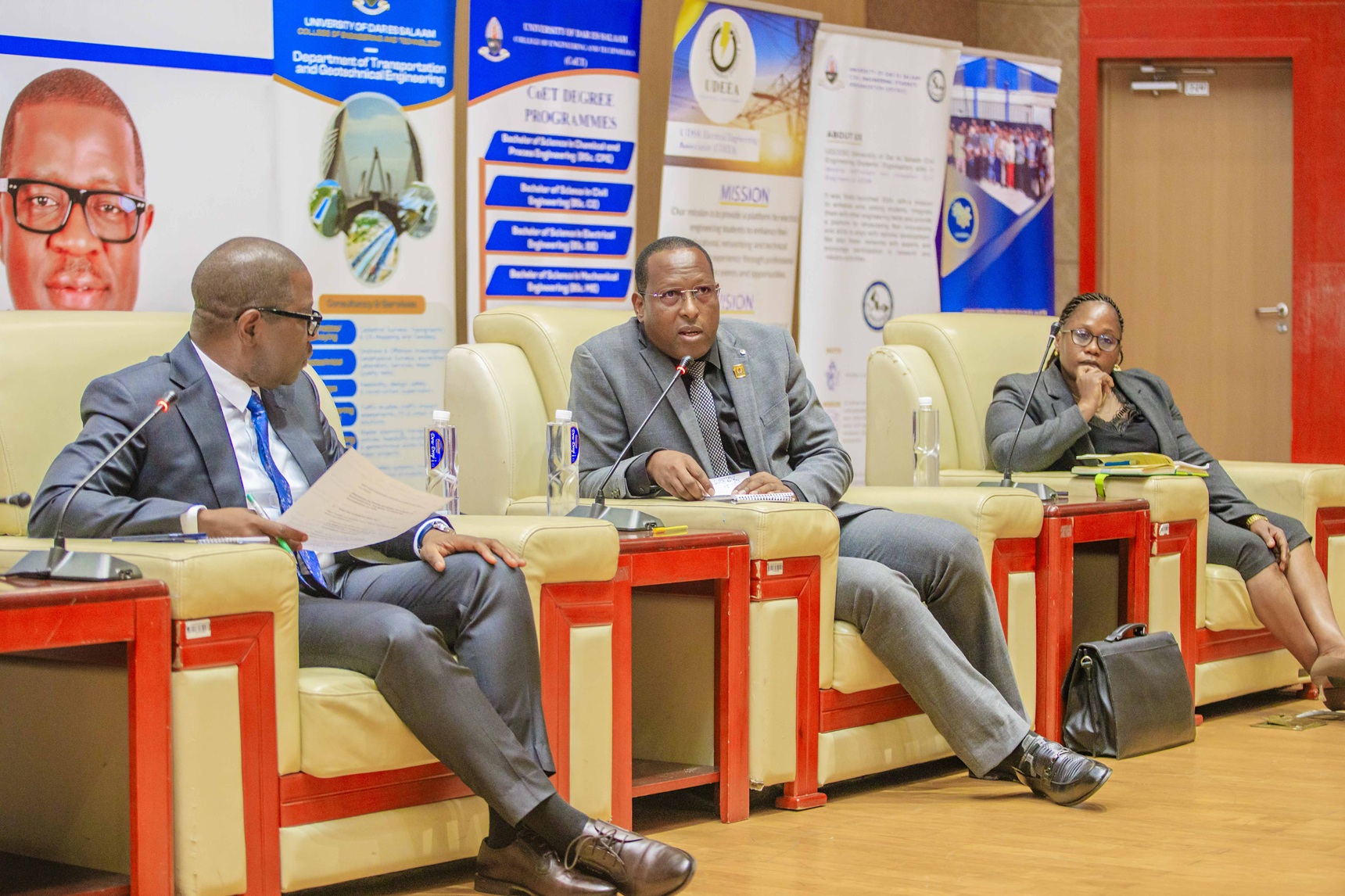
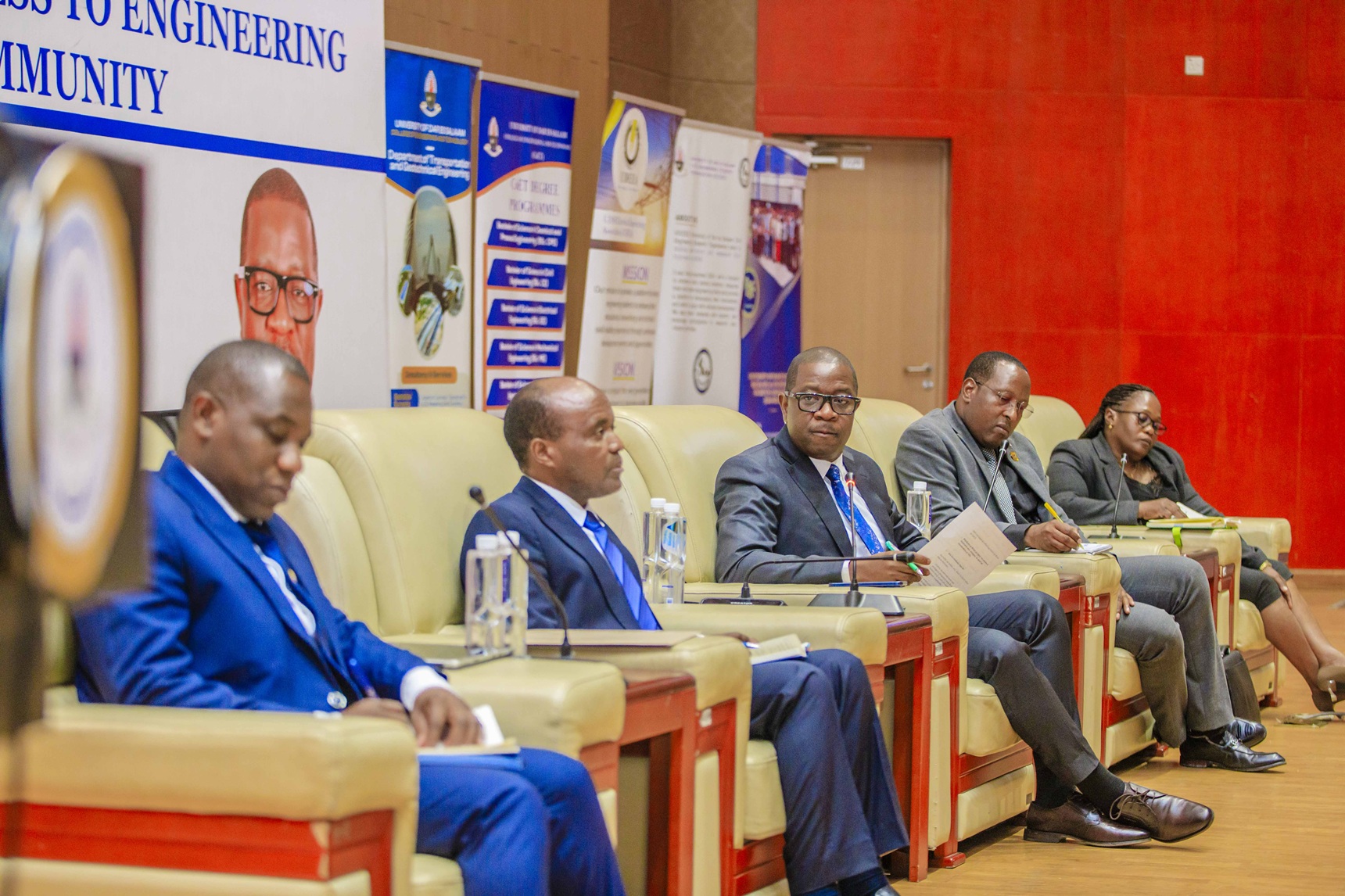
During the panel session, representatives from key institutions, including TANROADS, TEMESA, Tanzania Buildings Agency, Contractors Registration Board, and Architects and Quantity Surveyors Registration Board, emphasized professionalism, compliance and proactive engagement.
Engineer Veronica Ninalwo, speaking on behalf of the Engineers Registration Board, urged students to prioritize professional registration upon graduation.
“Registration is your gateway to lawful practice and professional recognition. It protects both you and the public,” she said.
Engineer Ephatar Mlavi of TANROADS reassured students that government reforms are creating more opportunities for local engineers to lead major projects.
“We are prioritizing domestic professionals in infrastructure projects. Organize yourselves strategically and position yourselves to participate,” he advised, citing the Busisi Bridge project as an example of strong local involvement.
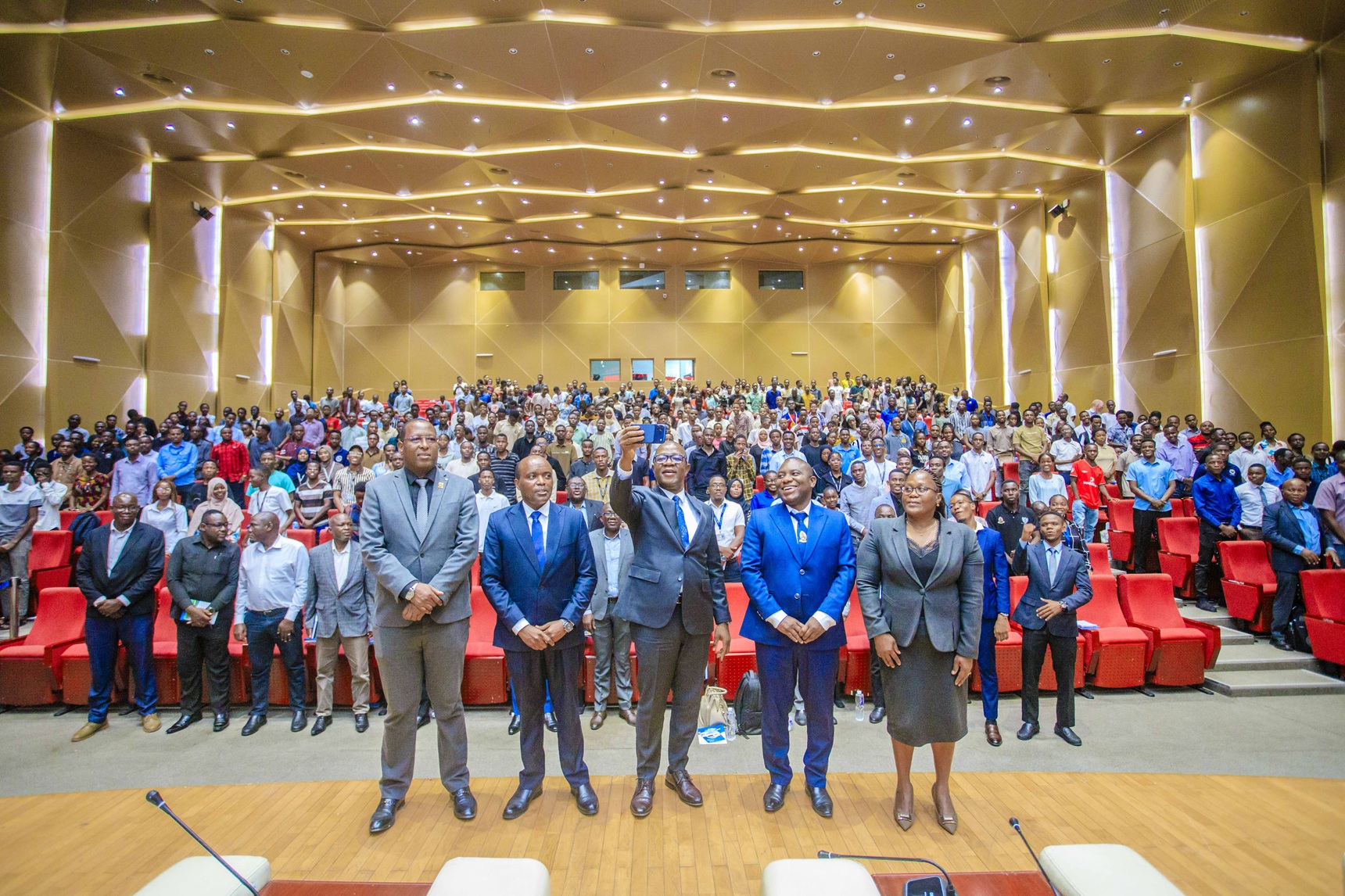
The engagement led to a renewed commitment from the University, the Ministry and regulatory bodies to deepen collaboration in nurturing innovative, competent and professionally recognized engineers.
The Minister’s challenge set a clear tone: Tanzania’s infrastructure transformation will depend not only on policy and funding, but on the creativity, discipline and ingenuity of its next generation of engineers.