

From Partnerships to Practice: UDSM Deepens China–Africa Academic Diplomacy in AI-Era Higher Education
By Jackson Isdory, CMU
The University of Dar es Salaam has significantly advanced Tanzania’s internationalization agenda through a high-level academic mission to Zhejiang Normal University, positioning itself at the forefront of global dialogue on the future of higher education in the age of artificial intelligence and the Fourth Industrial Revolution.
At the centre of the engagement was the Vice Chancellor, Prof. William Anangisye, who delivered a two-day lecture series themed “Reimagining African Higher Education in the Age of AI and Fourth Industrial Revolution: Governance, Curriculum, and Talent Development.”
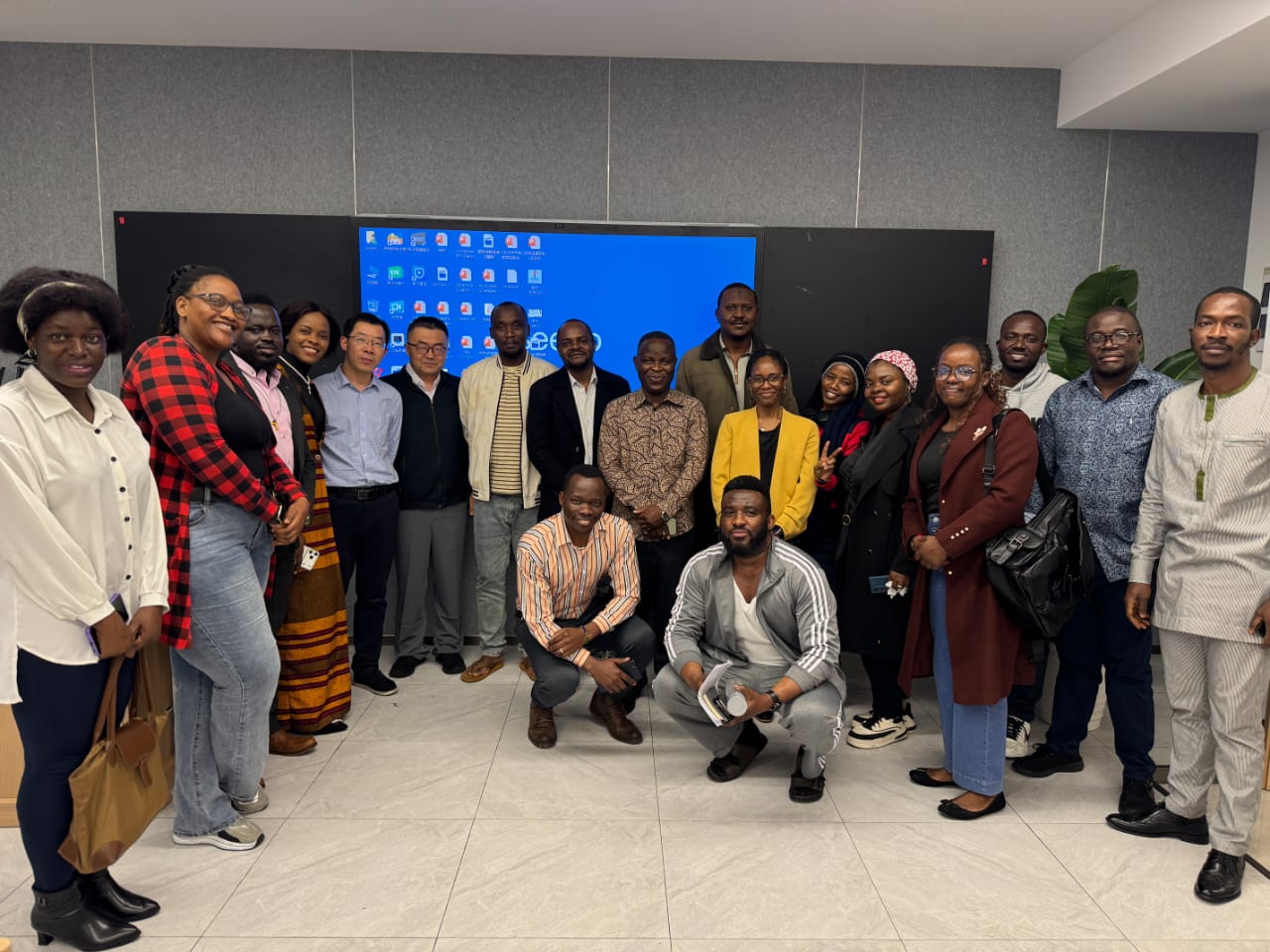
Hosted by the Institute of International and Comparative Education, the lectures convened scholars, researchers, and postgraduate students in a dynamic platform for intellectual exchange and policy reflection.
Framing the engagement as a strategic shift from symbolic cooperation to measurable impact, Prof. Anangisye emphasized that universities must rethink their role in a rapidly evolving global knowledge economy.
“Internationalization must move beyond agreements on paper to tangible outcomes that transform teaching, research, and institutional governance,” he stated.
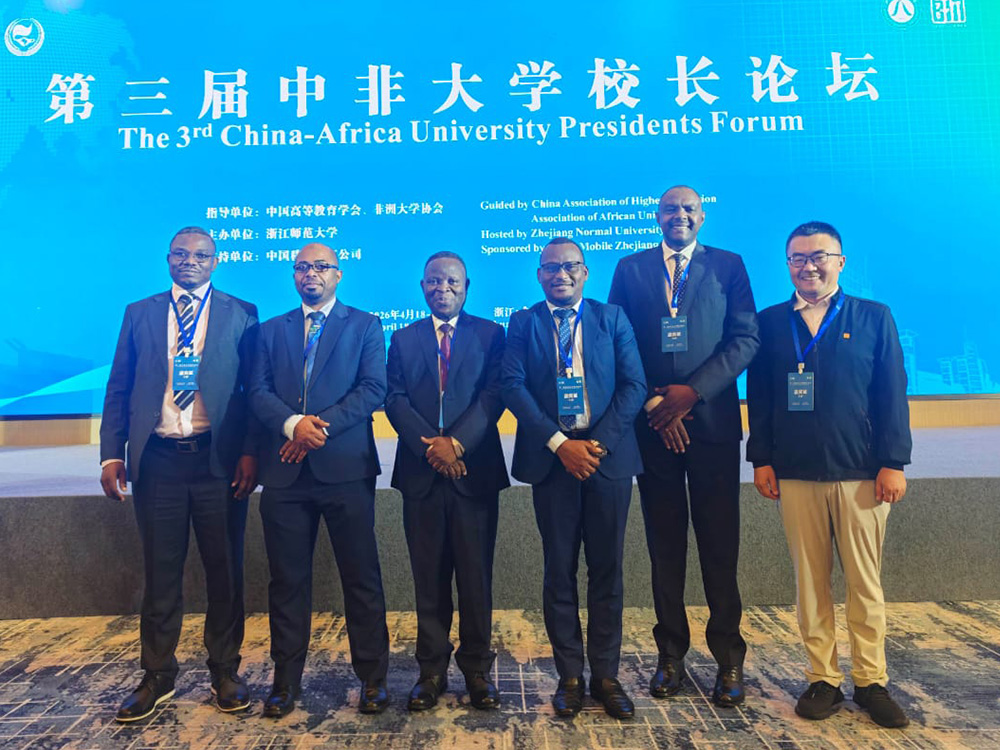
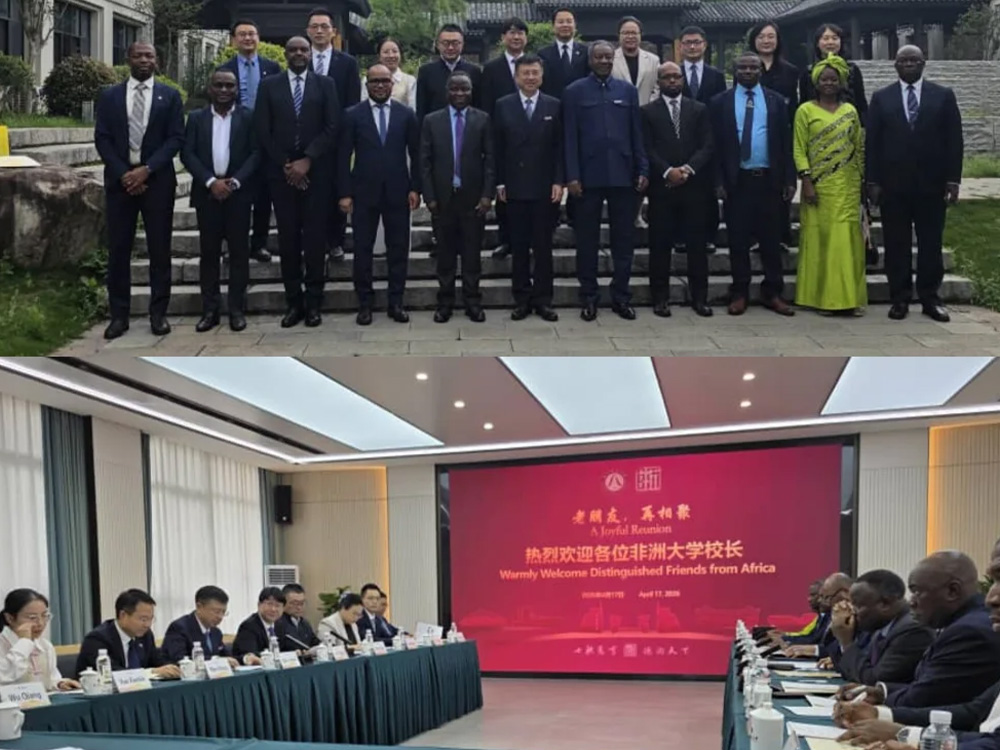
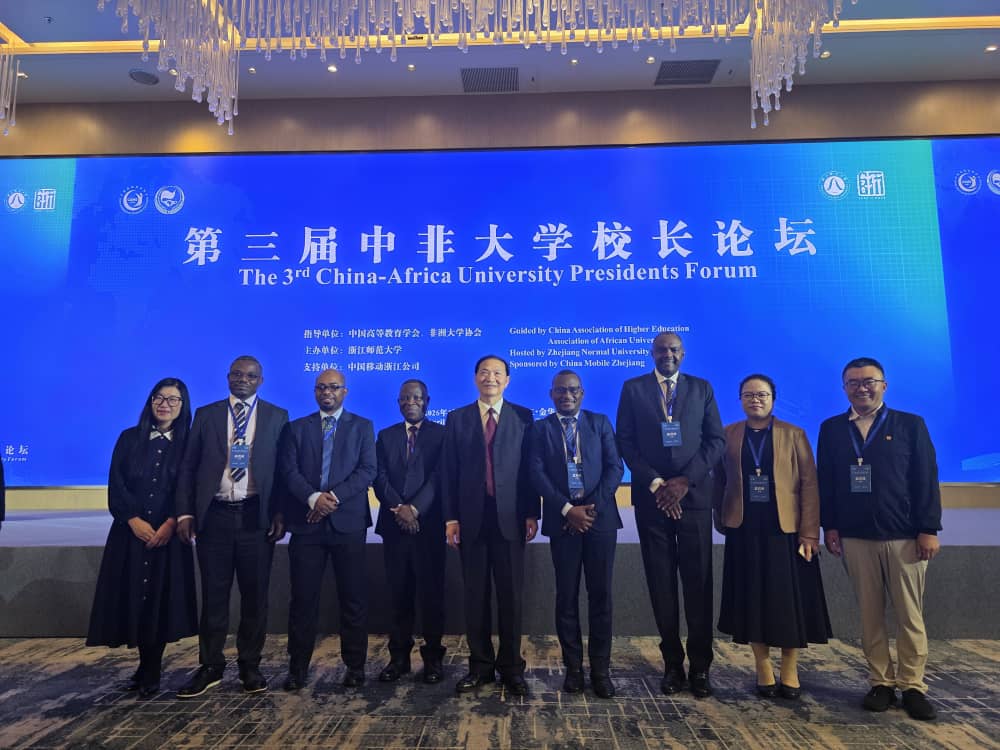
This forward-looking perspective was further amplified during the University President’s Forum held in Jinhua from 14 to 20 April 2026, as part of the 70th anniversary celebrations of Zhejiang Normal University.
Convened under the theme “Synergy, Transformation and Sustainability: Building a New Paradigm for China–Africa Higher Education Cooperation,” the forum brought together global university leaders and policymakers to redefine collaborative frameworks for future-ready education systems.
Tanzania’s delegation played a prominent role in shaping the discourse. In his keynote presentation, Prof. Anangisye challenged institutions to translate partnerships into actionable programmes, presenting on “From Partnership on Paper to Partnership in Practice: Revisiting UDSM’s Digital Education Partnership with Zhejiang Normal University.”
He underscored the urgency of embedding digital transformation, innovation, and talent development within institutional strategies.
Complementing this perspective, Prof. Method Samwel Semiono, Principal of the Mkwawa University College of Education of UDSM, highlighted the broader national implications of such collaborations, noting that structured academic partnerships are critical in unlocking capacity building and knowledge transfer.
Similarly, Dr. Maulid J. Maulid, Chief Executive Officer of the Agency for the Development of Educational Management (ADEM), emphasized the role of bilateral engagement in reimagining educational management systems for sustainable development.
Other Tanzanian scholars, including Prof. William Amos Palangyo, Rector Tanzania Institute of Accountancy (TIA); Prof. Abdi Abdalla, Acting Vice Chancellor, State University of Zanzibar (SUZA); and Dr. Innocent Macha, Principal, UDSM College of Engineering and Technology (CoET) contributed to high-level roundtables, reinforcing Tanzania’s intellectual presence in shaping China–Africa higher education cooperation.
Prof. Anangisye, other Tanzanian academics appointed Researchers under China–Africa Consortium of Varsities
In a landmark development, Zhejiang Normal University formally appointed Prof. Anangisye and several Tanzanian academics as Researchers under the China–Africa Consortium of Universities Exchange Mechanism—an institutional milestone that embeds Tanzania within a strategic global research network.
The engagement aligns with the China–Africa Year of People-to-People Exchanges (2026), underscoring the growing importance of academic diplomacy as a driver of international collaboration. Moderated by Prof. Zhu Jian and Prof. Zhang Yanjun, the sessions reflected a maturing partnership evolving from cultural exchange to deeper research and innovation collaboration.
Prof. Anangisye articulated five strategic pillars—relevance, equity, innovation, collaboration, and localization—as essential to transforming African higher education systems. He stressed that universities must align academic outputs with socio-economic priorities while maintaining global competitiveness and contextual relevance.
“The future of higher education lies in our ability to co-create knowledge across borders while remaining responsive to local realities,” he noted, emphasizing that academic institutions must produce graduates who are not only skilled but also socially responsible and development oriented.
From an institutional standpoint, the mission delivers tangible benefits for Tanzania, including expanded academic networks, increased mobility opportunities, and enhanced capacity in critical areas such as artificial intelligence, STEM (Science, Technology, Engineering and Mathematics), education, and instructional design.
Reflecting on the collaboration, Prof. Zhang Yanjun highlighted the evolving role of the Confucius Institute at UDSM as a bridge for deeper academic engagement. “This partnership is moving beyond language and cultural exchange into a robust platform for research and innovation,” he observed.
Similarly, Prof. Zhu Jian emphasized that such engagements position universities as key diplomatic actors. “This dialogue demonstrates how academic institutions can foster mutual learning and contribute to global education transformation,” he said.
As global higher education systems undergo rapid transformation, UDSM’s engagement in China signals a strategic and forward-looking approach to internationalization, one that leverages partnerships not only to enhance institutional visibility but also to generate real impact.
By advancing academic diplomacy and strengthening transnational collaboration, the University of Dar es Salaam continues to consolidate its position as a leading African institution shaping the future of higher education while contributing to Tanzania’s global intellectual footprint.