




UDSM Anchors Regional Push for Chemical Safety in Landmark EU–CBRN Engagement
By Renancy Remmy, CMU
The University of Dar es Salaam (UDSM) has reinforced its leadership in environmental protection and chemical safety following a high-level engagement with experts under the European Union-funded Chemical, Biological, Radiological and Nuclear (EU-CBRN) Centres of Excellence Initiative.
The strategic visit, held on 10 March 2026 under Project P111, marks a significant milestone in Tanzania’s efforts to strengthen the management of hazardous chemical waste and safeguard ecosystems.
The visit culminated in a high-level courtesy meeting at the Office of the Vice Chancellor, where the Deputy Vice Chancellor-Research, Prof. Nelson Boniphace, received the delegation and reaffirmed the University’s commitment to advancing research and innovation that address national and regional environmental priorities.
He emphasized UDSM’s strategic role as a hub for scientific excellence, particularly in generating solutions that promote environmental sustainability and public safety.
Speaking during the engagement, the Director General of the Tanzania Atomic Energy Commission (TAEC), Prof. Najat Kassim Mohammed, underscored the timely importance of the initiative.
She noted that Project P111 will significantly strengthen Tanzania’s capacity to manage hazardous chemical residues while protecting both public health and the environment.
“This initiative will empower key practitioners, particularly at border points, to effectively control the importation of toxic chemicals, while fostering a culture of safe chemical use across institutions and communities,” she said.
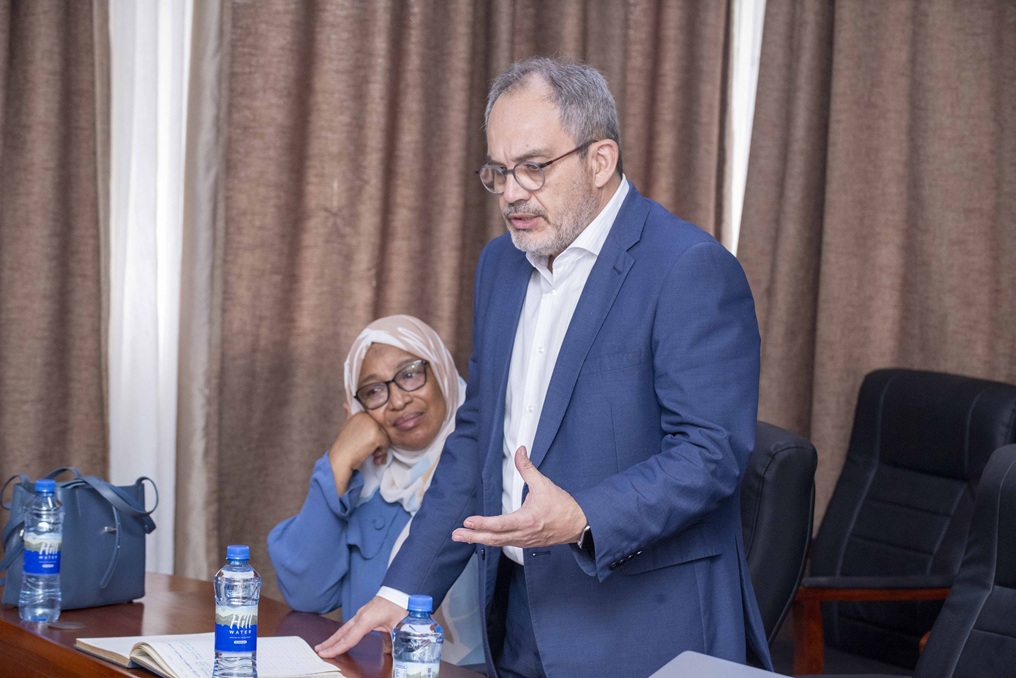
Representing the international technical team, Project Leader Dr. Pablo Taboada Utrera and Technical Expert Dr. Pierre Lennebert highlighted the importance of sustained collaboration between academia, government, and global partners.
They noted that universities such as UDSM play a critical role in building expertise, advancing research, and developing practical solutions to mitigate chemical-related risks and enhance environmental resilience.
Strengthening research, innovation, and training in chemical safety
At the institutional level, the College of Natural and Applied Sciences (CoNAS) welcomed the delegation, with Prof. Samora Andrew, Head of the Department of Botany, expressing appreciation for the European Union’s continued support and TAEC’s coordination.
He emphasized that the partnership would strengthen research, innovation, and training in chemical safety. “Through this collaboration, we are confident in our collective ability to safeguard the environment, protect public health, and build a new generation of professionals equipped to manage chemical risks responsibly”.
The engagement also showcased UDSM’s ongoing contributions to chemical waste management. A technical presentation by Dr. Clarence Mgina from the Chemistry Department outlined the University’s work in teaching, research, consultancy, and public service, all geared toward promoting environmentally responsible practices and advancing scientific solutions to pressing ecological challenges.
During the visit, the delegation toured key facilities, including chemical storage and handling units, where they observed systems for the safe registration, storage, and management of hazardous materials. These assessments highlighted UDSM’s proactive approach to minimizing environmental contamination and ensuring compliance with international safety standards.
Launched in 2010, the CBRN Centres of Excellence Initiative supports over 60 countries in strengthening their capacity to prevent and respond to chemical, biological, radiological, and nuclear risks.
Project P111, with a budget exceeding €3.4 million, brings together eleven countries in Eastern and Central Africa to enhance chemical waste management through training, awareness, and institutional capacity building.
In Tanzania, the project is coordinated by TAEC, with UDSM’s Chemistry Department serving as a key implementing partner. Beyond institutional strengthening, the initiative is expected to have far-reaching environmental benefits, including reducing risks from toxic residues, protecting biodiversity, and promoting safer ecosystems.
This landmark engagement further cements UDSM’s position as a leading institution in environmental stewardship and scientific innovation, while reinforcing Tanzania’s commitment to building a safer, cleaner, and more sustainable future.