










UDSM Transforms Research into Protected, Market-Ready Innovation
By Renancy Remmy, CMU
Declaring that research excellence must translate into protected and socially relevant innovation, the Deputy Vice Chancellor for Research at the University of Dar es Salaam (UDSM), Prof. Nelson Boniface, has called for the systematic integration of intellectual property considerations throughout the entire research lifecycle.
Closing a specialised training on Patent Protection, Patent Drafting and Documentation at the University of Dar es Salaam Library Lounge, Prof. Boniface stressed that safeguarding research outputs is no longer optional in today’s competitive academic and innovation landscape.
“Research conducted at UDSM must not only be excellent, but also relevant, protected and impactful. Embedding intellectual property within the research process strengthens academic integrity, enhances international competitiveness and ensures that knowledge generated at the University contributes meaningfully to society,” he said.
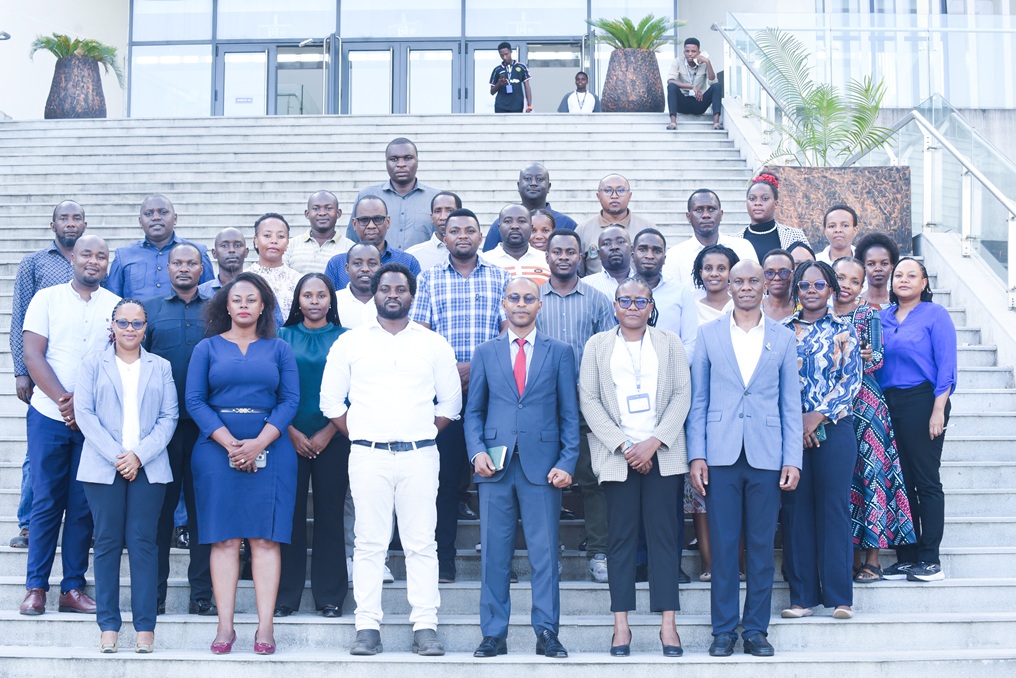
The training, conducted under the Research and Innovation Management (RIM) Subprogramme, brought together 38 postgraduate students, researchers, supervisors and academic staff, signalling UDSM’s strategic shift toward embedding intellectual property (IP) management as a core academic competency, alongside publication and graduation requirements.
As universities worldwide are increasingly evaluated not only by publication output but also by how effectively research is protected, transferred and applied, the initiative positions UDSM researchers to compete more effectively within global innovation ecosystems. Patents, technology transfer and research commercialisation have become central to university rankings, grant competitiveness and international collaboration.
The importance of IP in strengthening University’s research and innovation
Opening the training on behalf of the Director of Research and Publication and Principal Investigator of the RIM Subprogramme, Dr. Mathew Senga, Grant Coordinator Dr. Leonard Binamungu underscored the strategic importance of intellectual property in strengthening the University’s research and innovation value chain.
“This training is both timely and strategic. It responds directly to a fundamental challenge facing many universities across Africa: how to transform excellent research outputs into protected, usable and impactful innovations,” said Dr Binamungu.
He noted that although UDSM continues to generate high-quality research, innovative technologies and creative solutions across disciplines, limited patent protection and inadequate documentation often constrain their academic, societal and economic value.
“In today’s academic environment, research impact is no longer measured by publication alone. Without proper protection, many promising innovations fail to progress beyond journals and theses. This training equips our researchers with the skills needed to move research from knowledge generation to real-world application,” he added.
Moderating the session, UDSM Intellectual Property Manager Dr. Judith Iddy introduced participants to the fundamentals of intellectual property within the university research context, emphasising IP literacy as a cornerstone of responsible research conduct and postgraduate training.
She outlined major forms of intellectual property, including patents, copyrights, trademarks, industrial designs and trade secrets, and explained their distinct roles in safeguarding academic outputs.
Patentability criteria
Dr. Iddy also highlighted key patentability criteria such as novelty, inventive step and industrial applicability, stressing the importance of assessing research for protection prior to public disclosure through publication or conference presentation.
“For postgraduate students and supervisors, understanding intellectual property is critical. Decisions made at the proposal, data collection or publication stages can determine whether an innovation is protected or lost,” she said, noting that IP awareness strengthens research management, technology transfer and long-term academic value.
The technical sessions were facilitated by Mr Akeem Famuyiwa of Fractional IP, who focused on the practical aspects of patent drafting and documentation. Participants were guided through the structure of a patent – including specifications, claims, drawings and abstracts – and engaged in hands-on drafting exercises aligned with both Tanzanian and international intellectual property frameworks.
Beyond technical competencies, the training also highlighted evolving expectations for academic supervision at UDSM. Increasingly, supervisors are expected to support innovation development, ethical disclosure and responsible intellectual property management alongside thesis completion and publication, an approach consistent with global best practices.
By strengthening patent literacy among postgraduate students and academic staff, UDSM is fostering a research culture that recognises patents as complementary to scholarly publication rather than competing with it, enabling researchers to publish, protect and translate knowledge simultaneously.
The training forms part of a broader effort under the RIM Subprogramme to strengthen UDSM’s research and innovation ecosystem. In addition to patent drafting and IP protection, the Subprogramme supports initiatives aimed at ensuring that research conducted at the University advances academic excellence while contributing to national development priorities, including industrial growth, policy innovation, job creation and technological self-reliance.