

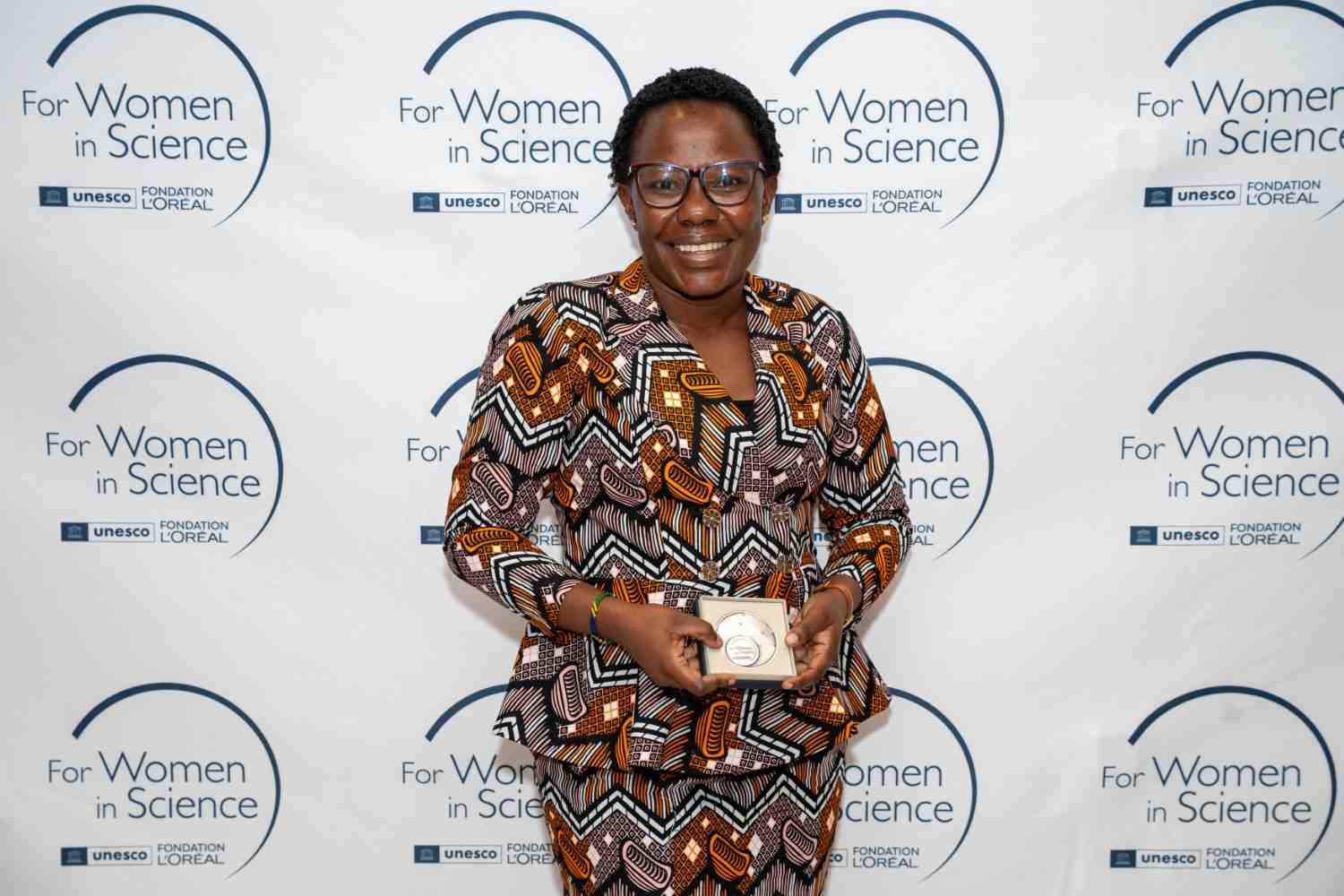
UDSM’s Grantina Modern Takes Child Stunting Research to Regional Spotlight
By Special Correspondent, CMU
A University of Dar es Salaam (UDSM) PhD researcher, Ms Grantina Modern, has earned regional recognition for her research into childhood stunting, bringing international attention to the University's contribution to scientific solutions addressing Tanzania's public health challenges.
Ms Modern was among 38 women scientists from across Sub-Saharan Africa recognised under the 2026 L’Oréal-UNESCO For Women in Science programme at an awards ceremony held in Johannesburg, South Africa, on November 19, 2026.
Her recognition places UDSM research on a regional platform while highlighting the growing importance of scientific investigations that connect academic knowledge with practical solutions for communities.
Her research, titled “Transforming Gut Microbiome Evidence into a Community-Led Growth Monitoring Tool to Combat Child Stunting,” examines how microorganisms in children's digestive systems interact with nutrition, water, sanitation and hygiene to influence their growth and development.
At the heart of her work is the need to understand why some children fail to grow as expected, even in communities with considerable agricultural potential and ongoing nutrition interventions.
Ms Modern is particularly interested in the relationship between the gut microbiome—the community of microorganisms living in the digestive system—and children's ability to absorb nutrients and maintain healthy growth.
Her research recognises that childhood stunting is not simply a question of food availability. The quality of water, household sanitation, personal hygiene, food preparation practices and repeated infections can also influence children's nutritional wellbeing.
“Two major factors contribute to stunting: nutrition and the environment. The environment includes the quality of water children drink, the water used to prepare their food, personal hygiene and how household waste, including children's faeces, is handled,” she explained.
Iringa research targets a persistent public health challenge
The research is initially focusing on Iringa Region, where childhood stunting remains a serious concern despite the area's agricultural potential.
According to the 2022 Tanzania Demographic and Health Survey and Malaria Indicator Survey, 30 per cent of children under five in Tanzania were affected by stunting. UNICEF estimates that more than three million children remain affected nationally.
The situation is particularly concerning in parts of the Southern Highlands, with Iringa recording a stunting prevalence of 56.9 per cent.
Beyond establishing the scientific relationship between gut bacteria, nutrition and environmental conditions, Ms Modern wants her research to produce something that families can use in their everyday lives.
Her ultimate goal is to develop a practical, community-led growth-monitoring guide that mothers and other caregivers can use to record children's feeding practices, diets and other indicators of healthy development.
The proposed resource will provide guidance on exclusive breastfeeding during the first six months, appropriate complementary feeding, dietary diversity, handwashing and safe food preparation.
It is intended to help caregivers better understand the factors influencing children's growth, identify potential problems early and seek professional health advice when necessary.
“We are bringing together information on bacteria, nutrition and the environment to show how they are connected. We also want to return this knowledge to mothers so they understand the practices that can support their children's healthy growth,” she said.
The research builds on scientific investigations into the relationship between water, sanitation and hygiene practices, dietary patterns and gut bacteria among children aged five to 23 months in Iringa.
By translating scientific findings into practical knowledge, the study seeks to bridge the gap between laboratory-based research and community-level interventions.
UDSM research contributes to national development priorities
For UDSM, Ms. Modern's recognition highlights the importance of postgraduate research in generating knowledge that responds to pressing national development priorities, particularly in public health, nutrition and environmental sustainability.
Her achievement also comes at a time when Tanzania is seeking to strengthen women's participation in science, technology, engineering and mathematics (STEM), where gender disparities remain a challenge.
The other three Tanzanian scientists recognised in the programme included Ms. Angella Meela, a PhD candidate at the Nelson Mandela African Institution of Science and Technology (NM-AIST), whose research explores the use of augmented reality to improve communication among children with autism.
Ms. Dativa Pereus of Muhimbili University of Health and Allied Sciences (MUHAS) was recognised for her work on improving malaria surveillance through genomic and epidemiological information.
Ms Hope Mbelwa, also of NM-AIST, was recognised for exploring artificial intelligence and multimodal learning approaches to improve cervical cancer detection.
The four Tanzanian researchers were selected alongside other scientists from a pool of more than 1,000 applicants.
The 2026 programme recognised 38 researchers across Sub-Saharan Africa, offering doctoral researchers grants of €10,000 and postdoctoral researchers €15,000, alongside leadership development opportunities.
Their recognition underscores the importance of investing in women scientists and creating opportunities for their research to contribute to addressing Africa's development challenges.
For Ms Modern, the recognition is also an opportunity to encourage more women to pursue scientific careers despite the challenges associated with postgraduate studies, research funding and balancing academic responsibilities with family commitments.
Her message to aspiring women researchers is one of persistence and determination.
“If one door closes, do not stop there. Look for another door. It may not open today, next week or next month, but if you keep pushing, another opportunity can come,” she advised.