


When Seconds Matter: UDSM Trains Staff to Act Fast and Safely in Fire Emergencies
By Tereza Peter, CMU
A fire can turn a routine working day into an emergency within minutes, leaving little time for hesitation. To strengthen its readiness for such situations, the University of Dar es Salaam (UDSM) has trained staff from across the University on fire prevention, firefighting and safe emergency response.
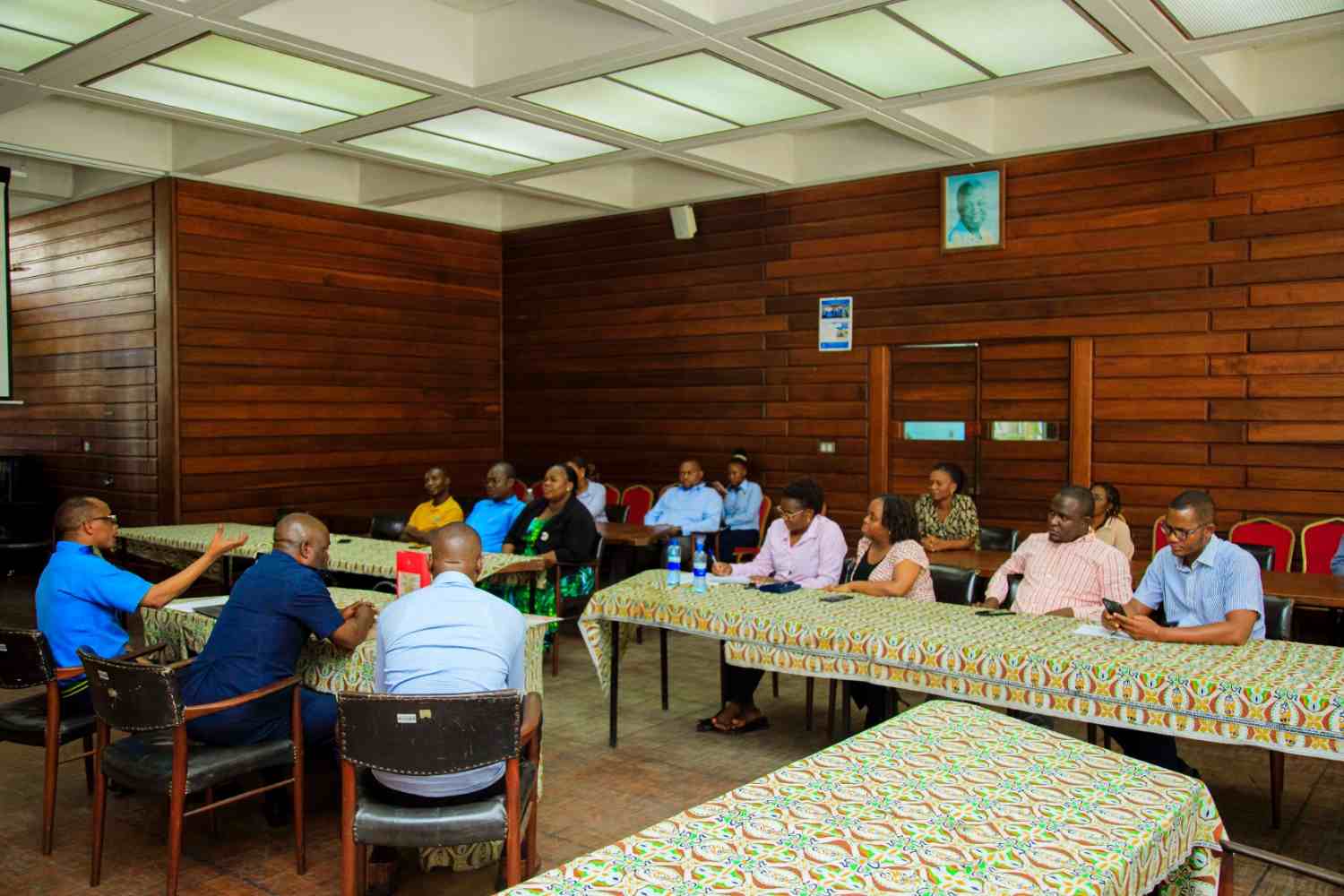
The training brought together employees from different departments, reflecting the need for fire-safety awareness across UDSM’s diverse working and learning environments.
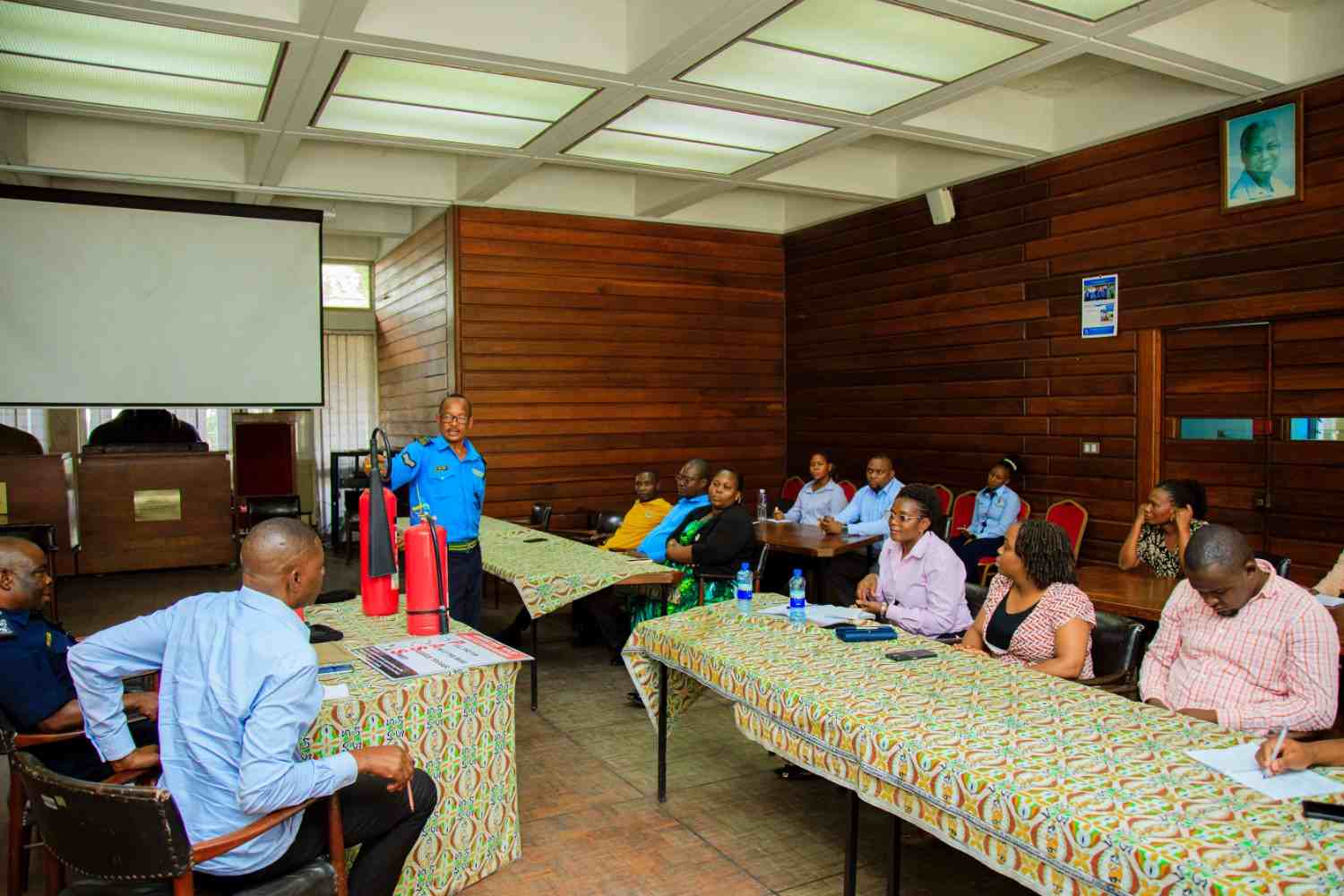
Speaking during the training, Auxiliary Police Officer at UDSM, Corporal John Haragwa, said the initiative was intended to give employees practical skills that could make a critical difference when a fire occurs.
“This training is specifically designed to equip employees with the necessary skills to effectively deal with fire incidents or fire-related accidents,” Corporal Haragwa said.
For a university environment that brings together students, staff and visitors while housing laboratories, research equipment, offices and other facilities, knowing how to respond during the first moments of a fire can be critical.
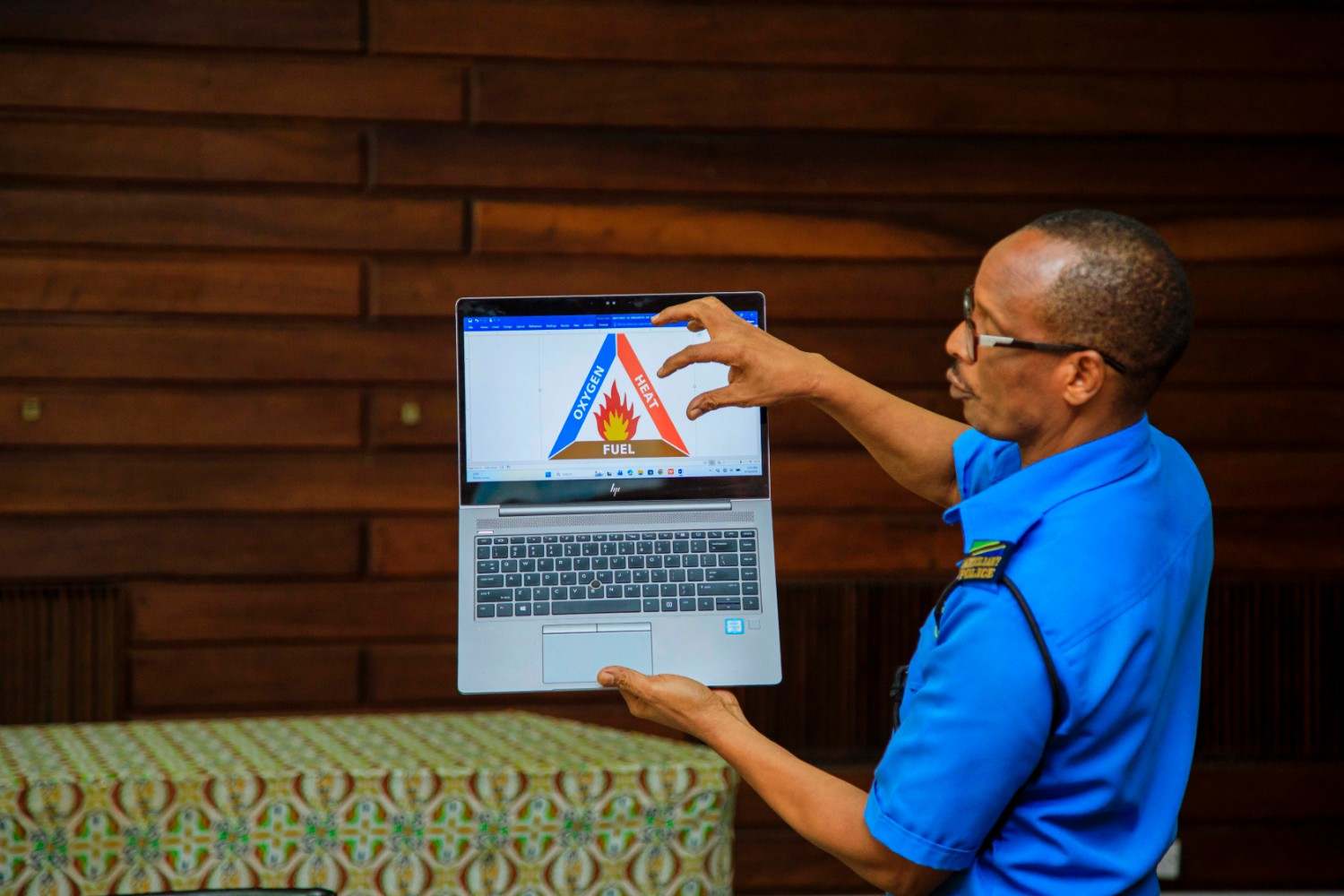
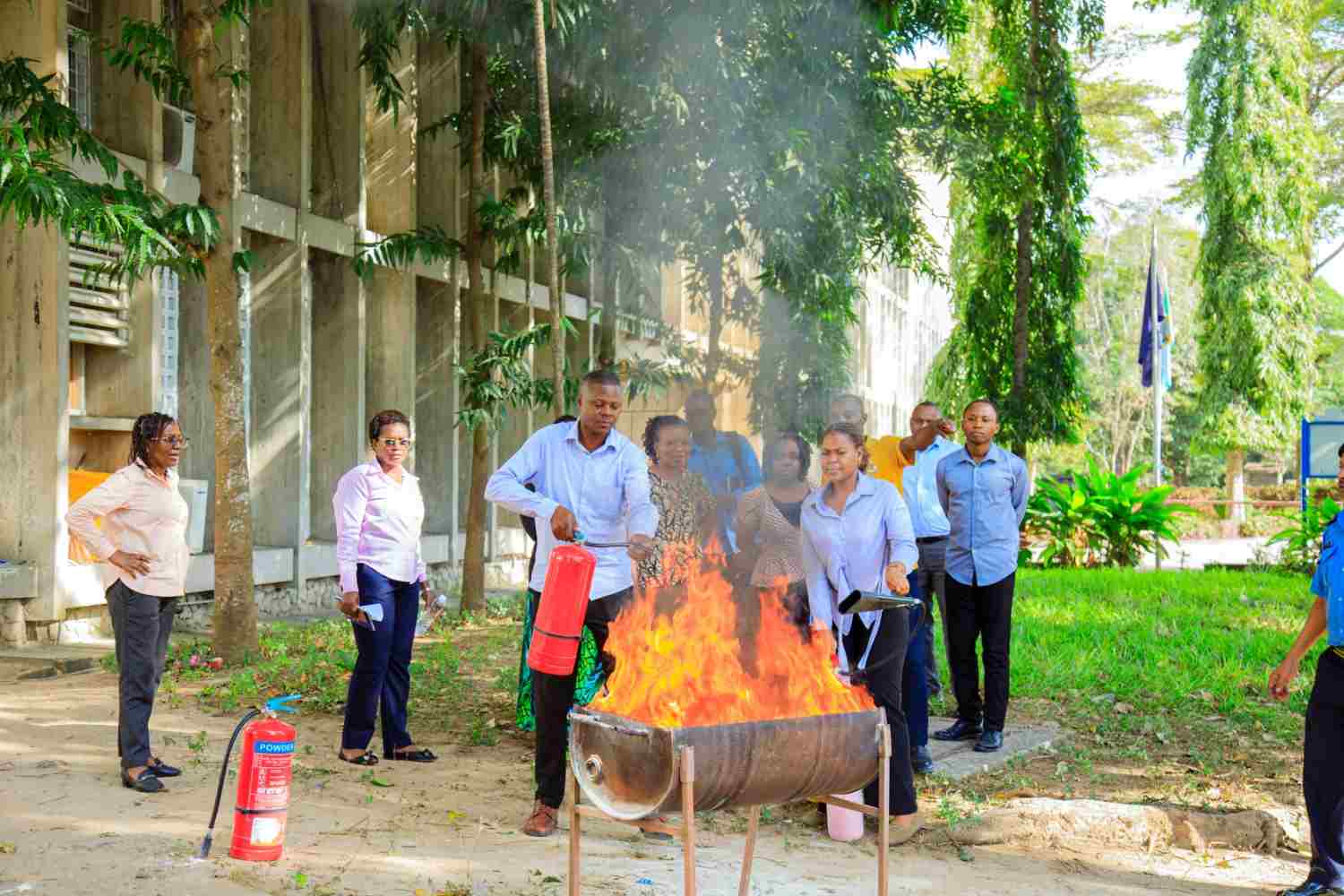
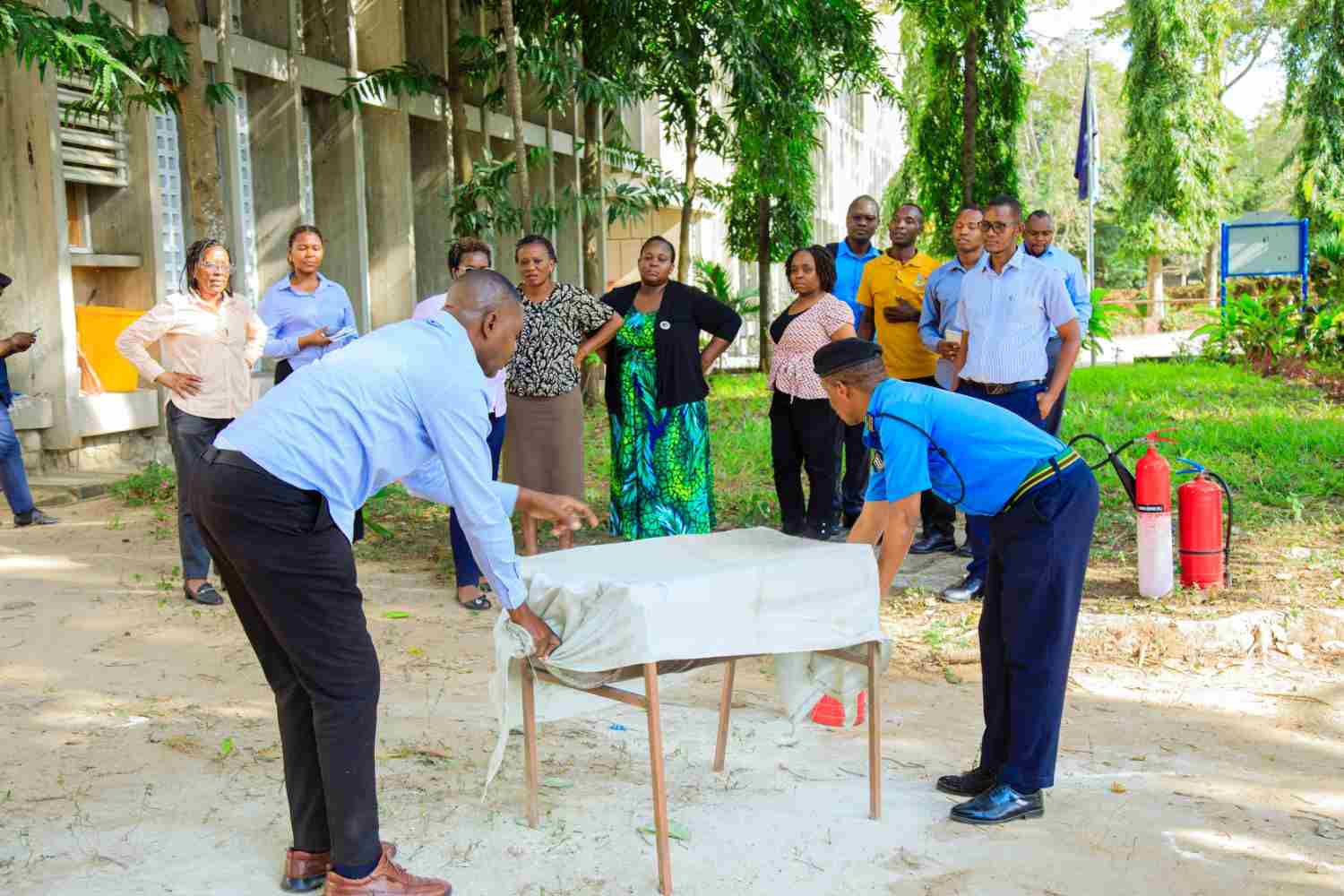
The training therefore combined basic fire-safety knowledge with practical guidance on how to respond to an incident. Participants learned about the three elements needed for fire to occur—oxygen, heat and fuel—as well as different types of fires and the appropriate methods of controlling them.
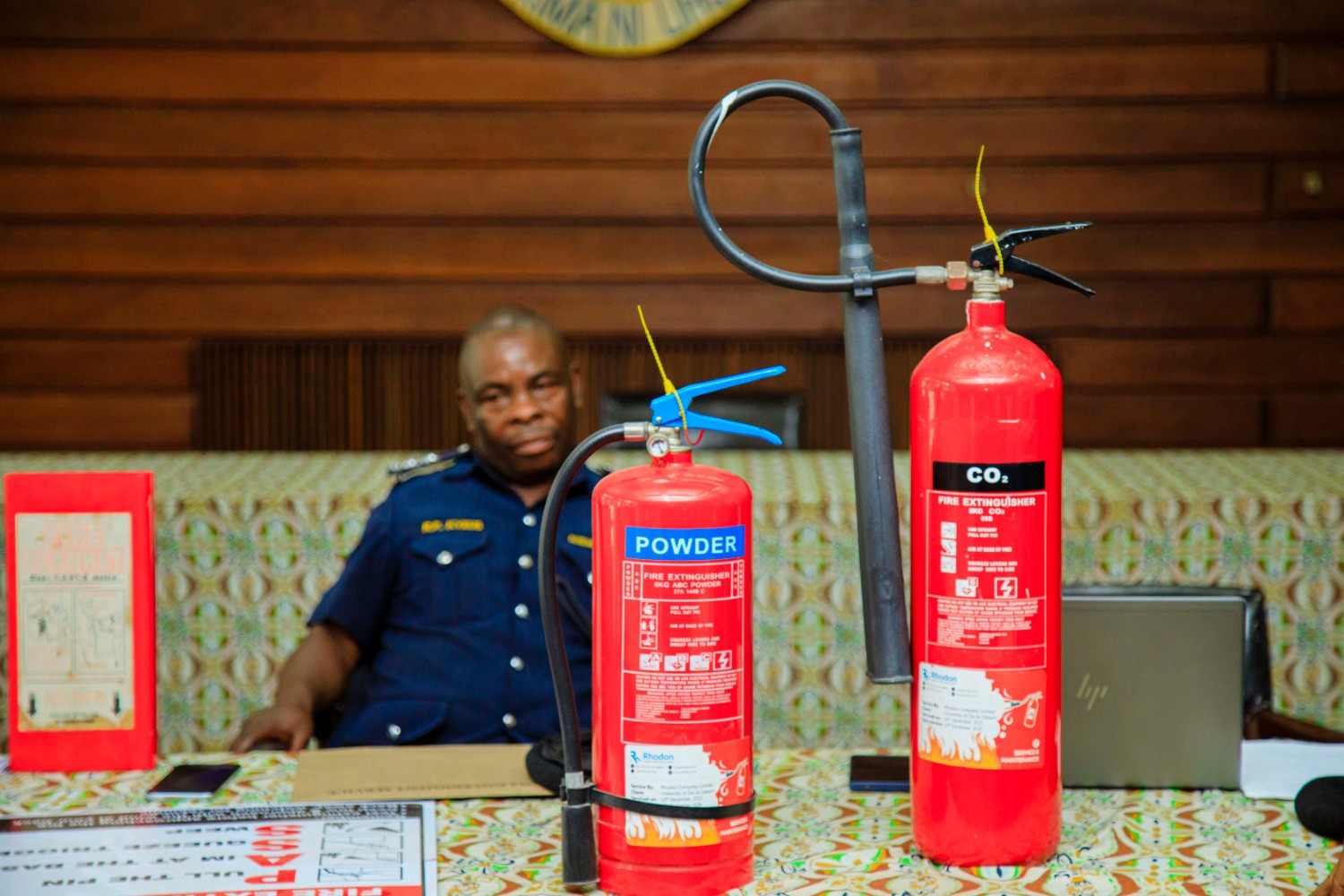
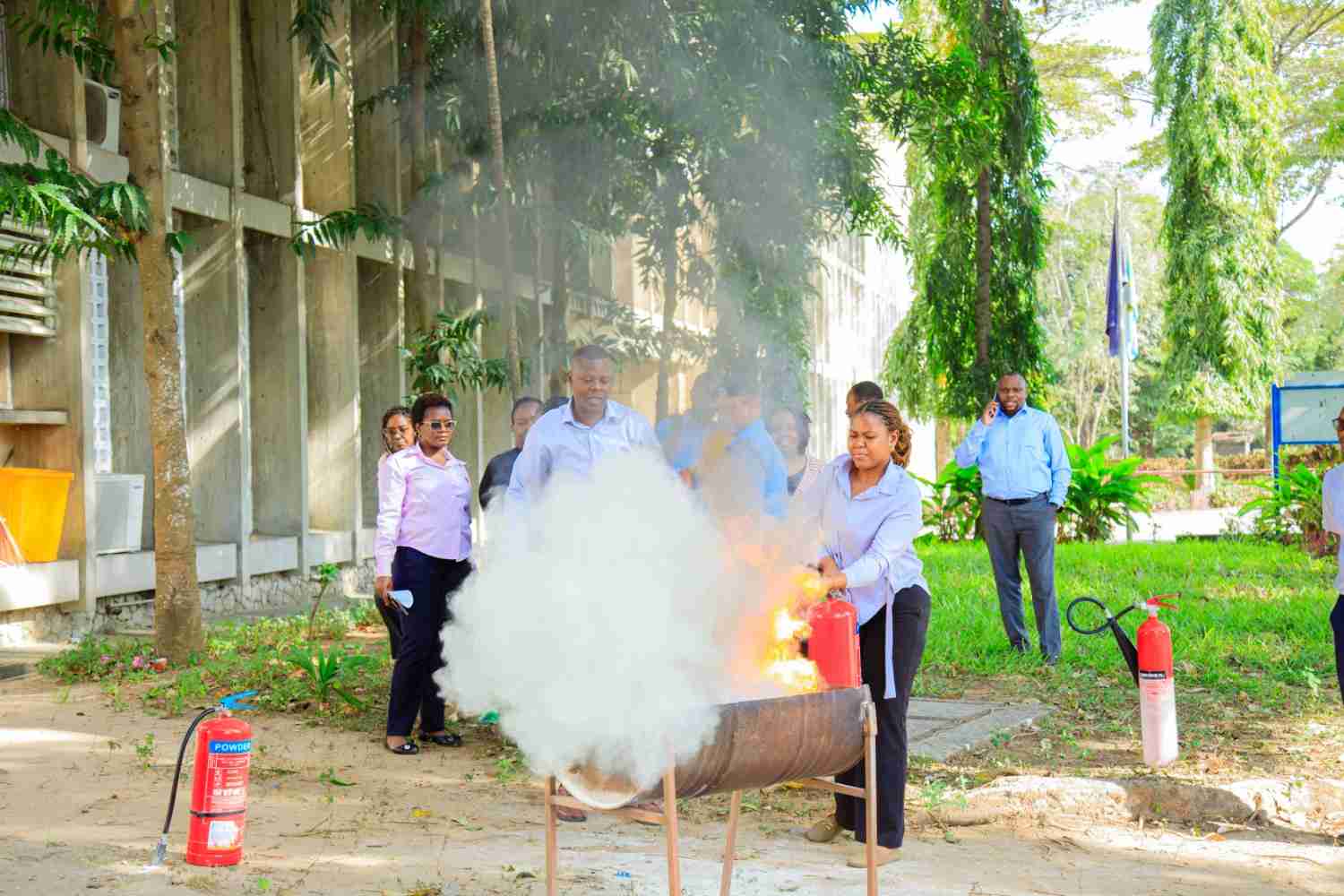
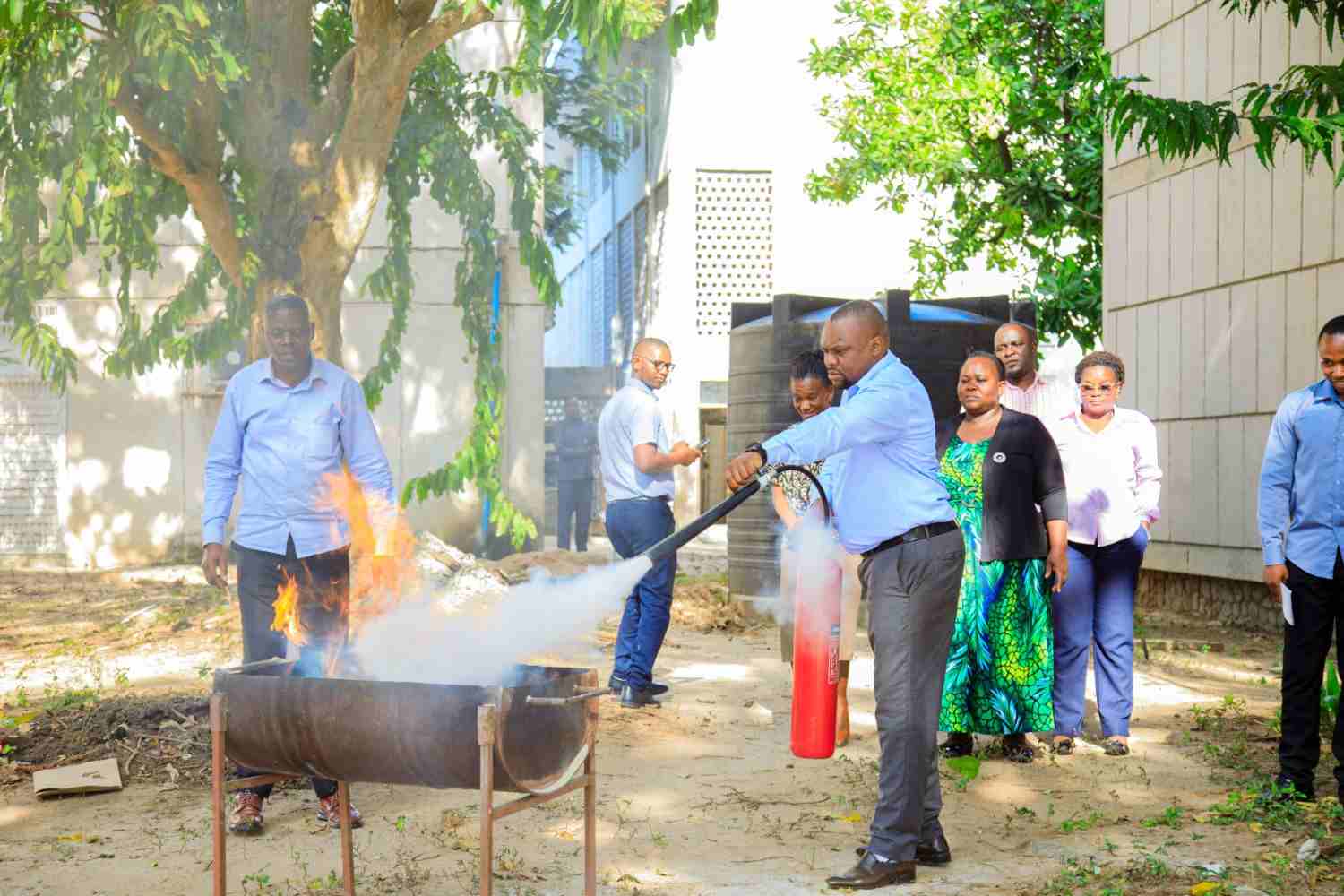
They were also introduced to commonly used firefighting equipment, including foam, dry-powder and carbon-dioxide (CO₂) extinguishers and fire blankets.
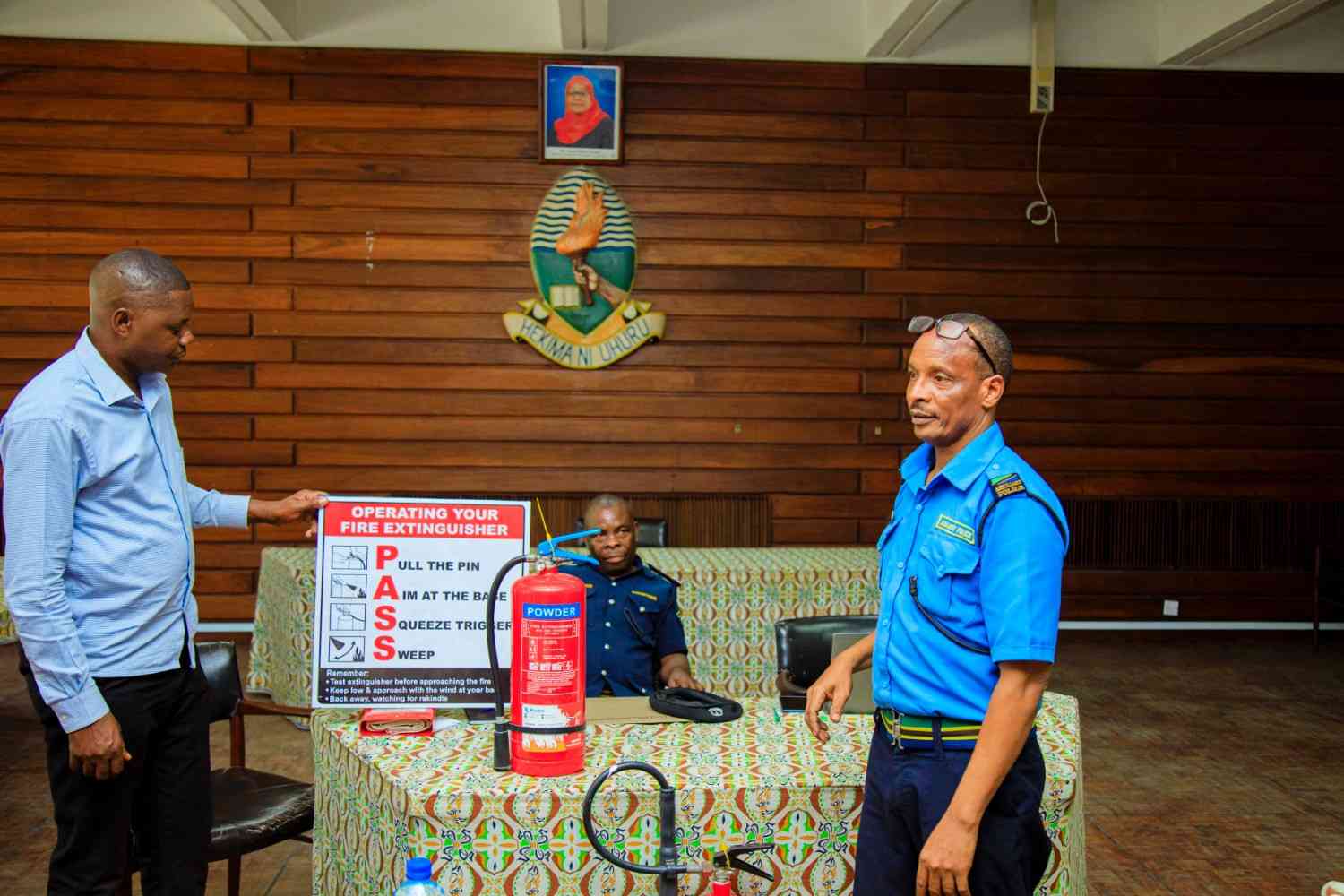
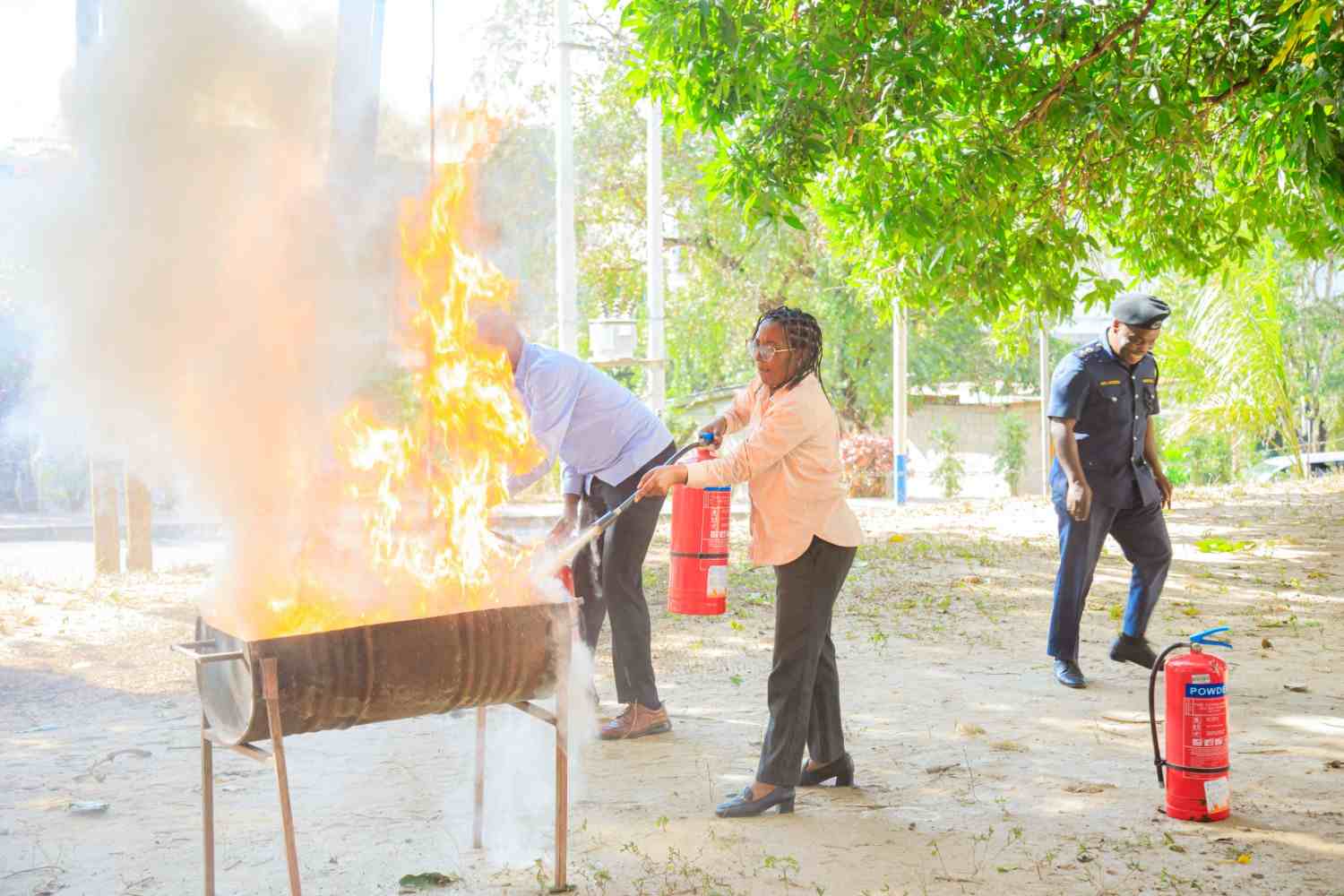
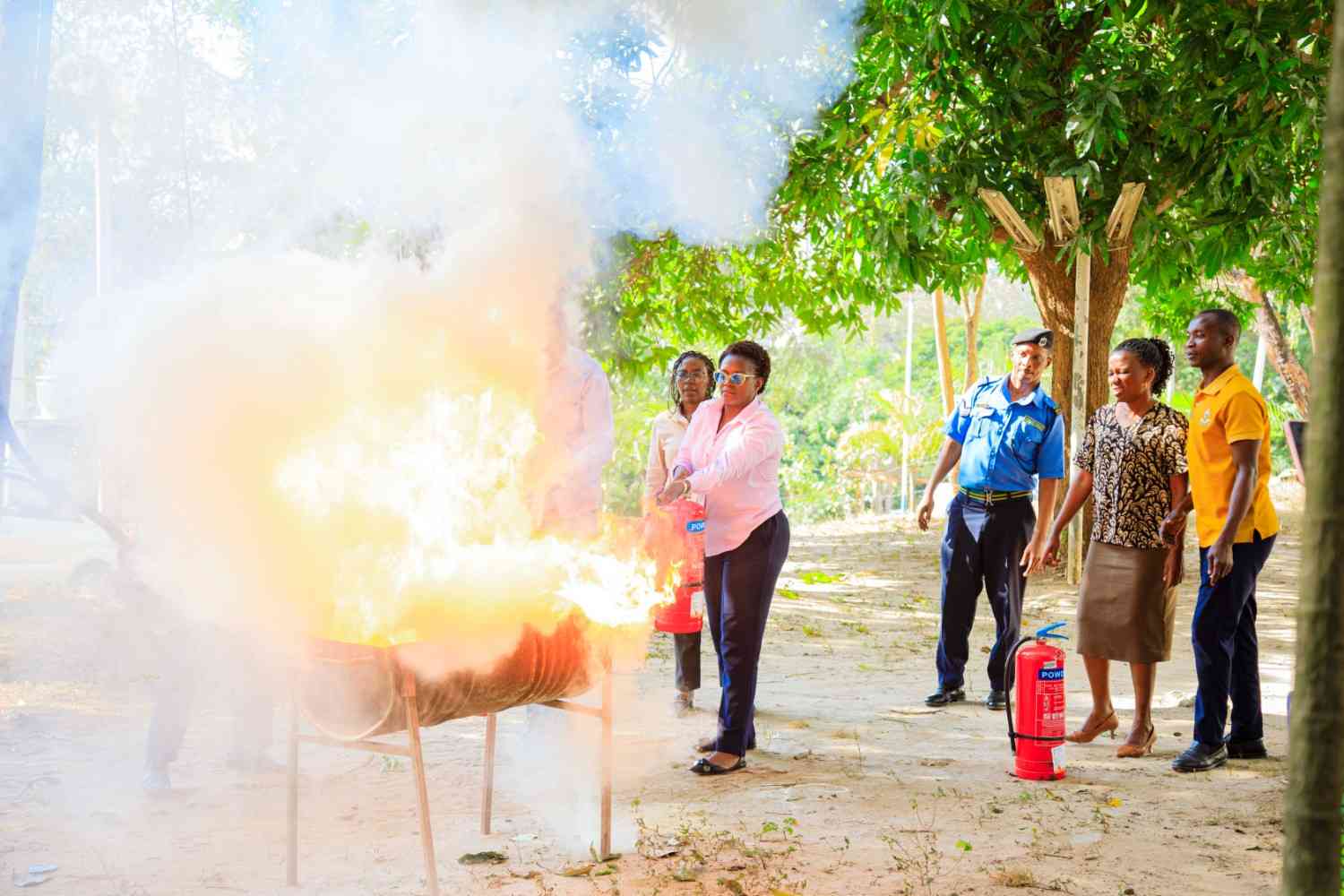
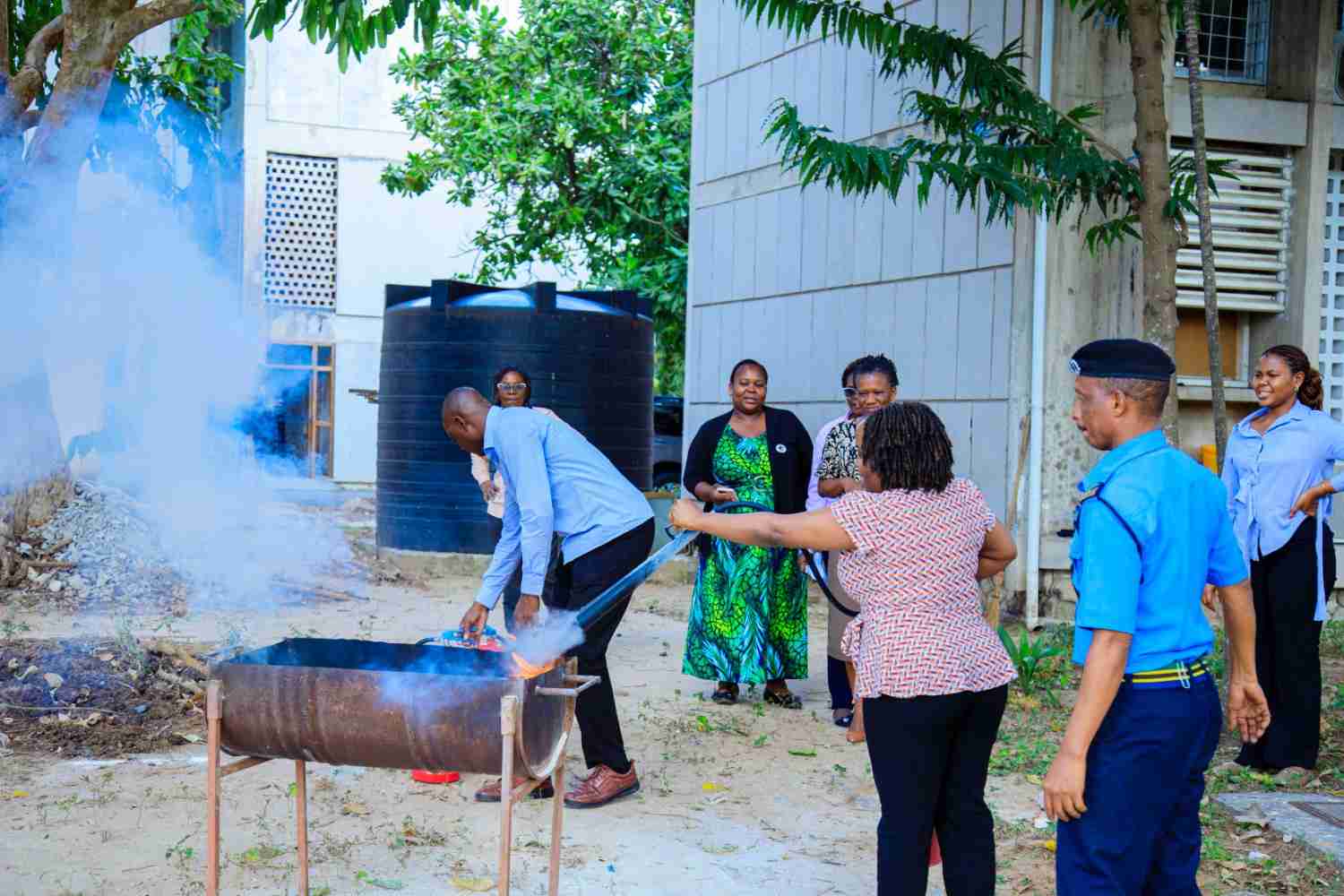
A key practical lesson was the PASS technique for using a fire extinguisher: Pull the pin, Aim at the base of the fire, Squeeze the trigger and Sweep from side to side.
During a demonstration, Staff Sergeant Japhet Ndalo, Auxiliary Police Officer at UDSM, stressed that attempting to fight a fire should never come at the expense of personal safety.
“There are specific procedures to follow when using a fire extinguisher, just as there are important safety precautions to observe when fighting a fire. We therefore need to remain vigilant and ensure that we protect ourselves, because in the process of trying to put out a fire, we can also expose ourselves to harm,” Staff Sergeant Ndalo said.
An evacuation emergency
That message was reinforced by Inspector Kyeus Revocatus, who focused on what happens when a fire becomes an evacuation emergency.
He urged members of the University community to remain calm, avoid running, follow designated evacuation routes and move to the designated assembly point, where people can be accounted for and await further instructions.
“When a fire occurs, the most important thing is to remain calm and avoid running, as panic can lead to injuries and make the situation more dangerous. Everyone should follow the designated evacuation procedures, move safely to the assembly point and remain there until it is confirmed that it is safe to return,” Inspector Revocatus said.
The training also emphasised the importance of raising the alarm quickly, helping others where it is safe to do so and contacting professional emergency responders when an incident requires further assistance.
For staff participating in the training, the lessons extend beyond knowing how to operate a fire extinguisher. They are about recognising risks early, responding without panic and understanding when an emergency requires evacuation rather than an attempt to fight the fire.
At UDSM, strengthening these skills forms part of the University's broader responsibility to provide a safe environment for teaching, learning, research and administration.
The initiative underscores the importance of preparedness in protecting not only University buildings and property, but, more importantly, the people who work, study and conduct research within them.
By equipping staff with practical fire-safety knowledge and reinforcing the principles of early warning, safe response and orderly evacuation, UDSM is strengthening its capacity to respond when an emergency occurs—helping ensure that its academic and research environment remains safer for the entire University community.