







Digital Learning Meets Agribusiness Innovation: UDSM Equips Youth with Skills for a Transforming Agricultural Economy
By Donald Boneka, CMU
The University of Dar es Salaam (UDSM), through its College of Agriculture and Food Security (CoAF), continues to strengthen its role in innovation, youth empowerment, and practical education through the successful implementation of the Agribusiness e-Academy Training. The programme equipped participants with essential skills needed to succeed in modern agriculture, reflecting the University’s commitment to bridging the gap between academic knowledge and real-world application.
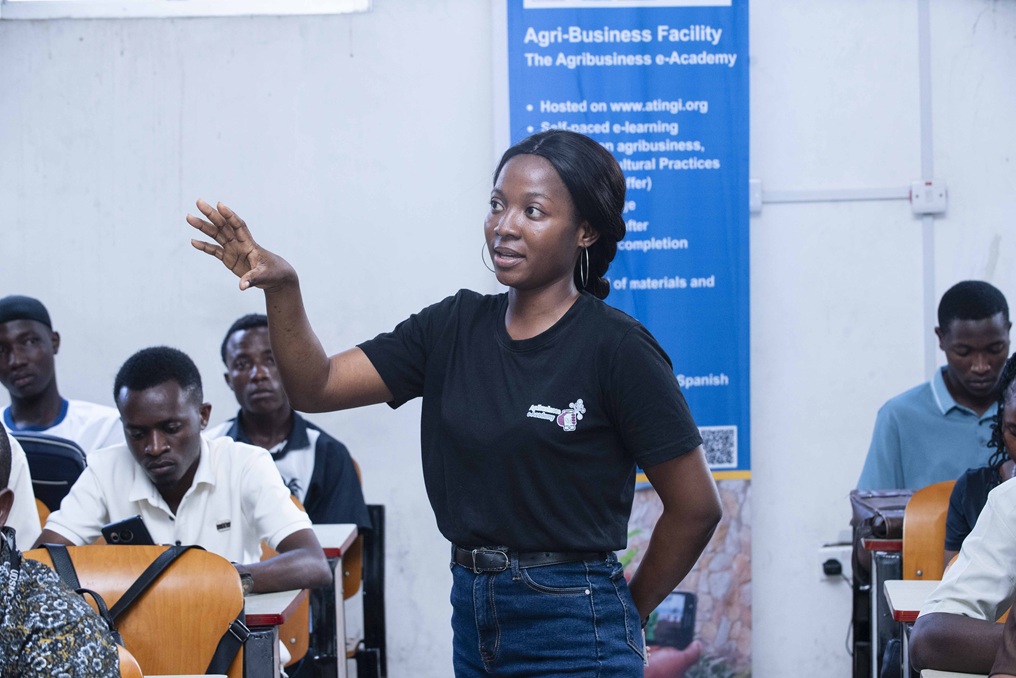
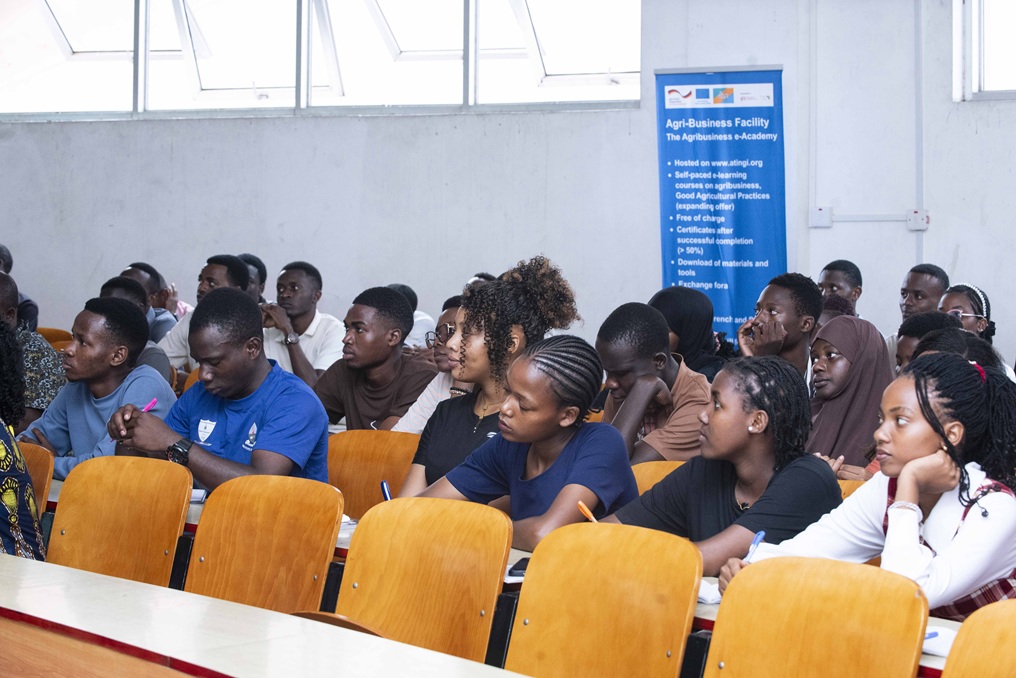
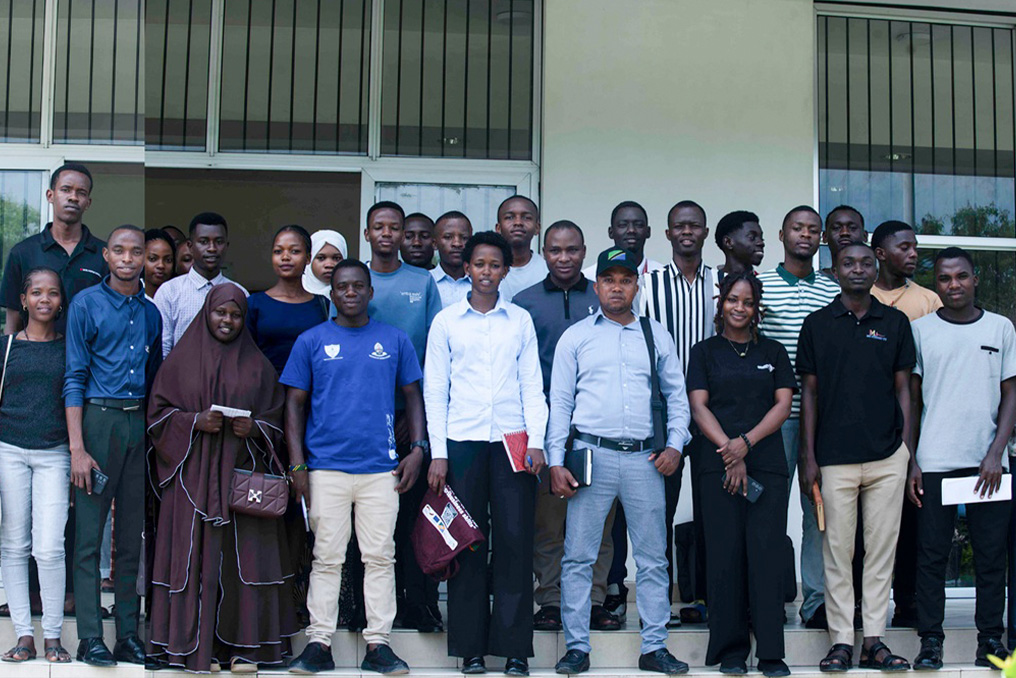
Delivered under the theme “Empowering Tomorrow’s Agribusiness Leaders through e-learning,” the training brought together students and academic staff in an interactive and forward-looking learning environment. At a time when agriculture remains central to Tanzania’s economy, the initiative underscored the urgent need to prepare graduates capable of transforming agriculture into profitable and sustainable enterprises. Stakeholders emphasised that such programmes are critical in shifting perceptions of agriculture from subsistence activity to a modern, innovation-driven sector with significant economic potential.
The training benefited from international expertise provided by Leticia Boateng, Agribusiness e-Academy Technical Advisor for the Agri-Business Facility for Africa, and Cinderella Arhinful-Mensah, Communication Specialist for the same programme under the Deutsche Gesellschaft für Internationale Zusammenarbeit (GIZ) GmbH. Their facilitation combined global perspectives with local relevance, ensuring that participants could relate concepts directly to Tanzania’s agricultural context. Through interactive discussions, practical exercises, and guided sessions, participants were encouraged to actively engage and apply their knowledge to real agribusiness opportunities.
A central component of the programme was the introduction of the Agribusiness e-Academy, a free, self-paced digital learning platform developed under the GIZ-supported Agribusiness Facility for Africa project. The platform provides practical knowledge in areas such as agronomy, entrepreneurship, climate-smart agriculture, and agribusiness economics. Its adoption at UDSM represents a significant step toward expanding access to flexible, technology-driven education. Participants were trained to navigate the platform, monitor their learning progress, and earn certifications—skills that are increasingly essential in today’s digital environment. The platform also promotes lifelong learning, enabling users to continuously upgrade their knowledge in response to changing industry demands.
A key focus of the training was redefining agriculture as a viable business sector. Participants were introduced to essential agribusiness concepts, including value chain analysis, financial management, market identification, and profit evaluation. By framing agriculture as a professional and profitable enterprise, the programme encouraged exploration of opportunities in commercial farming, agro-processing, agritech, logistics, and export markets. Facilitators emphasised that success in agribusiness requires innovation, discipline, and strategic planning.
The training also introduced participants to the Business Model Canvas (BMC), a globally recognised tool for structuring business ideas. Through practical exercises, learners were guided in identifying customer segments, defining value propositions, and developing sustainable revenue streams. This approach helped participants transform ideas into actionable and scalable business models, addressing a common challenge among young entrepreneurs who often lack structured implementation strategies.
In addition, the programme highlighted the importance of climate-smart agriculture in addressing the growing challenges posed by climate change. Participants were introduced to sustainable practices that enhance productivity while protecting the environment. The integration of environmental considerations into agribusiness planning was emphasised as essential for long-term success, particularly in a country like Tanzania where agriculture plays a vital role in livelihoods and economic stability.
Beyond technical knowledge, the training placed strong emphasis on digital empowerment and mindset transformation. Participants developed skills in using digital tools for independent learning, ensuring that their education continues beyond the training period. The programme also fostered an entrepreneurial mindset by encouraging participants to critically assess opportunities, evaluate risks, and develop practical business plans. This helped bridge the gap between ambition and execution, increasing participants’ confidence in pursuing agribusiness ventures.
The Agribusiness e-Academy Training reflects UDSM’s broader contribution to national development. As agriculture remains a key driver of Tanzania’s economy, the need for skilled and innovative professionals is critical. By integrating academic learning with practical training and industry collaboration, the University continues to produce graduates capable of creating employment and driving economic transformation.
Furthermore, the collaboration between UDSM, GIZ, and the Agribusiness Facility for Africa highlights the importance of partnerships in delivering impactful education. Such collaborations combine academic expertise, international experience, and local knowledge to create relevant and effective programmes. Expanding these partnerships will be essential for scaling similar initiatives and reaching more young people across the country.
Ultimately, the programme represents a strategic investment in human capital. It equips participants with practical skills, confidence, and a renewed perspective on the potential of agribusiness. As global challenges such as food insecurity, climate change, and youth unemployment continue to intensify, UDSM remains committed to providing innovative, future-oriented education.
Through initiatives like the Agribusiness e-Academy Training, the University is not only educating students but actively shaping a new generation of agribusiness leaders capable of transforming agriculture into a competitive and sustainable sector, thereby contributing to Tanzania’s broader socio-economic development.