
President Tharman Urges Africa to Invest in People, Skills and Innovation for Inclusive Growth
By Renancy Remmy, CMU
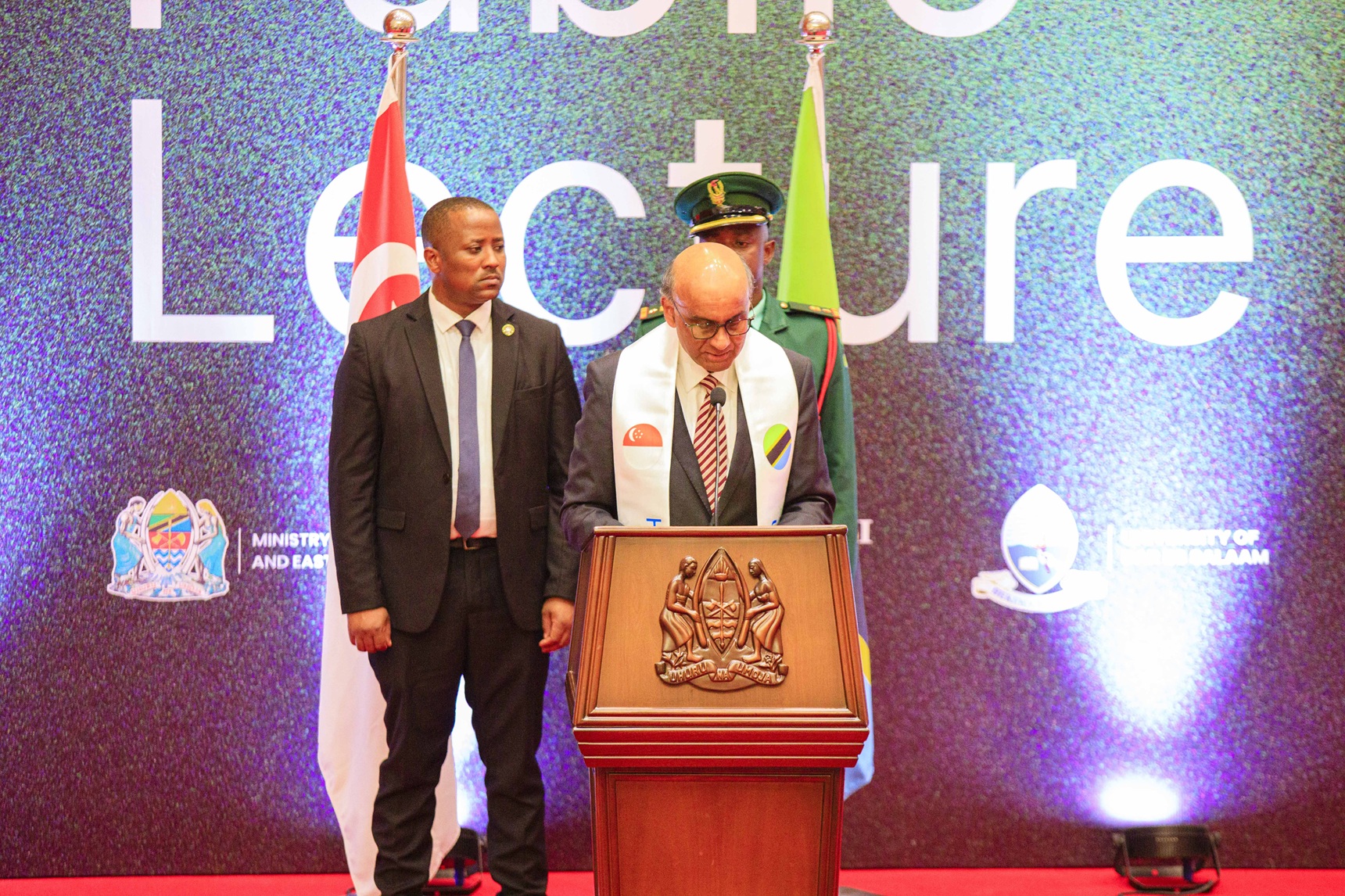
The President of the Republic of Singapore, His Excellency Tharman Shanmugaratnam, has called on African countries to prioritize investments in people, skills development and innovation, arguing that sustainable economic transformation depends more on the quality of human capital than on the abundance of natural resources.
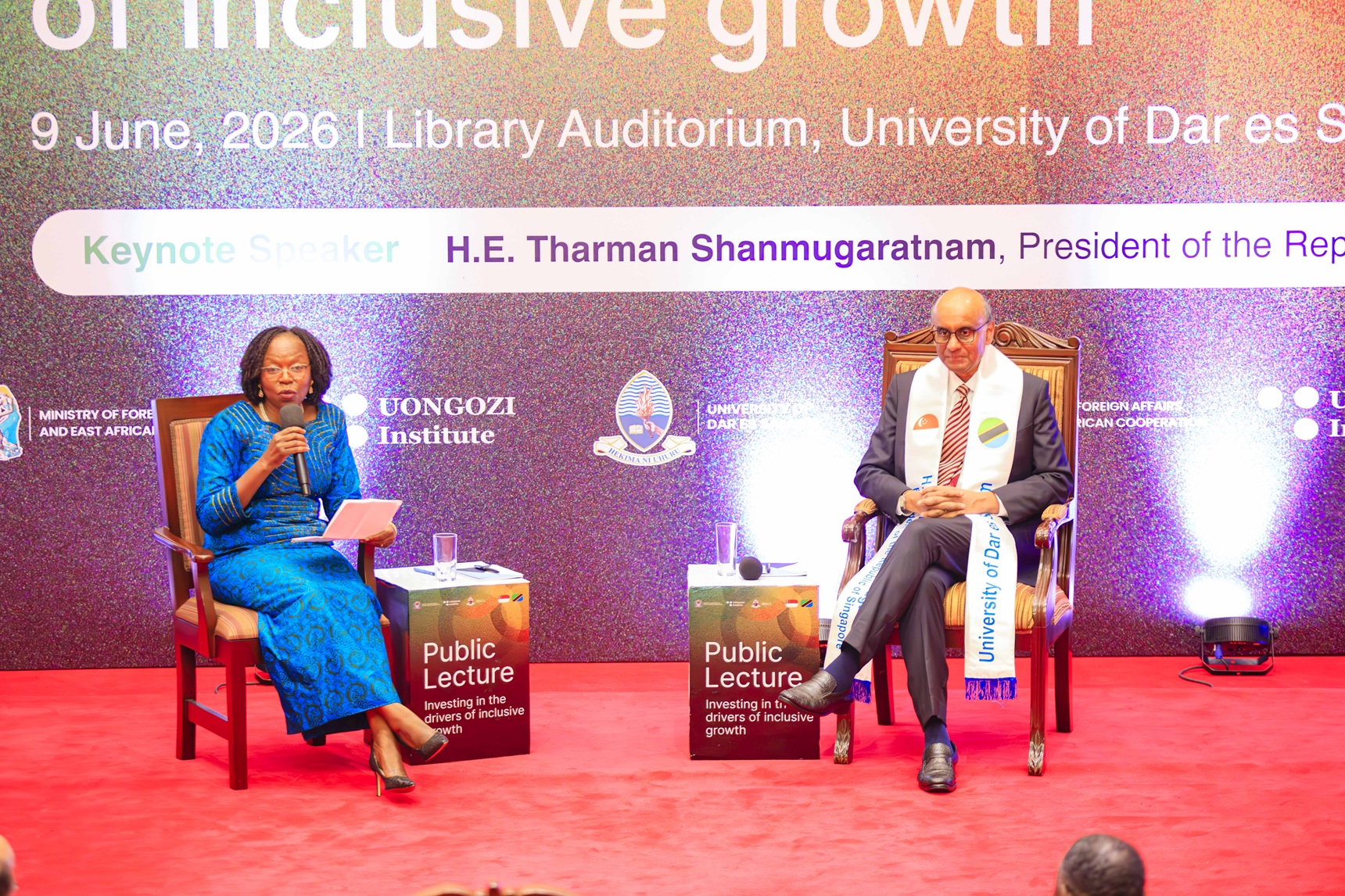
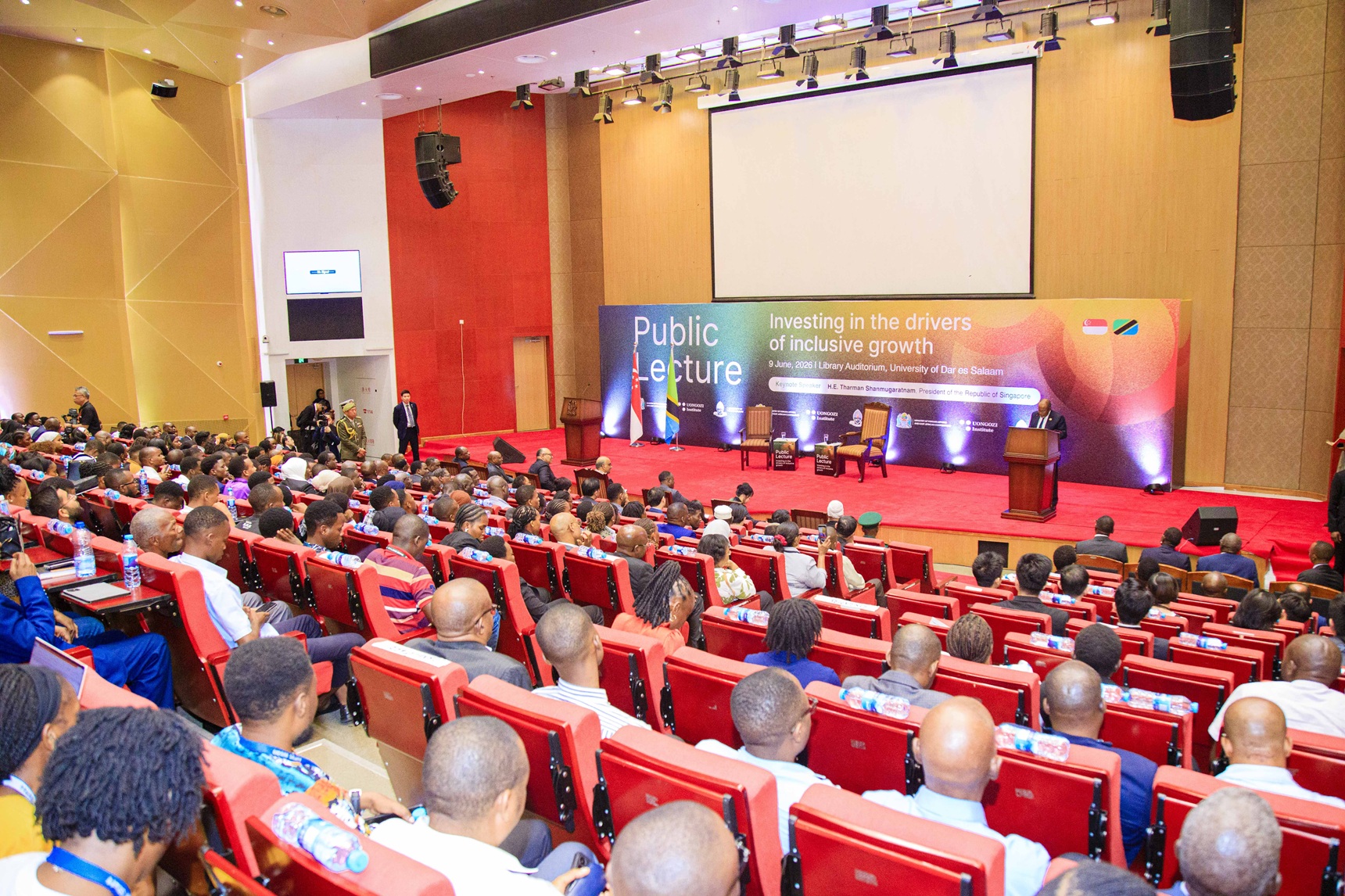
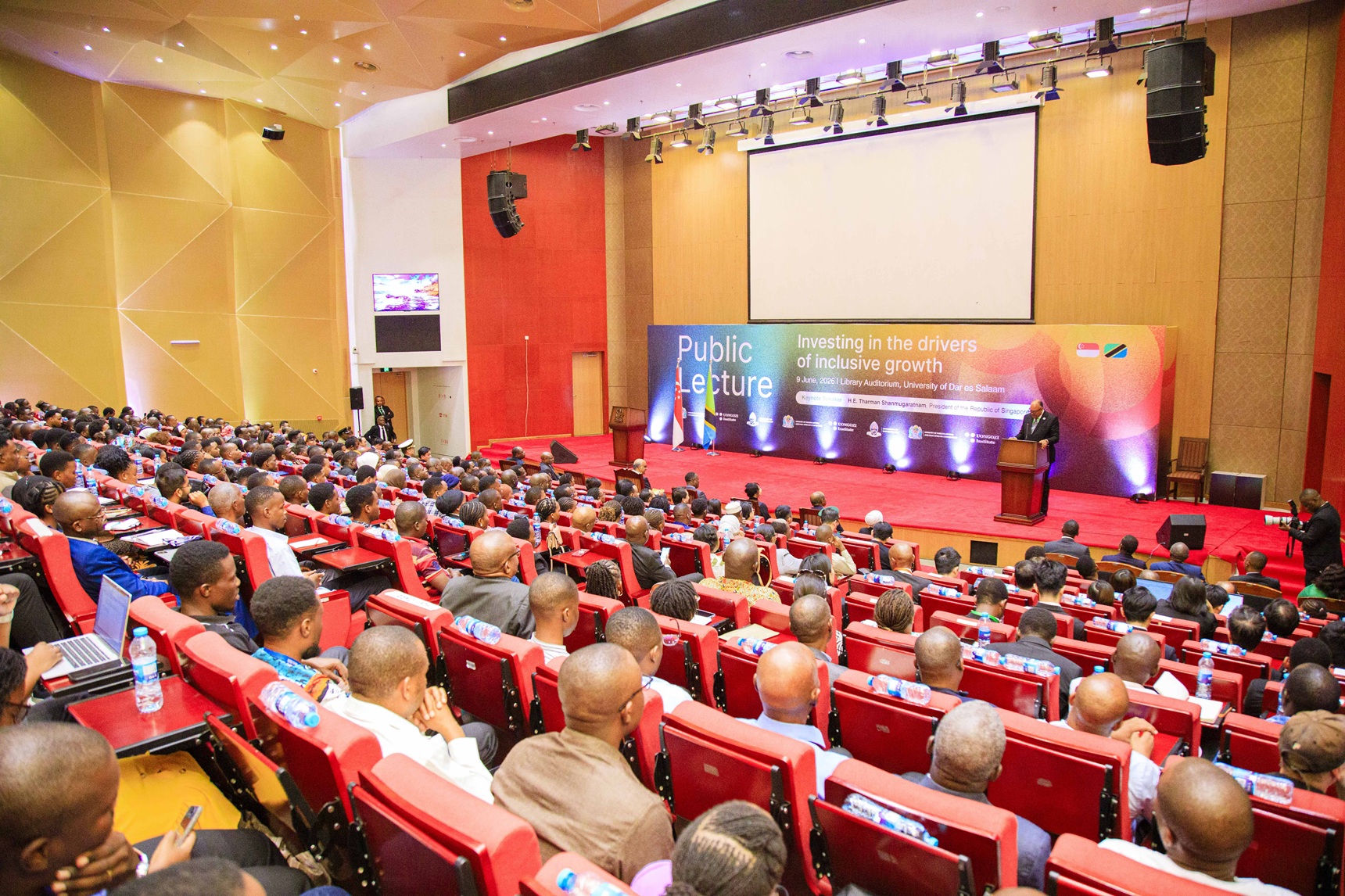
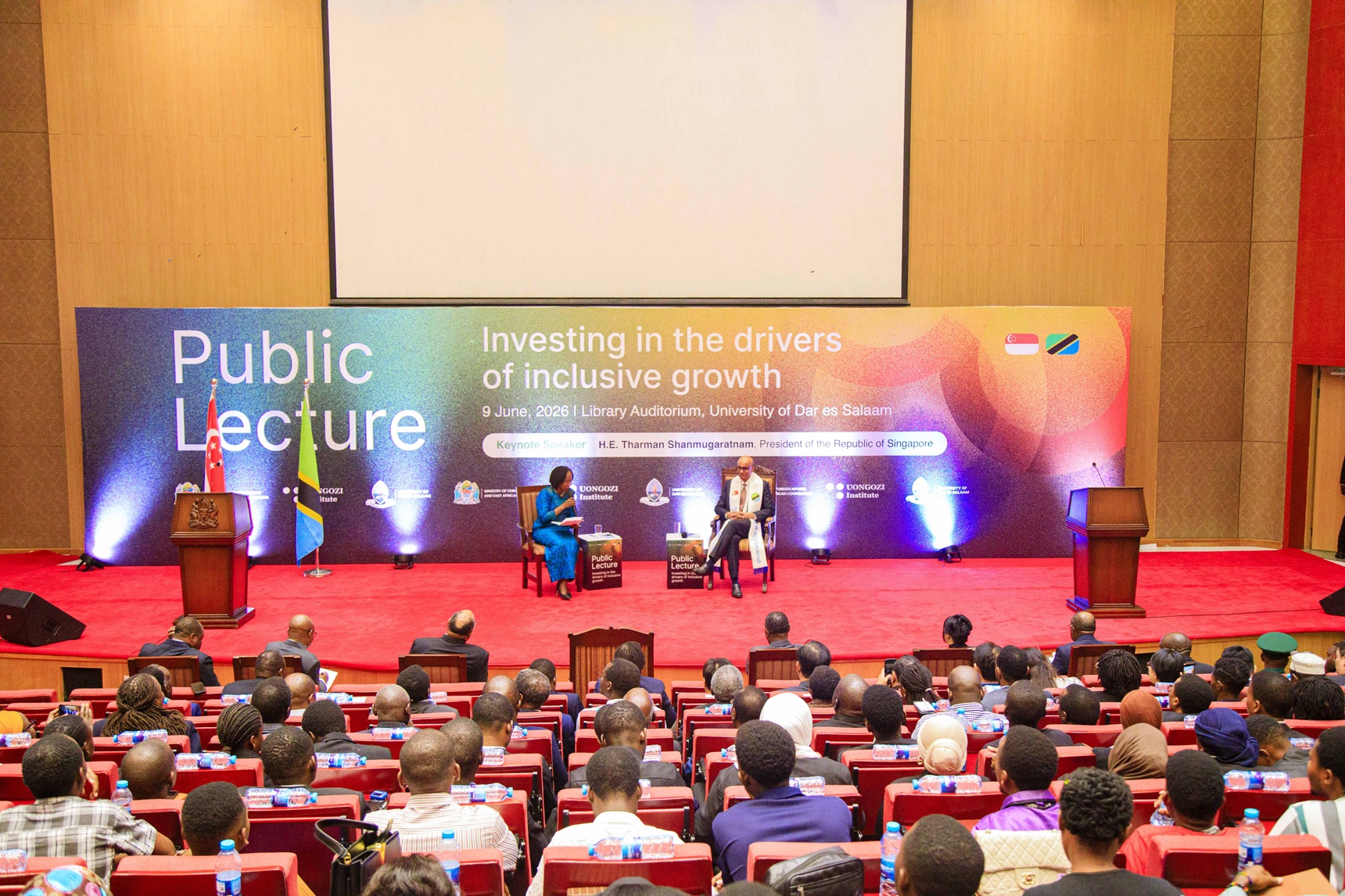
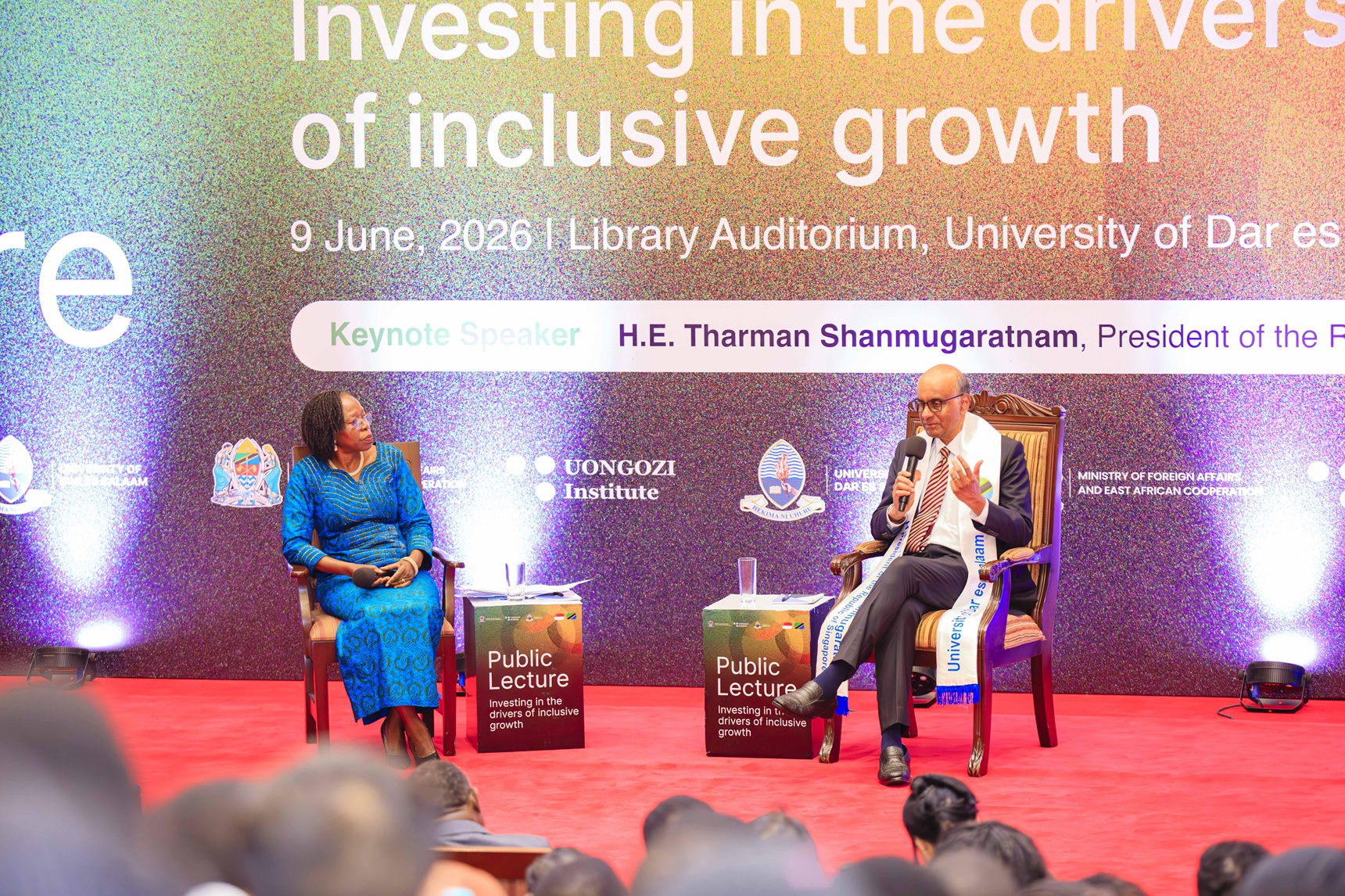
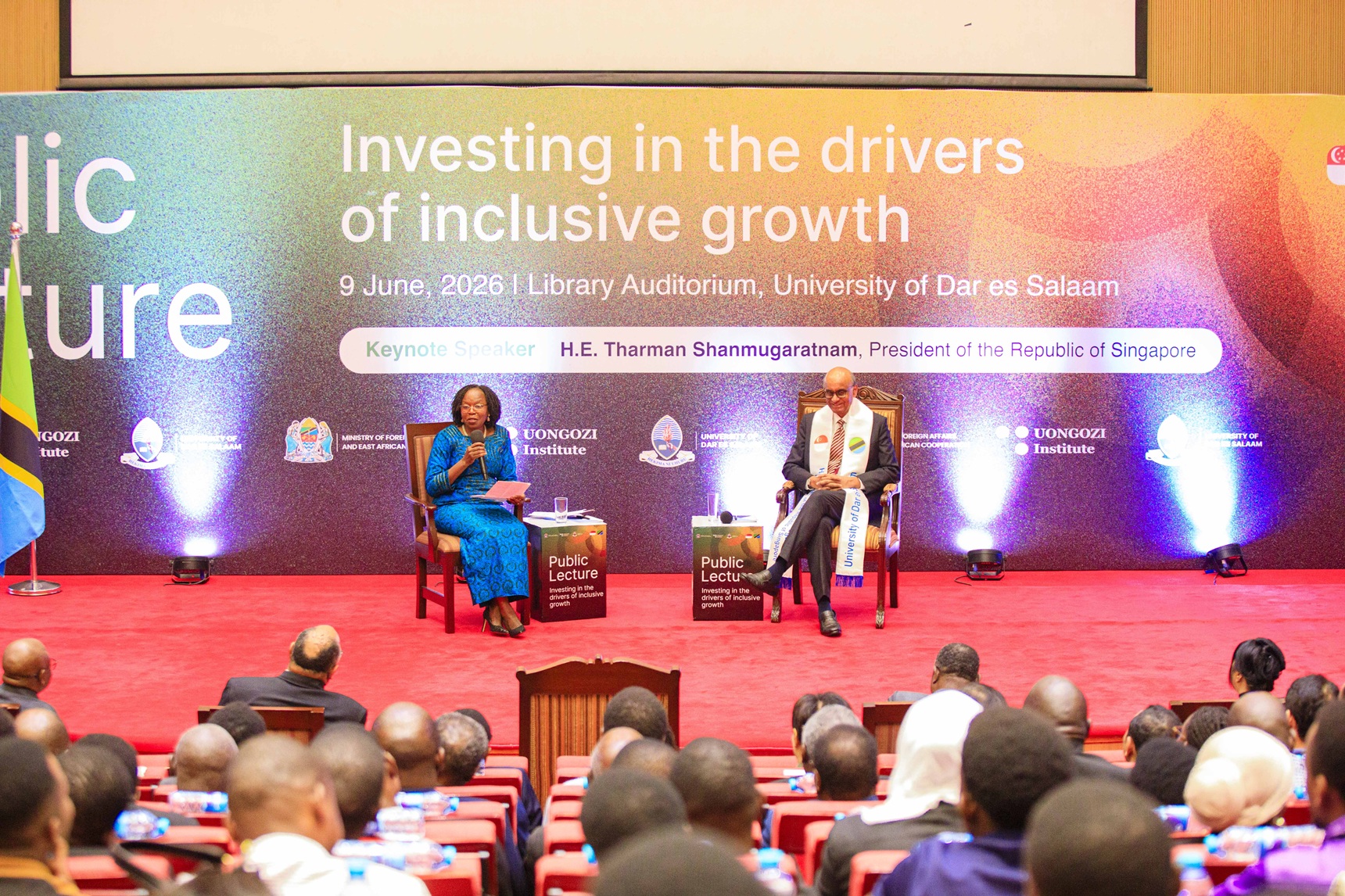
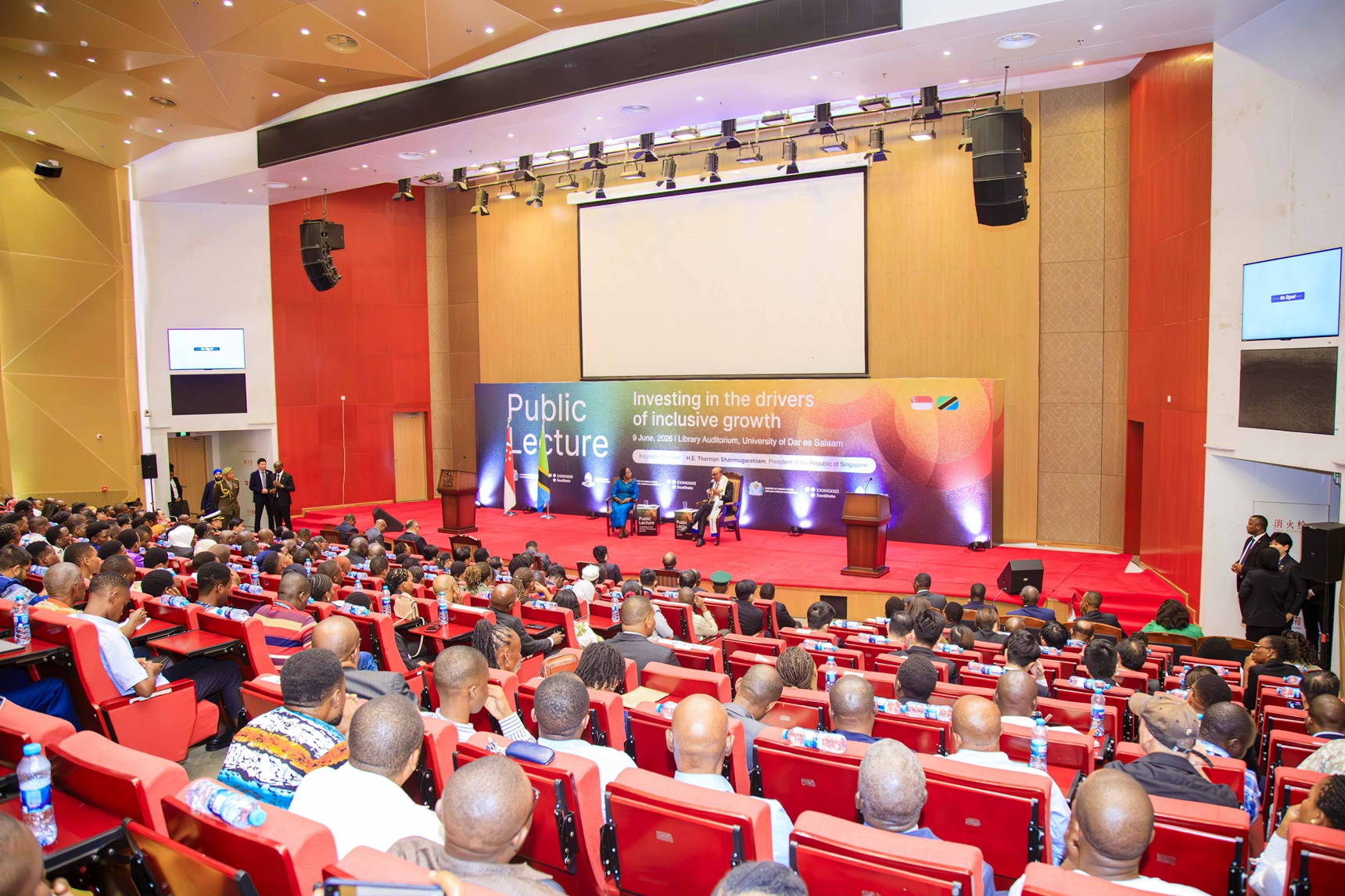
Delivering a landmark public lecture at the University of Dar es Salaam (UDSM) during his State Visit to Tanzania, President Tharman outlined a vision for inclusive growth anchored in job creation, education, technological advancement and strong institutions.
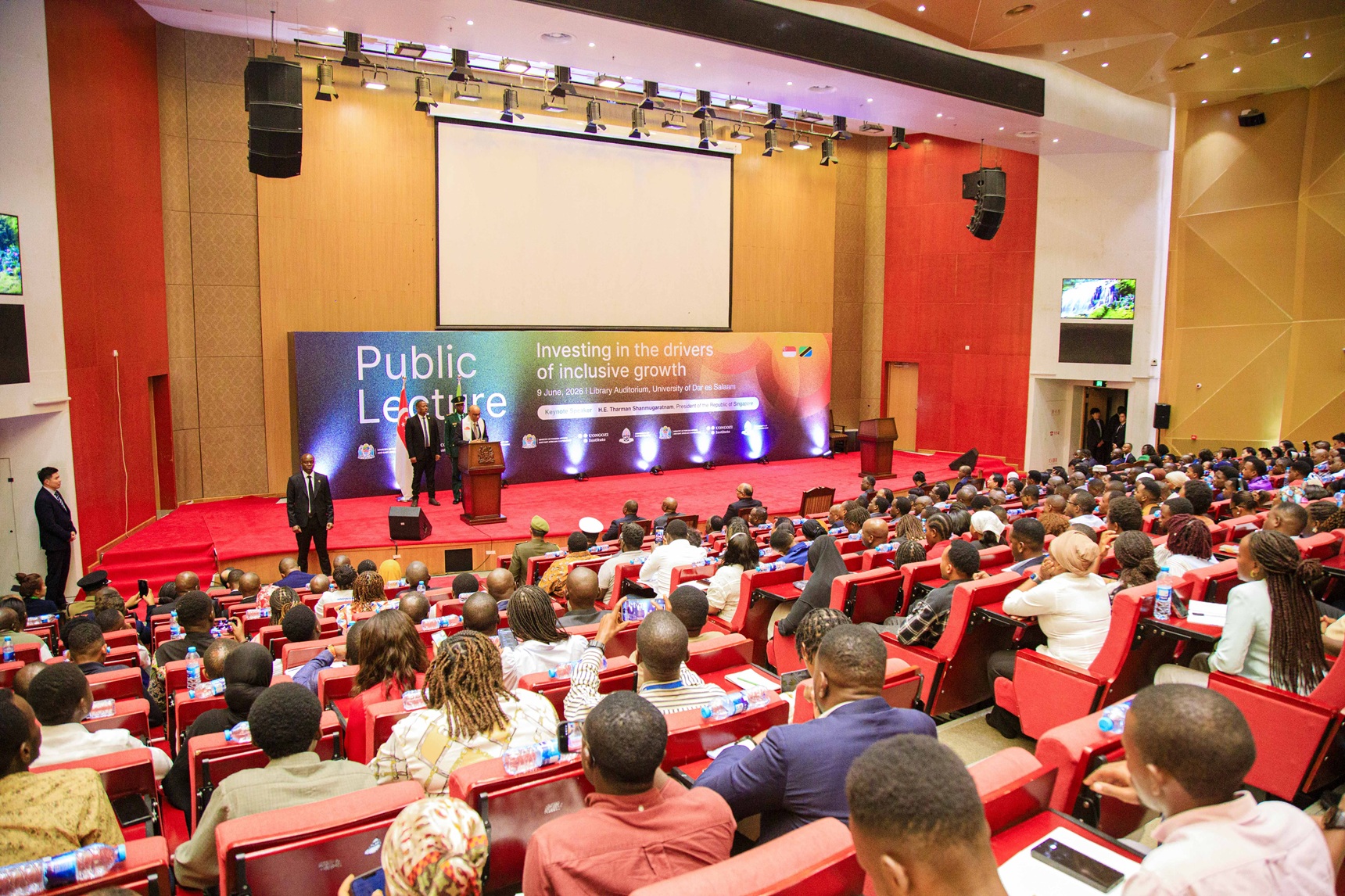
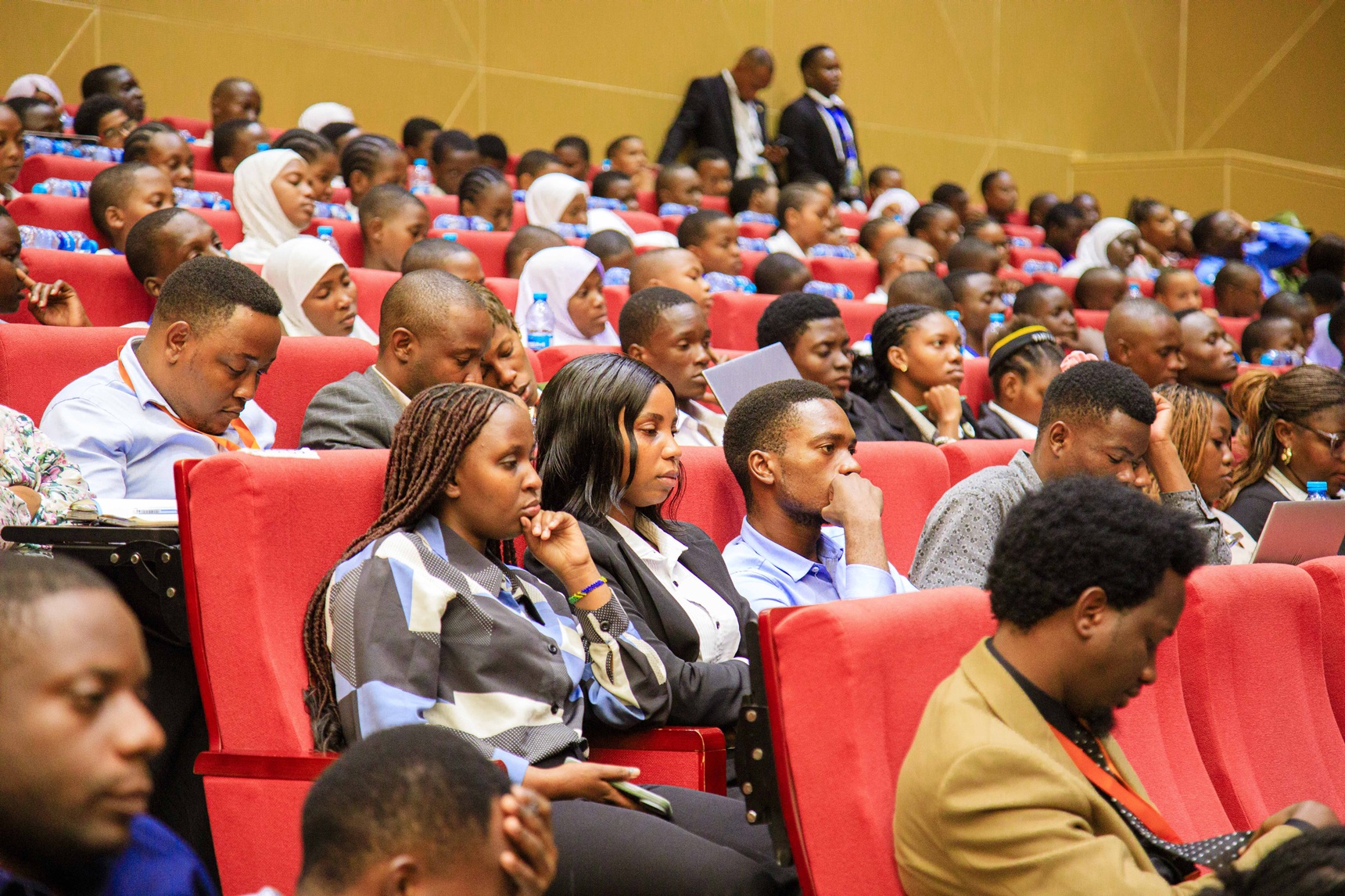
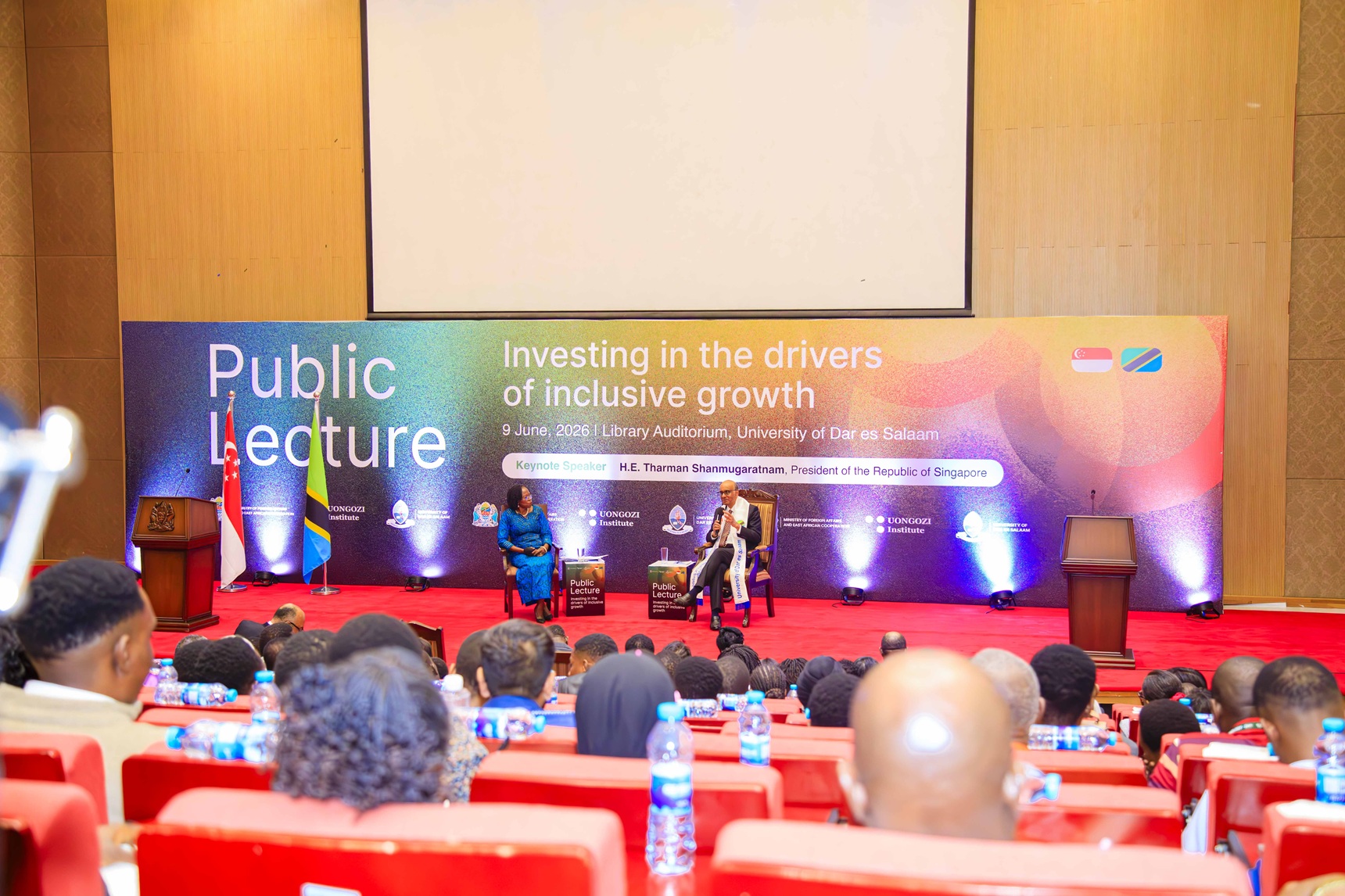
The lecture, held at UDSM’s New Library Auditorium under the theme “Investing in the Drivers of Inclusive Growth,” brought together government leaders, diplomats, academics, students, development partners and private-sector stakeholders.
Addressing the audience, President Tharman said nations that invest strategically in their people are better positioned to achieve long-term prosperity, resilience and social progress.
“A nation’s true wealth lies not in its natural resources, but in the capabilities, aspirations and unity of its people,” he said.
The Singaporean leader noted that Africa stands at a critical moment in its development journey, with nearly 500 million young people expected to enter working age over the next decade.
He described job creation as one of the continent’s most pressing priorities and urged governments, businesses and educational institutions to align their efforts toward creating meaningful employment opportunities.
“Good jobs must be the test of whether development is succeeding,” President Tharman emphasized.
A major focus of his lecture was education and workforce development, which he described as the most important investments any nation can make. While acknowledging the critical role of universities, he challenged policymakers to place greater emphasis on practical skills, capabilities and lifelong learning.
“What matters most is not certificates, but capabilities,” he said, calling for expanded investment in Technical and Vocational Education and Training (TVET), polytechnics and other applied learning institutions.
Transformative potential of Technology and Artificial Intelligence
President Tharman also highlighted the transformative potential of technology and artificial intelligence (AI), arguing that countries that embrace innovation and invest in skills development will be better positioned to benefit from the changing world of work.
While some jobs may be displaced, he said technological advancement would also create new opportunities for entrepreneurship, productivity and economic growth.
He further identified renewable energy as one of Africa’s greatest economic opportunities. With vast solar, wind and hydro resources, he said, the continent is uniquely positioned to support the global energy transition while creating jobs, expanding energy access and strengthening industrial competitiveness.
The President also pointed to emerging opportunities within the bioeconomy, including sustainable agriculture, biodiversity conservation, environmental restoration and eco-tourism. These sectors, he noted, can generate employment while contributing to environmental sustainability and climate resilience.
Beyond investments in people and technology, President Tharman underscored the importance of good governance, policy consistency and strong institutions.
According to him, transparent and predictable institutions are essential for attracting investment, fostering innovation and ensuring that economic growth benefits all citizens.
He also praised the African Continental Free Trade Area (AfCFTA), describing it as a transformative platform for expanding markets, increasing productivity and strengthening Africa’s competitiveness in the global economy.
He encouraged deeper economic cooperation between Africa and Southeast Asia to accelerate trade, investment, technology transfer and skills development.
Speaking at the event, the Minister for Foreign Affairs and East African Cooperation, Hon. Mahmoud Thabit Kombo (MP), said President Tharman’s State Visit marked an important milestone in strengthening diplomatic and economic relations between Tanzania and Singapore.
He noted that cooperation between the two countries continues to grow in key sectors including trade, investment, education, technology and innovation.
UDSM commended for advancing knowledge and innovation
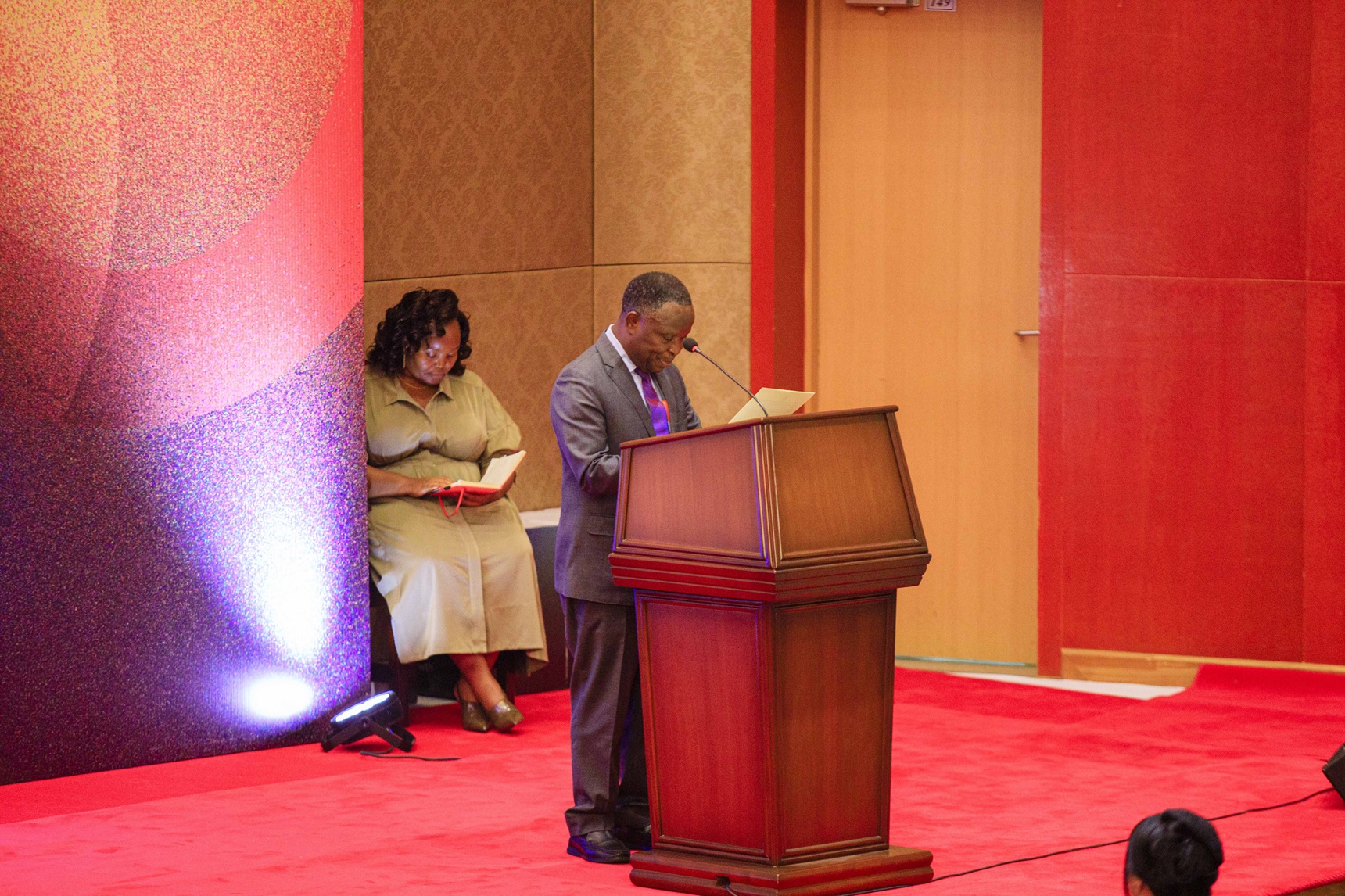
Earlier, UDSM Vice Chancellor, Prof. William A. L. Anangisye, described the President’s visit as a historic occasion for the University and a reflection of the deepening partnership between Tanzania and Singapore. He said the visit highlighted the important role universities play as centres of knowledge generation, innovation and public dialogue.
“This occasion reflects our shared belief that education, innovation and human capital development remain fundamental drivers of inclusive and sustainable growth,” said Prof. Anangisye.
The Vice Chancellor noted that the lecture theme resonated strongly with UDSM’s mission of producing skilled graduates, advancing research and innovation, and generating solutions to societal challenges.
He also reflected on the enduring legacies of Tanzania’s founding President, Mwalimu Julius Nyerere, and Singapore’s founding Prime Minister, Lee Kuan Yew, both of whom championed education, strong institutions and investment in people as foundations for national development.
The lecture generated significant interest among students, academics and policymakers, many of whom viewed Singapore’s development experience as an important source of lessons on human capital development, institution-building and economic transformation.
For the University of Dar es Salaam, the event reinforced its position as a leading platform for intellectual engagement and international dialogue. It also underscored the growing importance of partnerships in addressing development challenges and creating opportunities for future generations.
As participants reflected on the President’s message, one theme stood out clearly: Africa’s greatest resource is not beneath the ground, but within its people. Investing in their skills, creativity and potential, President Tharman argued, will be the key to achieving inclusive growth, prosperity and sustainable development in the decades ahead.