

UDSM Remembers Ambassador Kuhanga for a Legacy of Dialogue, Service and Academic Leadership
By Selemani Nambimbi, CMU
The University of Dar es Salaam (UDSM) has paid tribute to former Vice Chancellor Ambassador Dr. Nicholas Alfred Kuhanga, remembering him as a humble and generous leader whose patience, commitment to dialogue and lifelong service left a lasting mark on the University and Tanzania’s education sector.
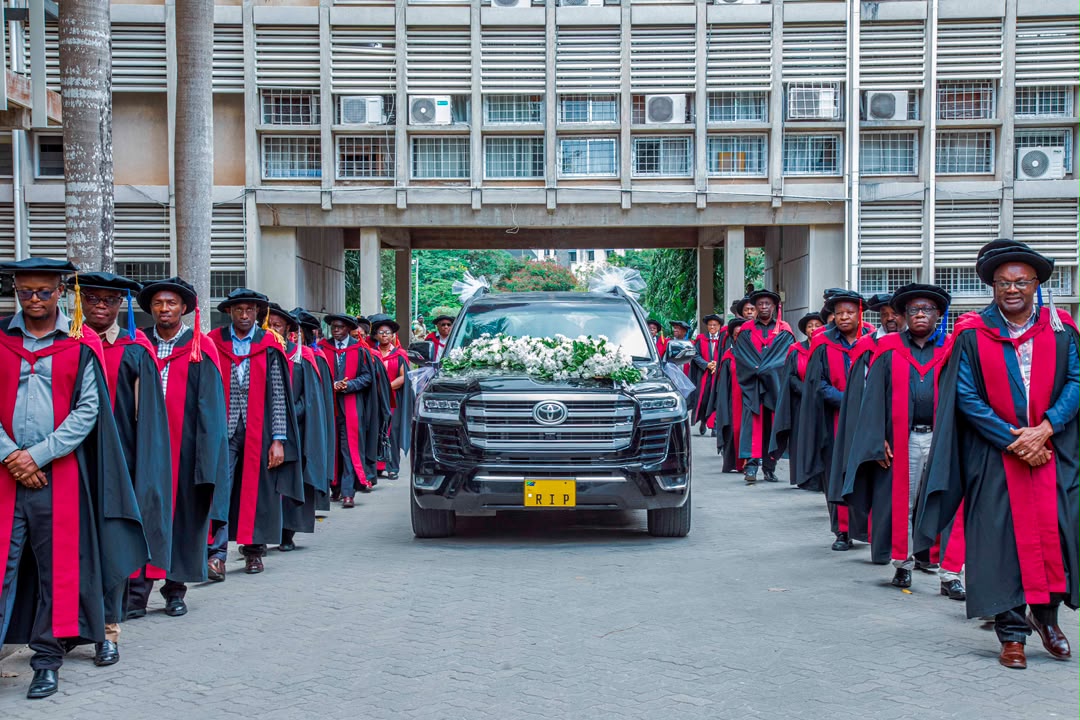
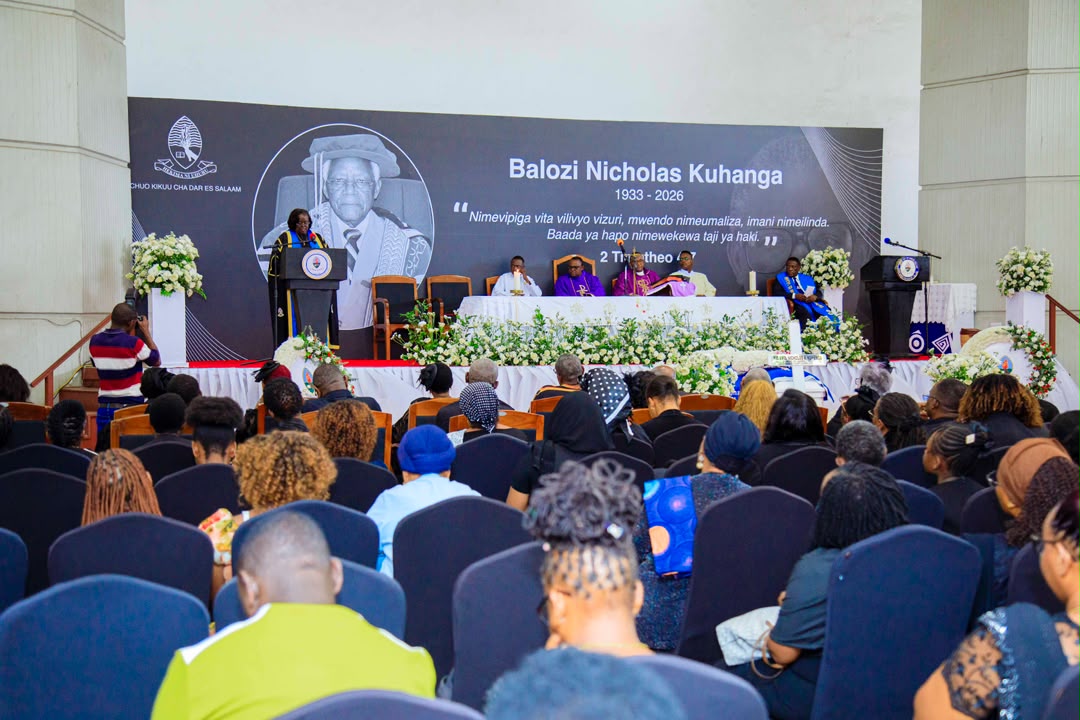
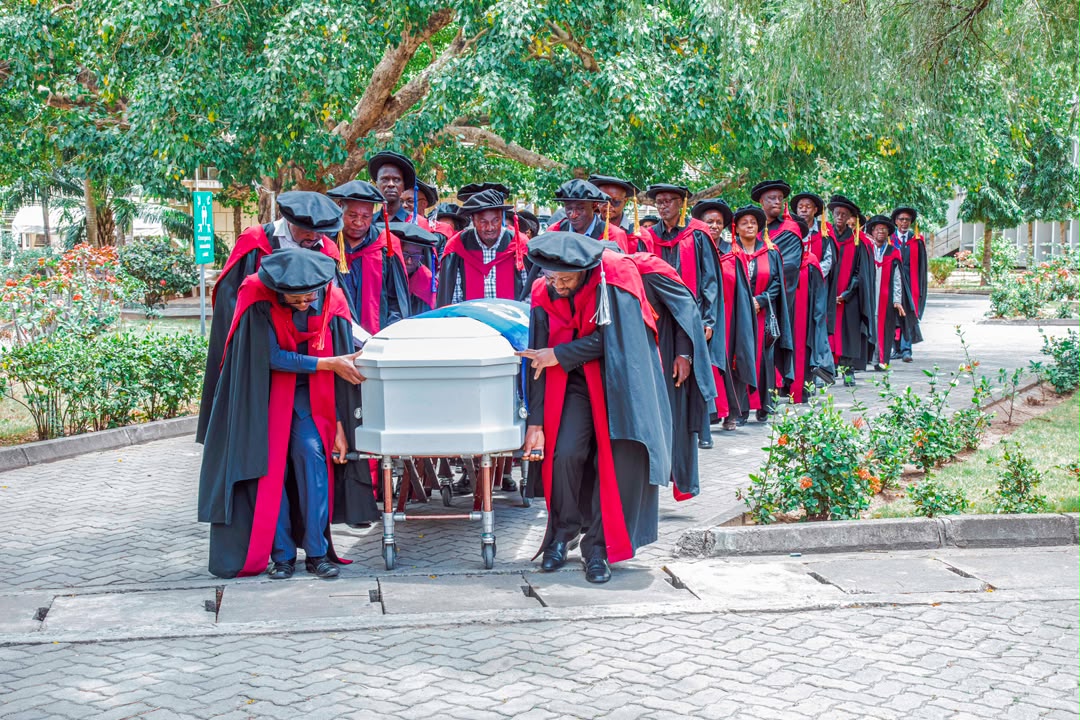
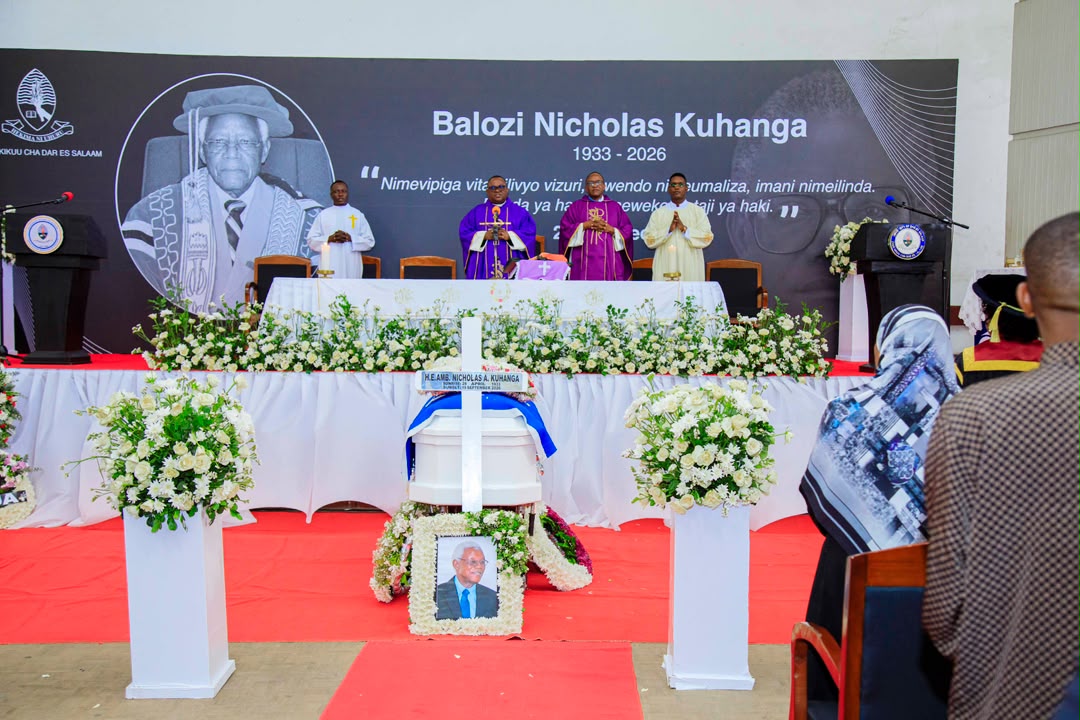
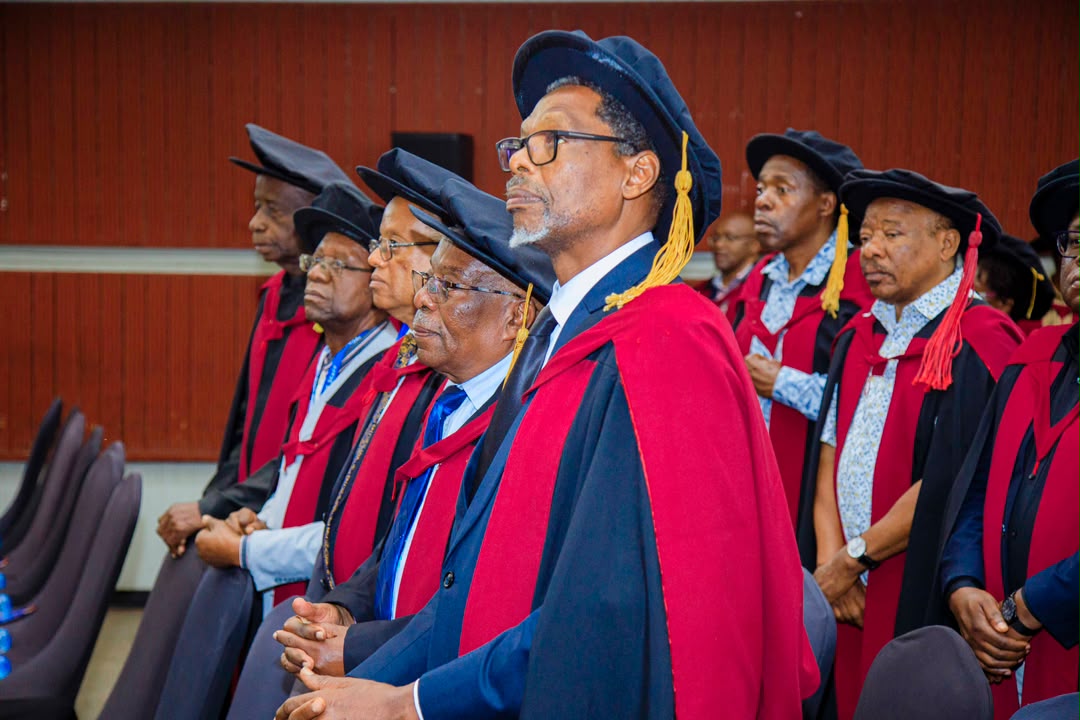
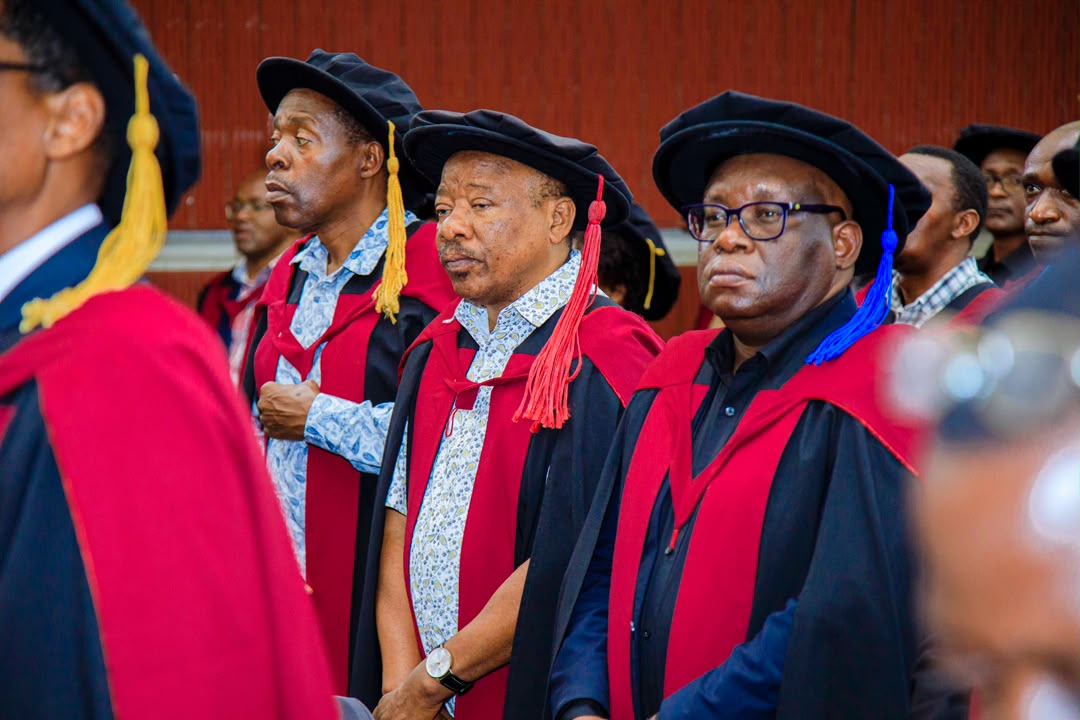
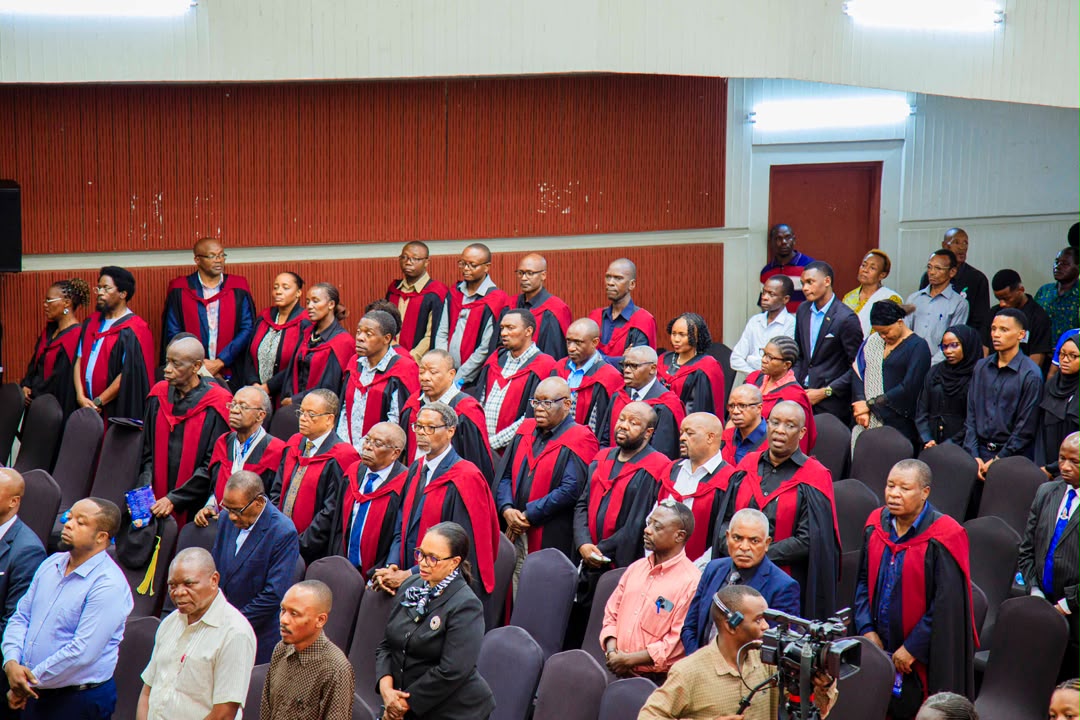
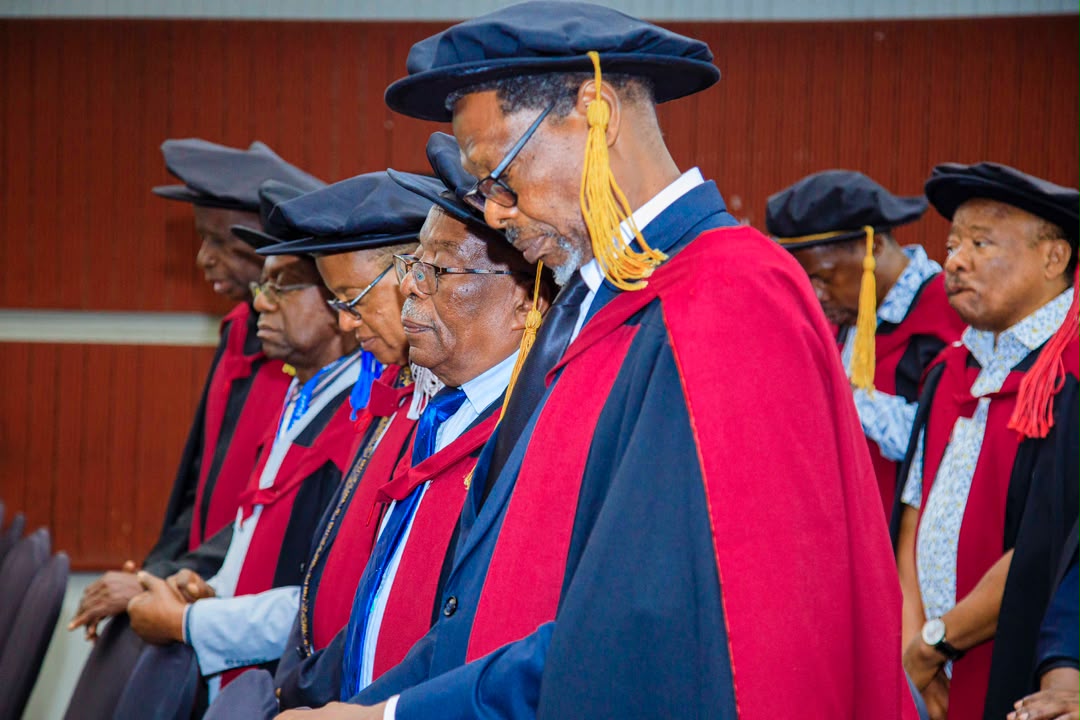
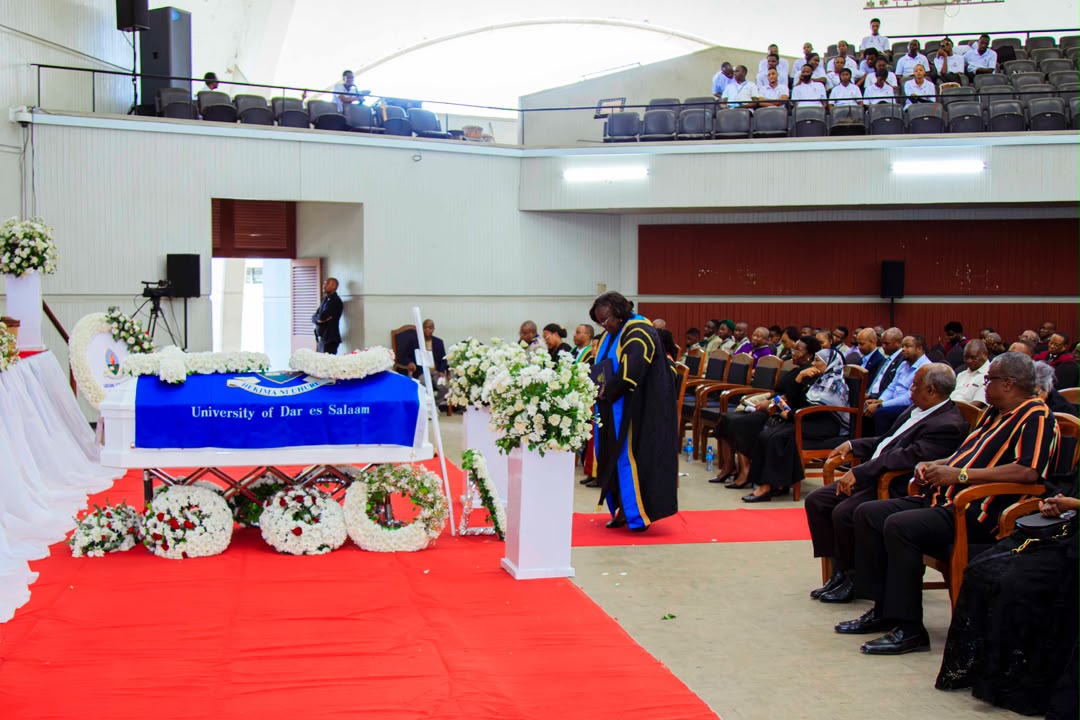
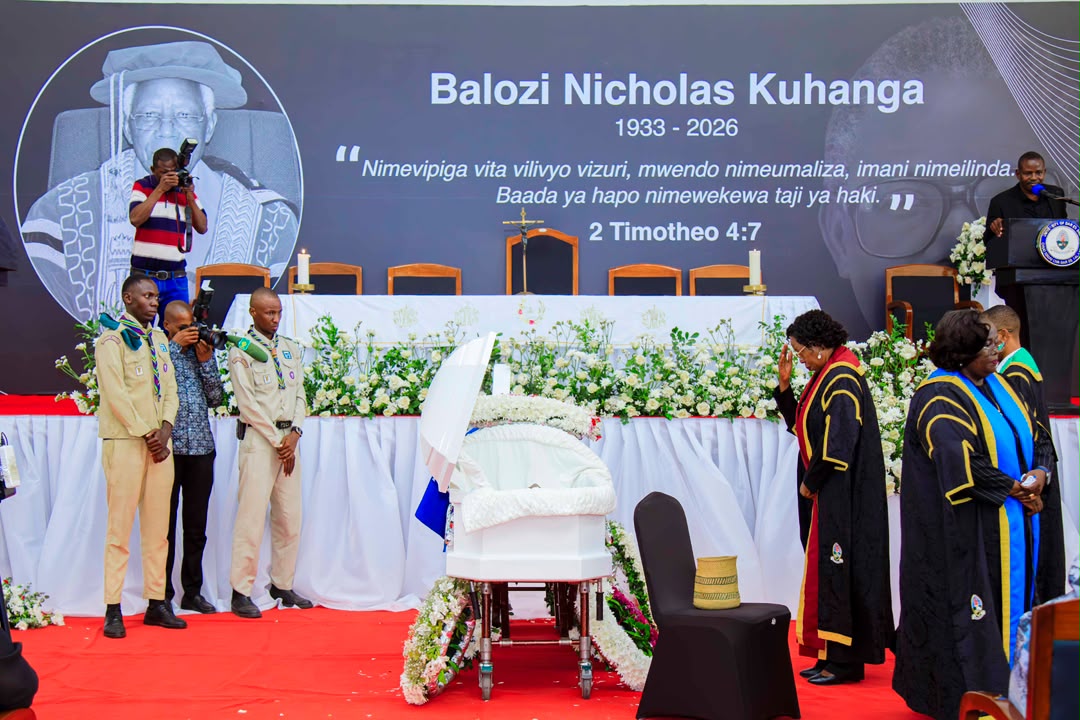
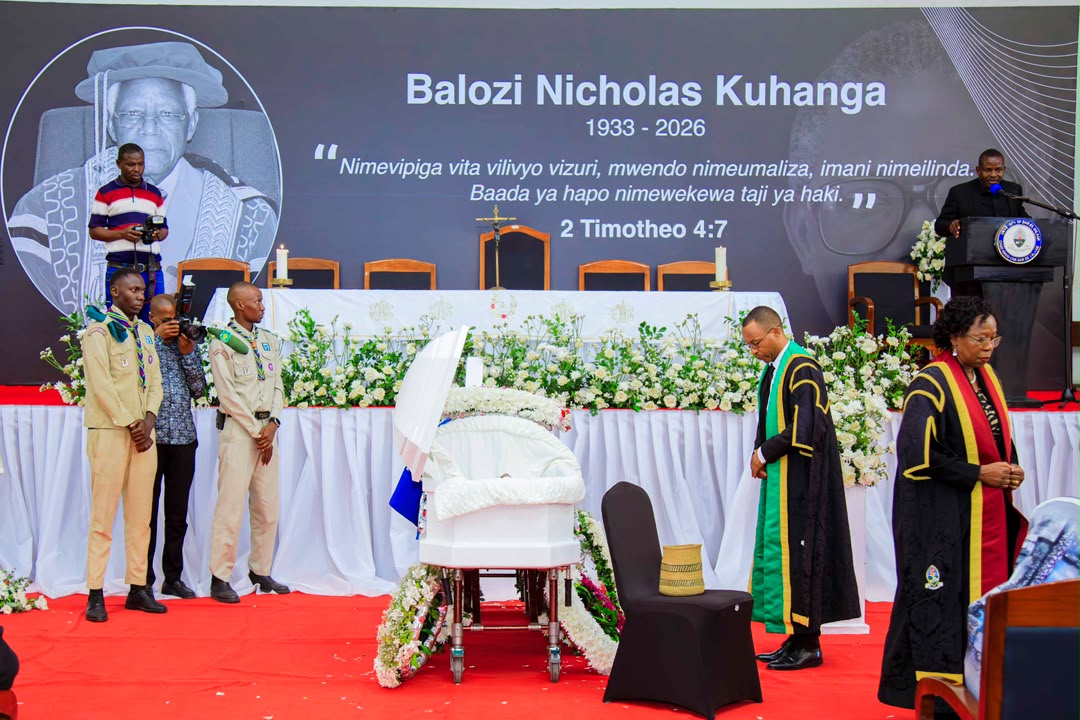
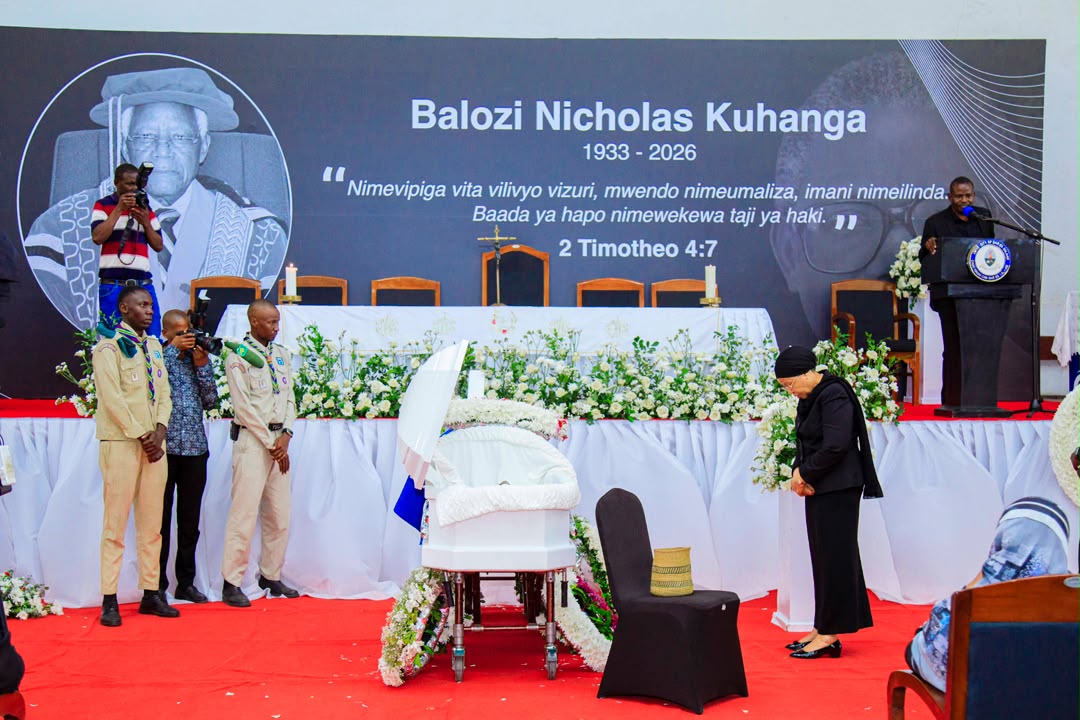
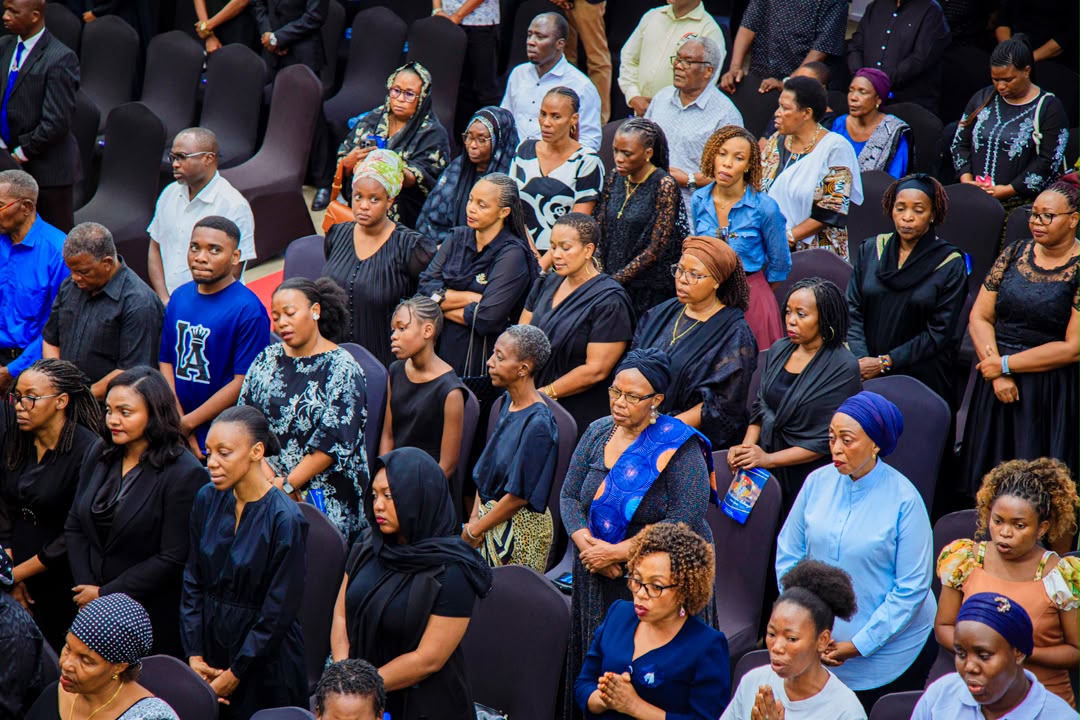
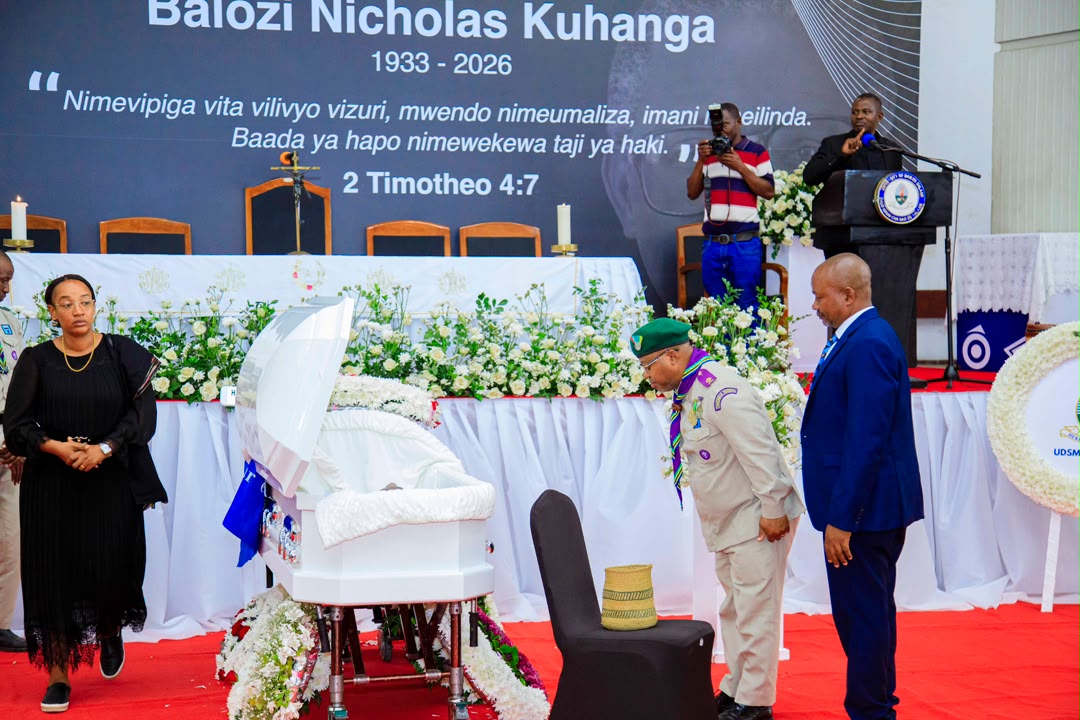
The tribute was made during a special farewell service held at Nkrumah Hall on September 22, 2026, bringing together members of the UDSM community, the bereaved family, friends and other stakeholders to honour the life and service of the former University leader, who died on September 19, 2026, aged 93.
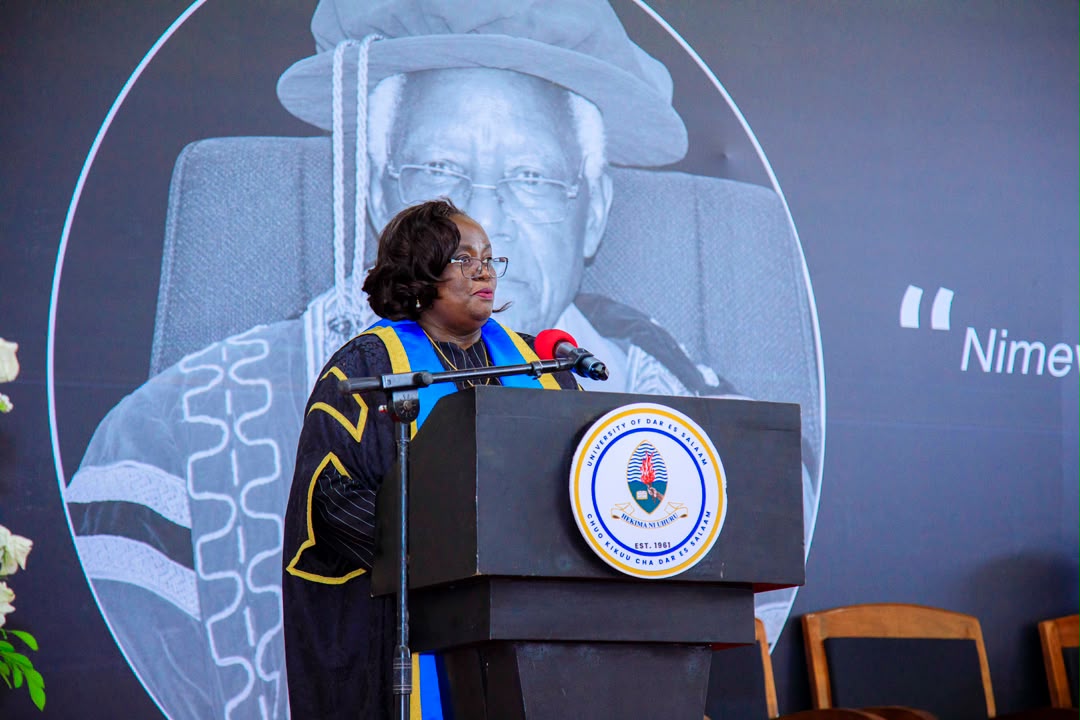
Speaking on behalf of the Vice Chancellor, Prof. William A. L. Anangisye, Deputy Vice Chancellor–Academic, Prof. Rose Upor, described Ambassador Kuhanga as a leader whose connection with UDSM extended far beyond the years he occupied formal leadership positions.
“I will remember him for serving the University of Dar es Salaam at all times, as well as for his service and contribution to this institution,” said Prof. Upor.
Prof. Upor, who had the opportunity to work with Ambassador Kuhanga during his later service to the University, said his humility, generosity and willingness to continue contributing to UDSM distinguished him as a leader who remained connected to the institution even after leaving office.
For those who experienced his leadership from within the University, however, Ambassador Kuhanga’s legacy was perhaps most vividly expressed through the way he handled difficult situations.
Prof. Bonaventure Rutinwa, former Deputy Vice Chancellor-Academic, who was a UDSM student during Ambassador Kuhanga’s tenure as Vice Chancellor, recalled a leader who believed that disputes could be addressed through listening, patience and dialogue rather than confrontation.
“It was not that there were no problems. There were many, but because of his leadership qualities, including his ability to listen and his patience, they were resolved and the university continued,” Prof. Rutinwa recalled.
He cited an incident in 1986 when students convened an Extended Baraza and announced a strike. Rather than treating the students’ action simply as a confrontation with the University administration, Ambassador Kuhanga listened to their grievances and recognised that some of the issues raised fell beyond the University’s mandate.
The students subsequently requested that the Government hear their concerns. The University facilitated the process, including providing transport and accompanying the students when they went to State House to present their grievances to government representatives.
For Prof. Rutinwa, the episode illustrated an important dimension of Ambassador Kuhanga’s leadership: understanding that some institutional disputes could only be resolved by bringing the appropriate parties to the table.
“He did not view student grievances as a confrontation between the administration and students, but as a problem requiring the parties involved to sit together and find a solution,” Prof. Rutinwa said.
He said the lesson remained relevant to contemporary leadership, arguing that dialogue requires willingness to listen on both sides.
“Those in leadership should be ready to listen to the people they lead, while those with grievances should also be ready to come to the negotiating table,” he said.
Eight years that shaped UDSM
Ambassador Kuhanga served as UDSM Vice Chancellor from 1980 to 1988, a period that coincided with important institutional and academic developments at the University. UDSM records identify him as Vice Chancellor throughout the eight-year period.
During his tenure, the University underwent significant academic and institutional changes. In 1984, the Faculty of Agriculture, Forestry and Veterinary Sciences was transformed into a fully-fledged university, becoming Sokoine University of Agriculture (SUA). The transition was formally effected on July 1, 1984.
His tenure also coincided with efforts to strengthen academic structures and standards. In 1985, the Senate approved a proposal from the Faculty of Law to establish five departments, while the requirement for a PhD for appointment to the position of lecturer was introduced during his leadership period.
These developments formed part of a broader period of institutional and academic consolidation as UDSM continued to strengthen its role in producing professionals and advancing knowledge for national development.
A relationship with UDSM spanning generations
Ambassador Kuhanga’s association with UDSM began well before he became Vice Chancellor and continued for decades after his tenure ended.
His professional journey brought him into the University environment in the 1960s through the Institute of Adult Education, where he worked in adult education before rising through senior academic and administrative responsibilities. He later returned to the University as Vice Chancellor, serving for eight years.
Even after leaving the Vice Chancellor’s office in 1988, his contribution to higher education continued. From September 1988 to March 1991, he chaired the committee established to examine the creation of an open university in Tanzania.
The committee’s work produced what became known as the Kuhanga Report, which provided an important basis for the eventual establishment of the Open University of Tanzania under the Open University of Tanzania Act No. 17 of 1992.
His connection with UDSM was renewed in 2004 when he chaired an Academic Audit Panel that reviewed the University. A decade later, he returned once again to senior leadership at UDSM when, following the death of then Chancellor Ambassador Fulgence Kazaura, President Jakaya Mrisho Kikwete appointed him Acting Chancellor of UDSM on May 7, 2014.
He had also briefly performed the role during the University’s 43rd Graduation Ceremony in 2013.
That long institutional relationship—stretching from his early work in adult education through vice chancellorship, academic quality assurance and later university leadership—made Ambassador Kuhanga a distinctive figure in UDSM’s history.
Education as a lifelong mission
Although his leadership at UDSM forms an important part of his legacy, Ambassador Kuhanga’s contribution to education extended well beyond the University.
His career began as a secondary school teacher in 1958 before moving into adult education, where he became involved in expanding educational opportunities for people outside the formal school system. He participated in initiatives that contributed to the development of correspondence education and helped organise teacher training programmes linked to Universal Primary Education.
His expertise subsequently took him beyond Tanzania, where he advised on education and adult-learning initiatives in countries including Mozambique, Lesotho, Botswana and Ghana, while also contributing to wider Commonwealth and international education initiatives.
He later served as Tanzania’s Ambassador to Zaire, now the Democratic Republic of Congo, from 1991 to 1992, and continued to contribute to public institutions and education initiatives after his diplomatic service.
His contribution to education was recognised internationally in 2018 when Victoria University in Canada awarded him an Honorary Doctor of Education. He also received national honours recognising his long and distinguished public service and contribution to adult education.
A legacy that lives beyond the office
For UDSM, Ambassador Kuhanga’s passing represents the loss of a former institutional leader whose influence cannot be measured only by the positions he held.
It is also a reminder of a particular style of leadership—one that placed value on listening, patience, dialogue and service. His eight years as Vice Chancellor coincided with institutional changes that helped shape the University, while his continued engagement with UDSM decades after leaving office reflected a sustained commitment to its mission.
His life also demonstrated the breadth of education leadership: from the classroom to adult education, from university administration to national policymaking, diplomacy and the development of new opportunities for higher education.
At the farewell service, the UDSM community joined his family and friends in remembering a man whose 93-year journey touched education, public service, diplomacy and university leadership.
Beyond his public responsibilities, Ambassador Kuhanga was remembered by his family as a man who understood the importance of family and relationships.
Despite a demanding career spanning education, Government, diplomacy and university leadership, he remained closely connected to his family. Together with his late wife, Mama Elizabeth Vitus Komba, he raised eight children and was later a father figure to 19 grandchildren and 13 great-grandchildren.
His family also remembered him as a man who valued people and maintained relationships across generations and professional circles. His long public life brought him into contact with colleagues, students, government leaders, academics, diplomats and members of the wider community, but those who knew him closely said he remained grounded in the personal relationships he built along the way.
For the family, this human dimension of his life is an important part of the legacy he leaves behind; a legacy carried through the institutions he served and the generations of Tanzanians whose lives were touched by his commitment to education.
For UDSM, perhaps one of the most enduring lessons of his life is simple: leadership is not only about holding office, but about listening, serving and leaving institutions stronger for those who come after.