


Research and Innovation Week Showcases AI Journalism, Smart Technologies and Blue Economy Innovations
By Renancy Remmy, CMU
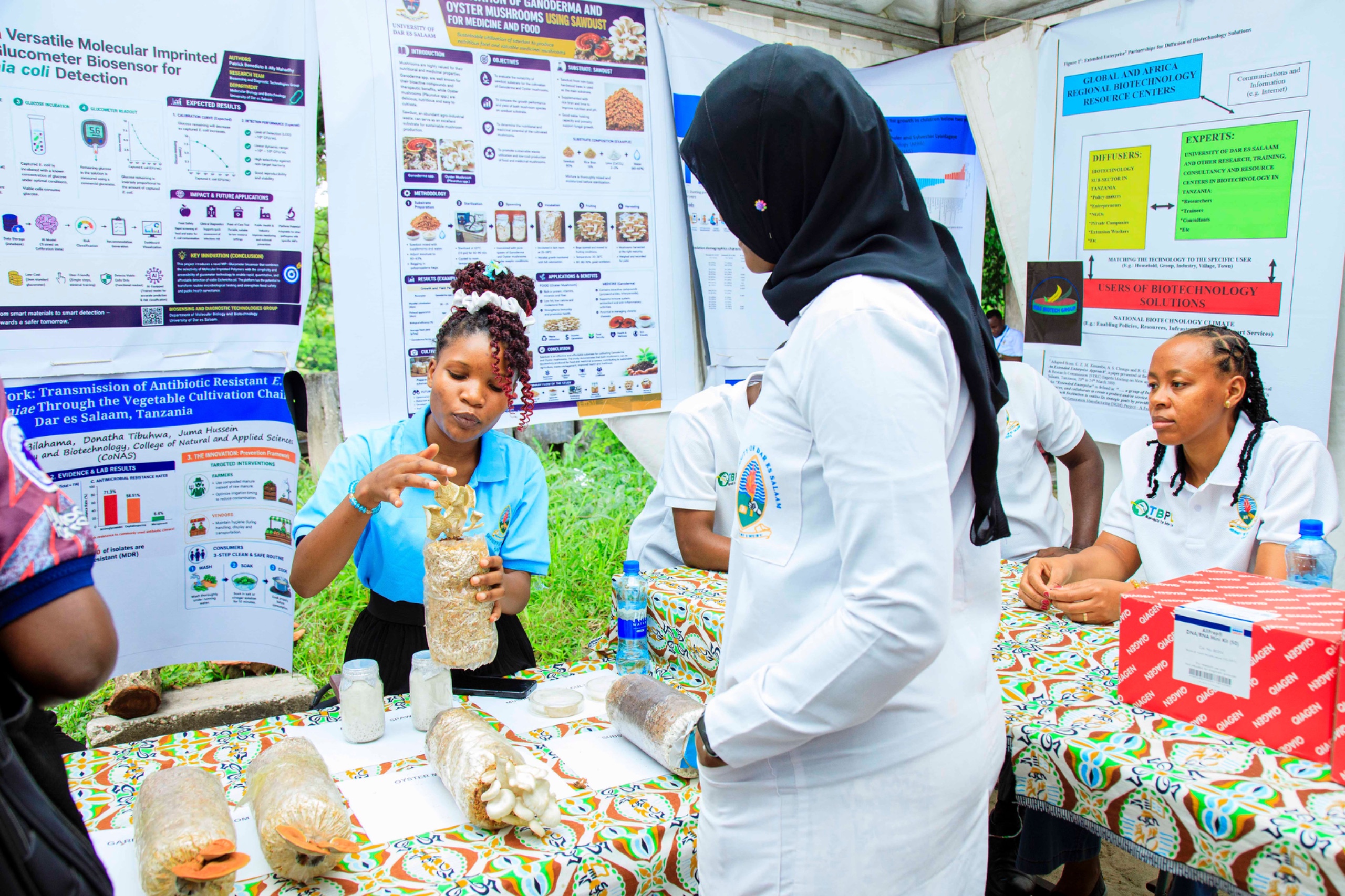
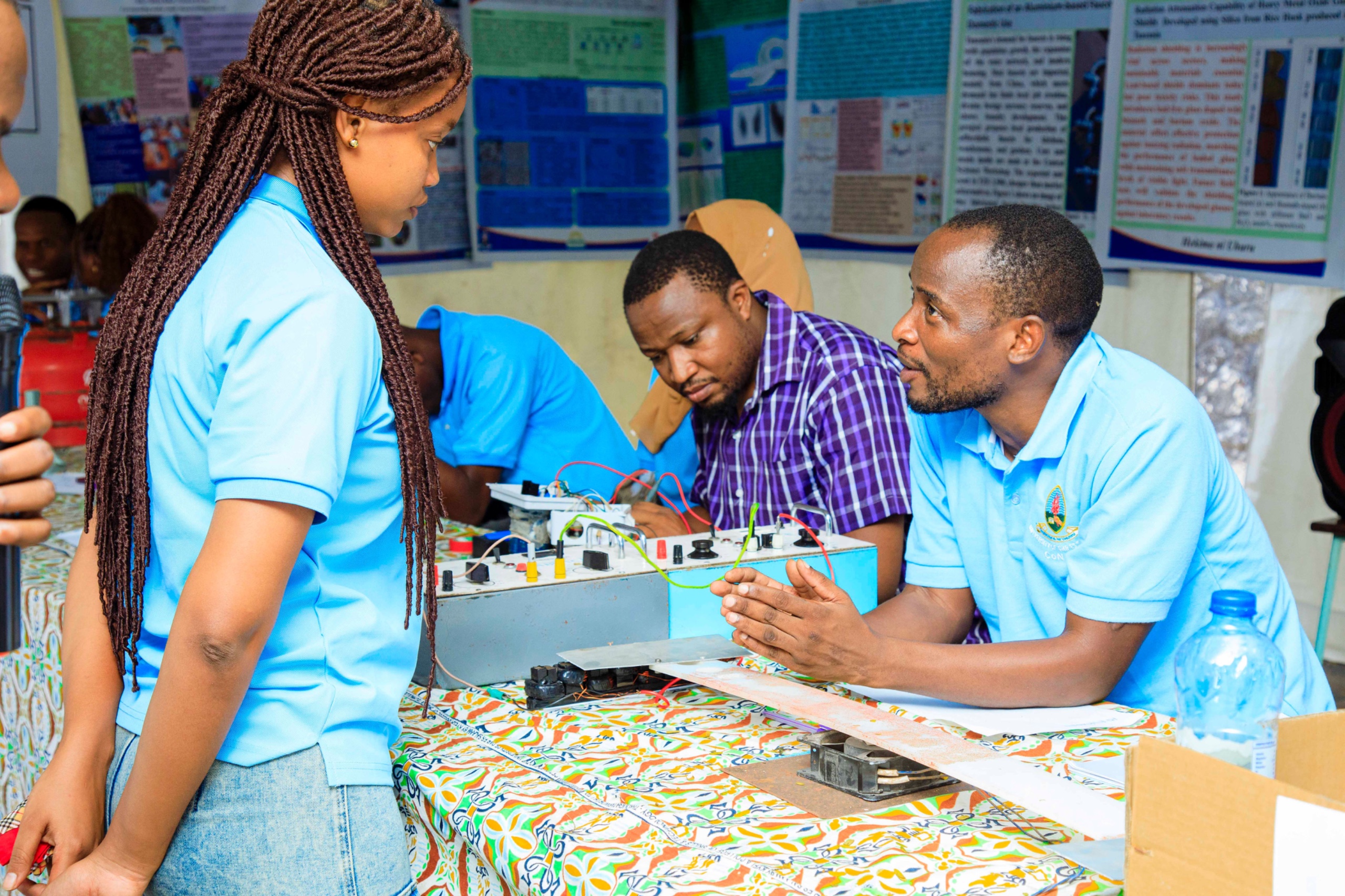
The second day of the 11th Research and Innovation Week at the University of Dar es Salaam, at Unit level, has highlighted the growing role of artificial intelligence, digital innovation and blue economy research in addressing Tanzania’s emerging societal and industrial challenges.
Researchers, students and innovators from different colleges, schools and institutes showcased practical technologies and research-driven solutions aligned with this year’s theme, “Harnessing Tanzania’s Mineral Wealth for Renewable Energy, Digital Transformation and Societal Security.”
The exhibitions, held from 19 to 21 May, 2026, have attracted academics, industry stakeholders, policymakers and members of the public eager to explore how university research is contributing to national development through innovation and technology.
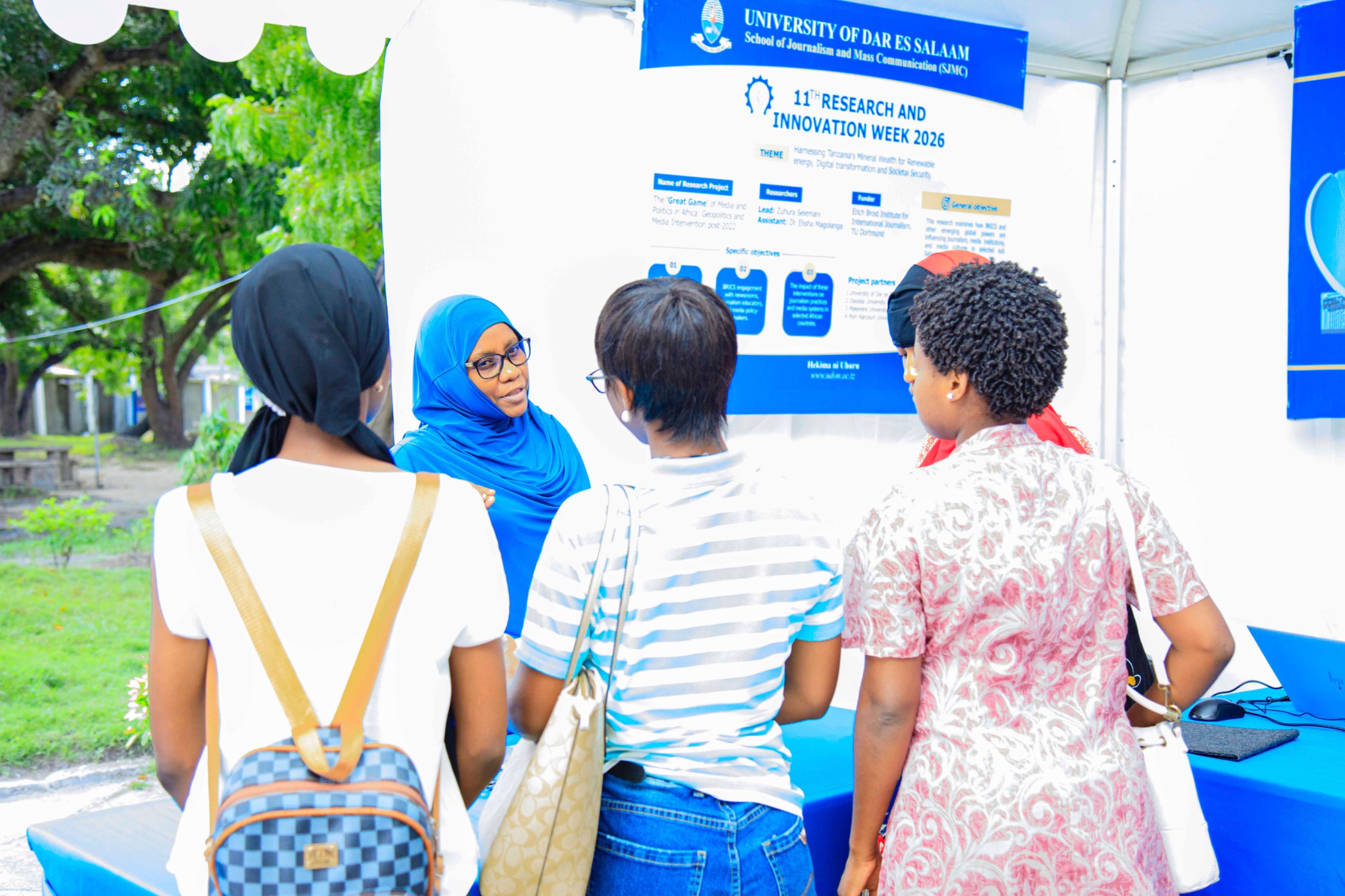
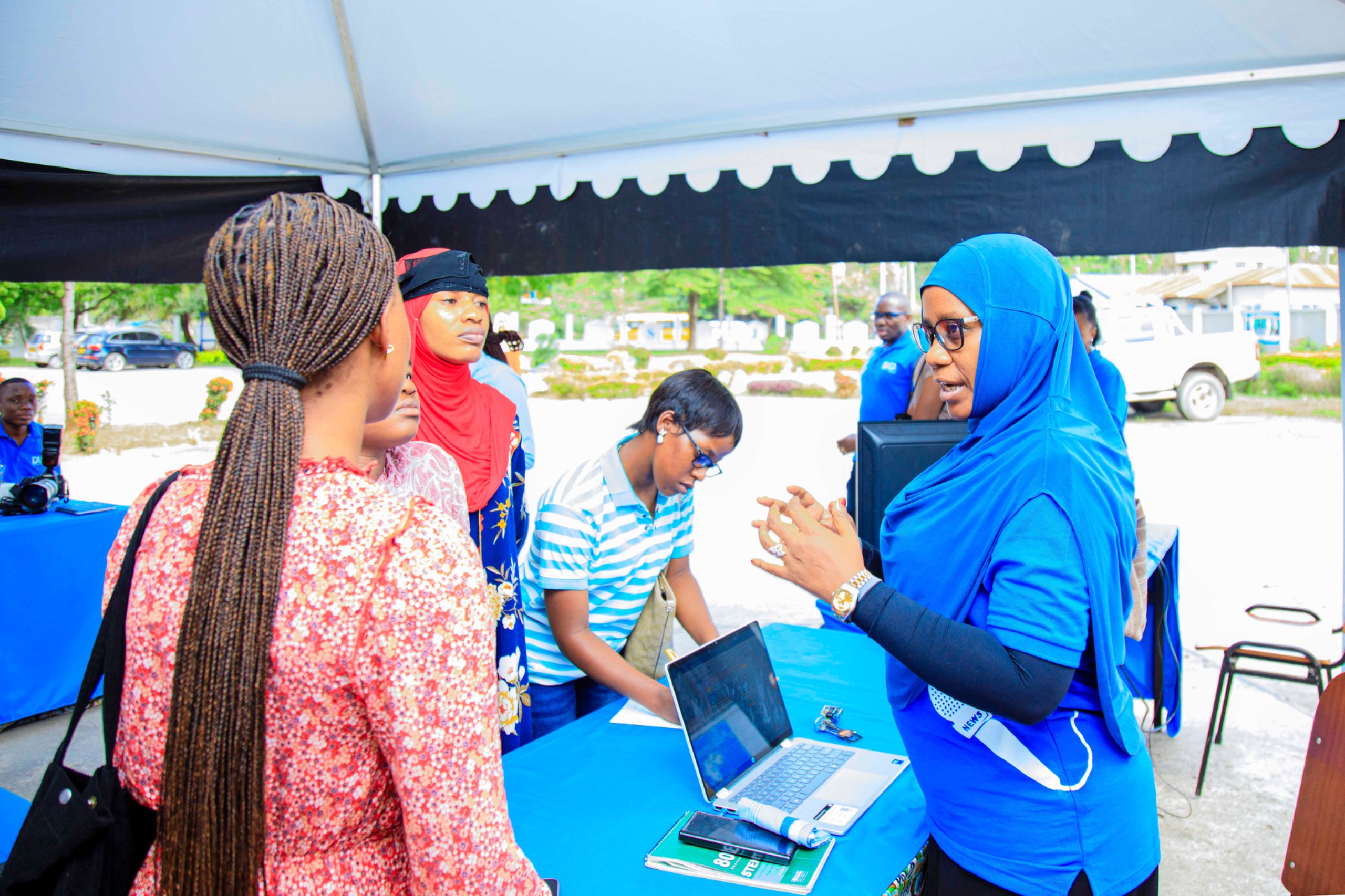
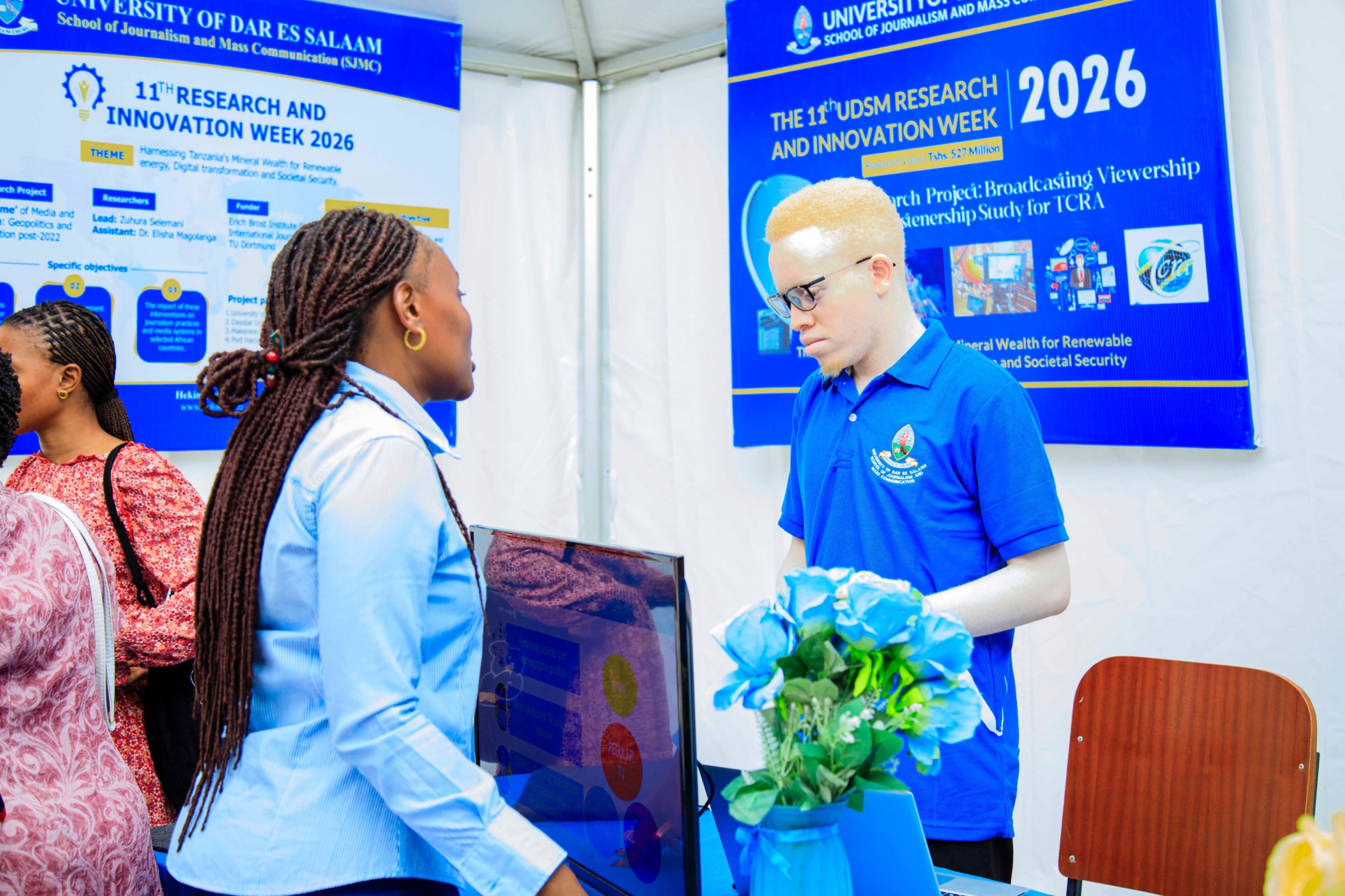
At the School of Journalism and Mass Communication (SJMC), attention centered on the transformation of journalism and communication in the digital era, particularly the growing influence of artificial intelligence, data-driven communication and digital media research.
Speaking during the exhibitions, the Coordinator of Research and Knowledge Exchange at SJMC, Dr. Egbert Mkoko, said the school continues to strengthen research and innovation initiatives in response to rapid technological changes reshaping the media industry.
“Journalism and communication are increasingly becoming digital and data-driven. Through these projects, we aim to improve media quality, strengthen research culture and ensure communication continues to support national development,” said Dr Mkoko.
Among the projects showcased was the Year Book on the Quality of Media 2025, an annual assessment that evaluates the quality and professionalism of media content in Tanzania.
Another major project presented was a nationwide media audience research initiative conducted in partnership with the Tanzania Communications Regulatory Authority (TCRA), focusing on radio listenership and television viewership trends across the country.
Explaining the project, Rahman Mshahara, a third-year Bachelor of Arts in Mass Communication student, said the study covers all 26 regions and 139 districts of Tanzania.
“This research helps us understand how audiences consume media content and how media platforms continue to influence society and national development,” he said.
SJMC also showcased the NORPART programme, a collaborative academic initiative between UDSM and universities in Norway aimed at strengthening research cooperation and student exchange in journalism and communication studies.
One of the innovations that attracted significant attention was an AI-supported research system developed by Dr. Sophia Ndibalema to guide researchers and supervisors on the ethical and effective use of artificial intelligence in academic work.
“Our innovation focuses on helping researchers and supervisors use artificial intelligence responsibly and effectively in research and academic writing,” explained Dr. Ndibalema.
Students and researchers at SJMC further demonstrated how digital storytelling, strategic communication and responsible journalism can be used to enhance public awareness, education and community engagement.
Innovations for sustainable marine resource utilization and blue economy
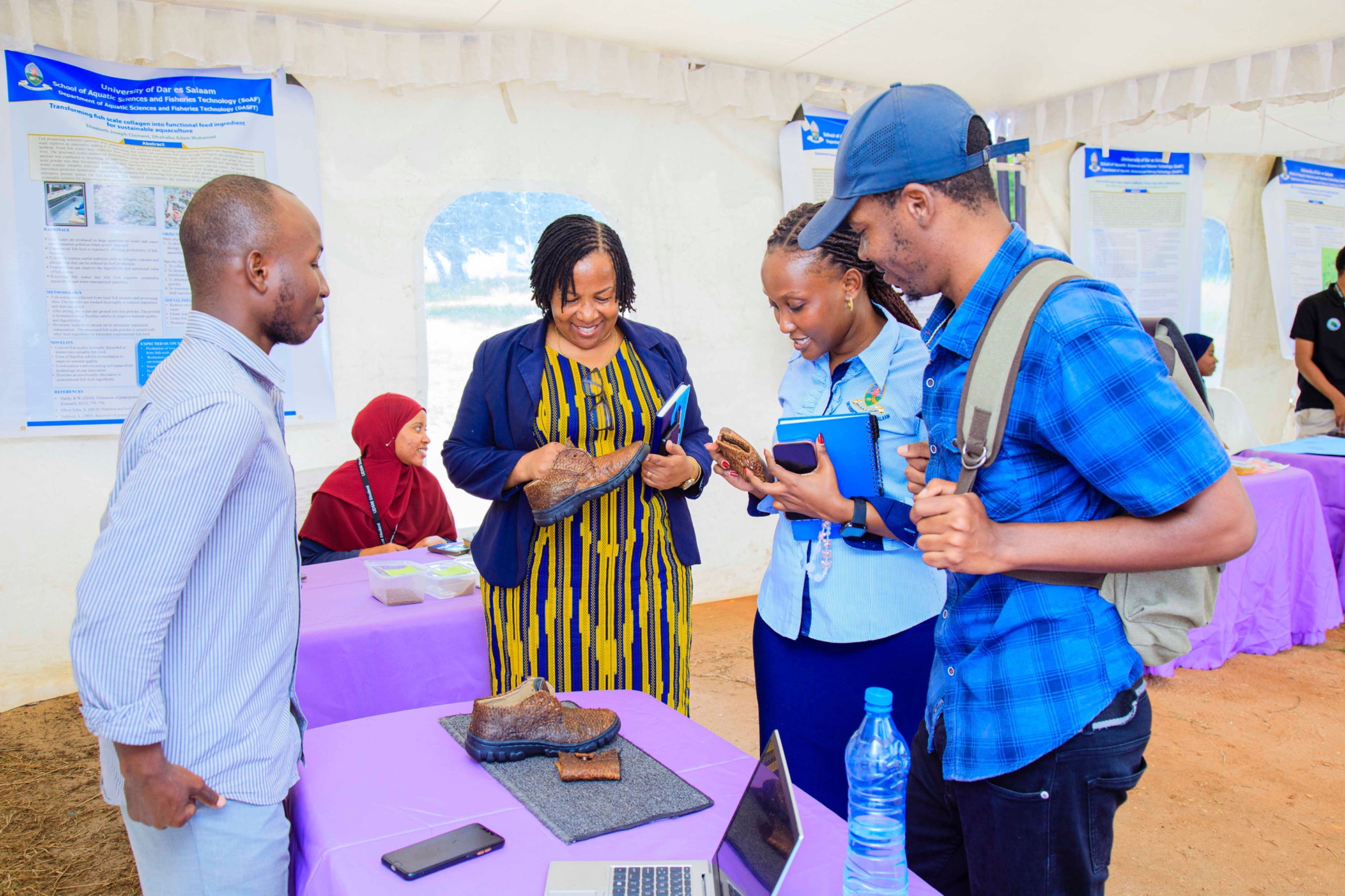
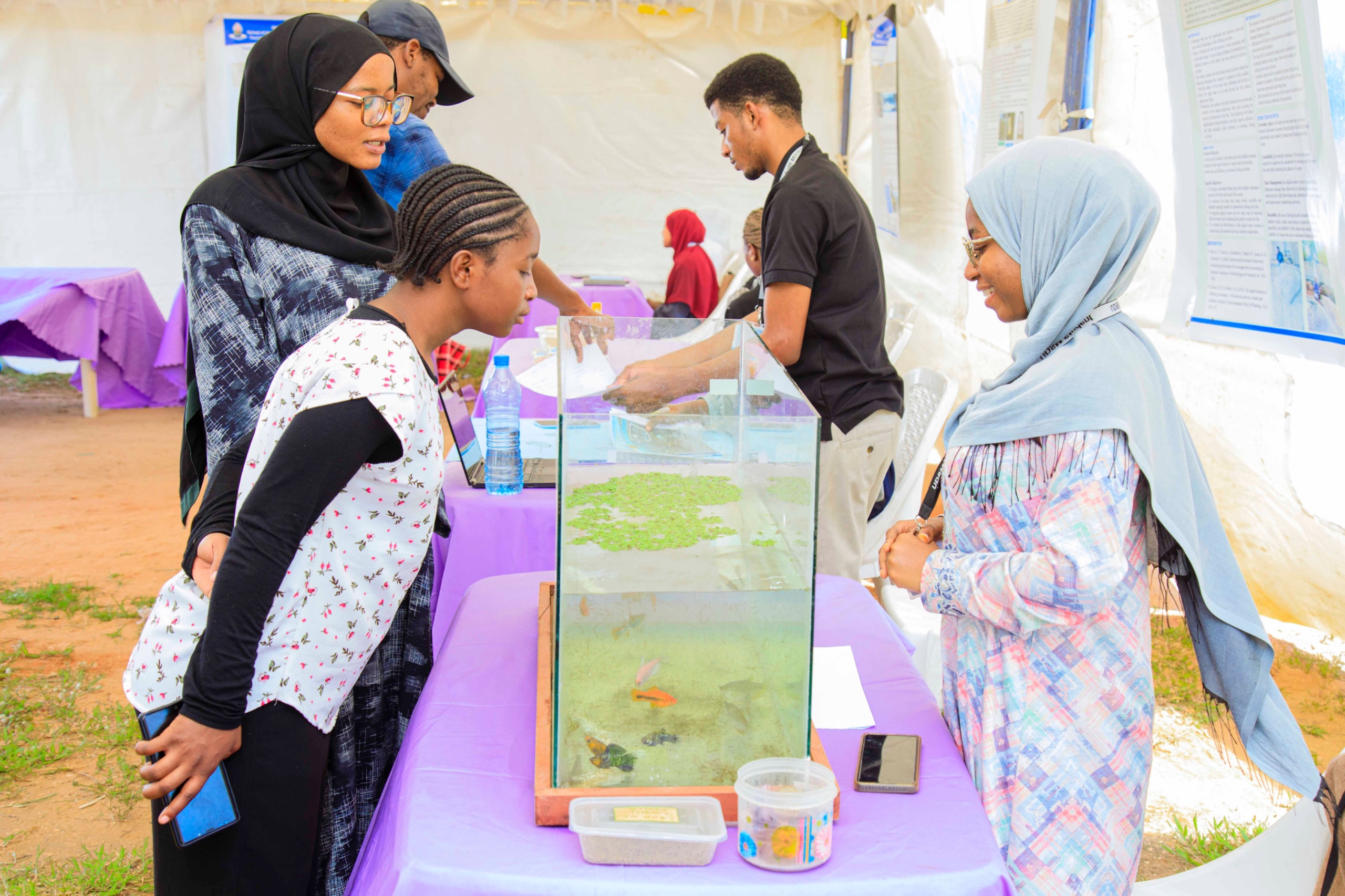
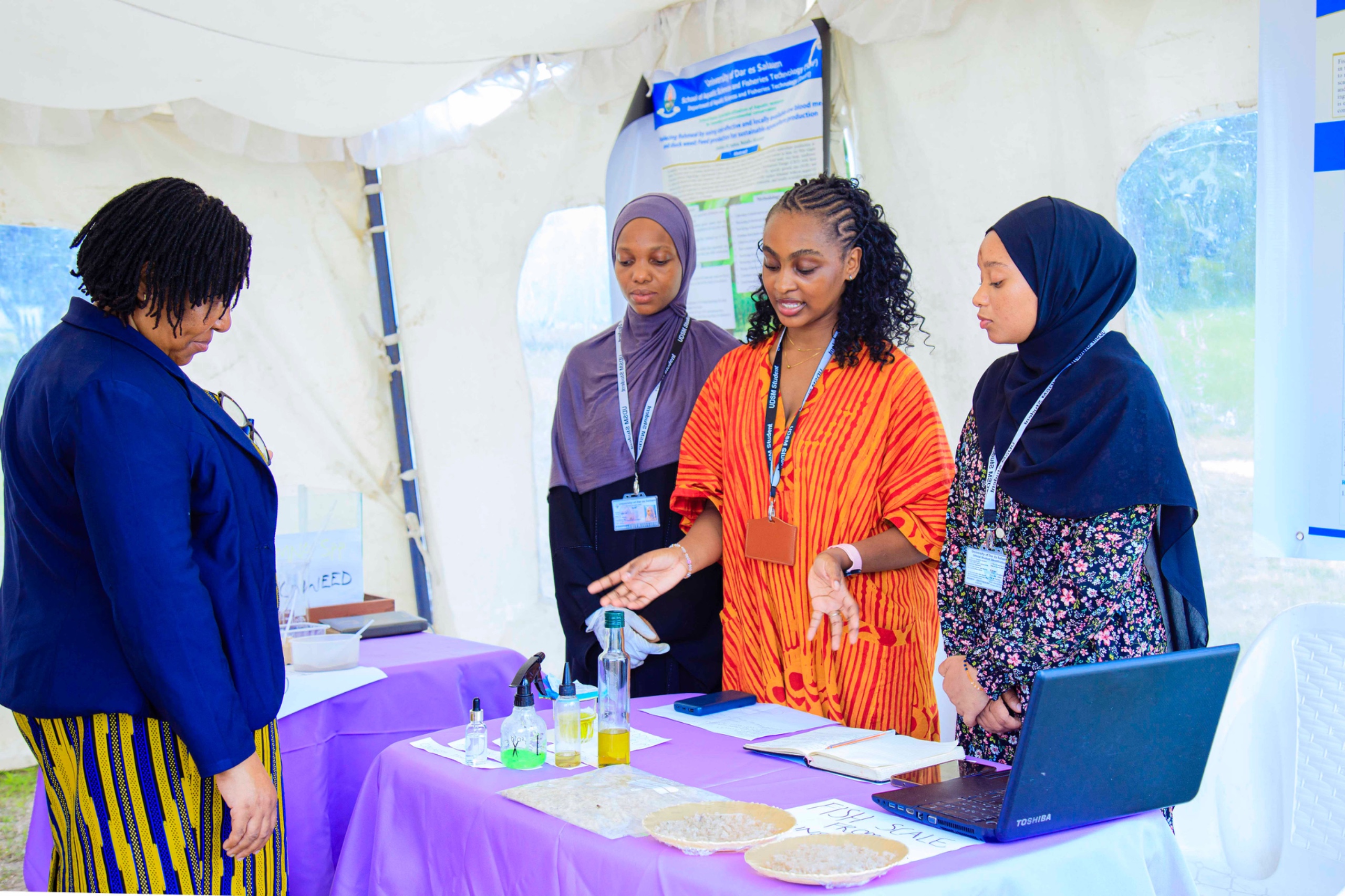
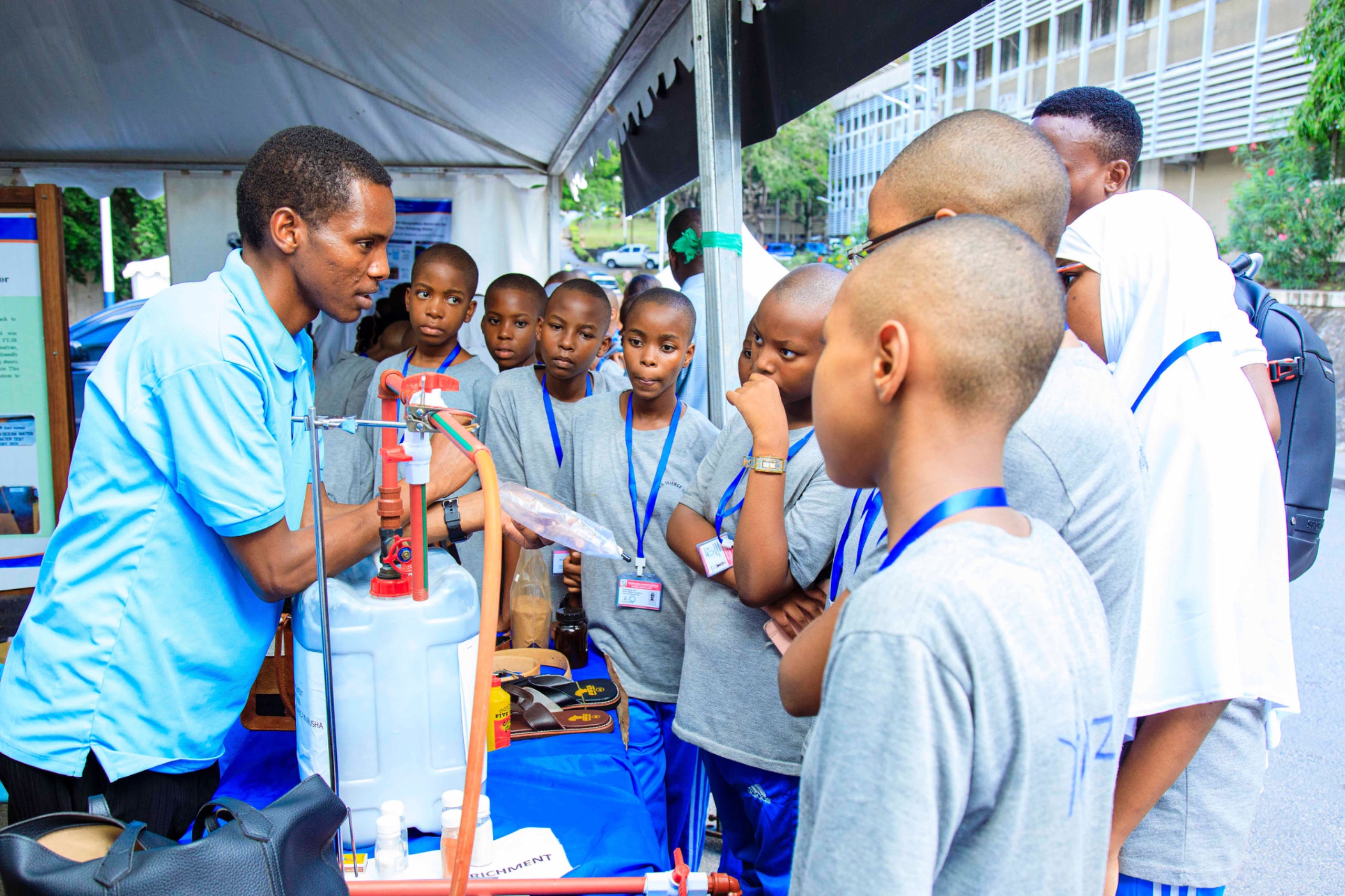
Meanwhile, the School of Aquatic Sciences and Fisheries Technology (SoAF) showcased a range of innovations supporting sustainable marine resource utilization and Tanzania’s blue economy agenda.
The Dean of SoAF, Dr. Blandina Lugendo, encouraged members of the public to explore the school’s research-driven marine innovations and fisheries products.
“Many people only see fish as food, but through research we are now producing products such as shoes, wallets and beauty products from fish resources. These innovations help increase income, reduce waste and support environmental conservation,” said Dr Lugendo.
Among the highlighted projects was an innovation using fish scales to produce beauty products such as hair serum, an initiative aimed at reducing waste from fish markets while creating additional economic opportunities.
Another research project presented by Joshua Ryoba focused on the use of sweet orange peel powder in sex reversal of Nile tilapia to improve aquaculture productivity.
“This project aims to increase the preferred tilapia population for aquaculture production while introducing affordable and environmentally friendly methods for fish farmers,” explained Joshua.
Researchers also showcased an alternative fish feed innovation using cow blood meal and duckweed as protein sources in Nile tilapia fingerling feeds. According to the researchers, the innovation could significantly reduce fish feed costs, which account for nearly 70 percent of aquaculture production expenses.
Another attraction at the exhibitions was a modern fish trap equipped with sensors, artificial lures and multiple doors capable of capturing fish while transmitting monitoring information directly to mobile phones.
Digital systems and smart technologies to improve efficiency in various sectors
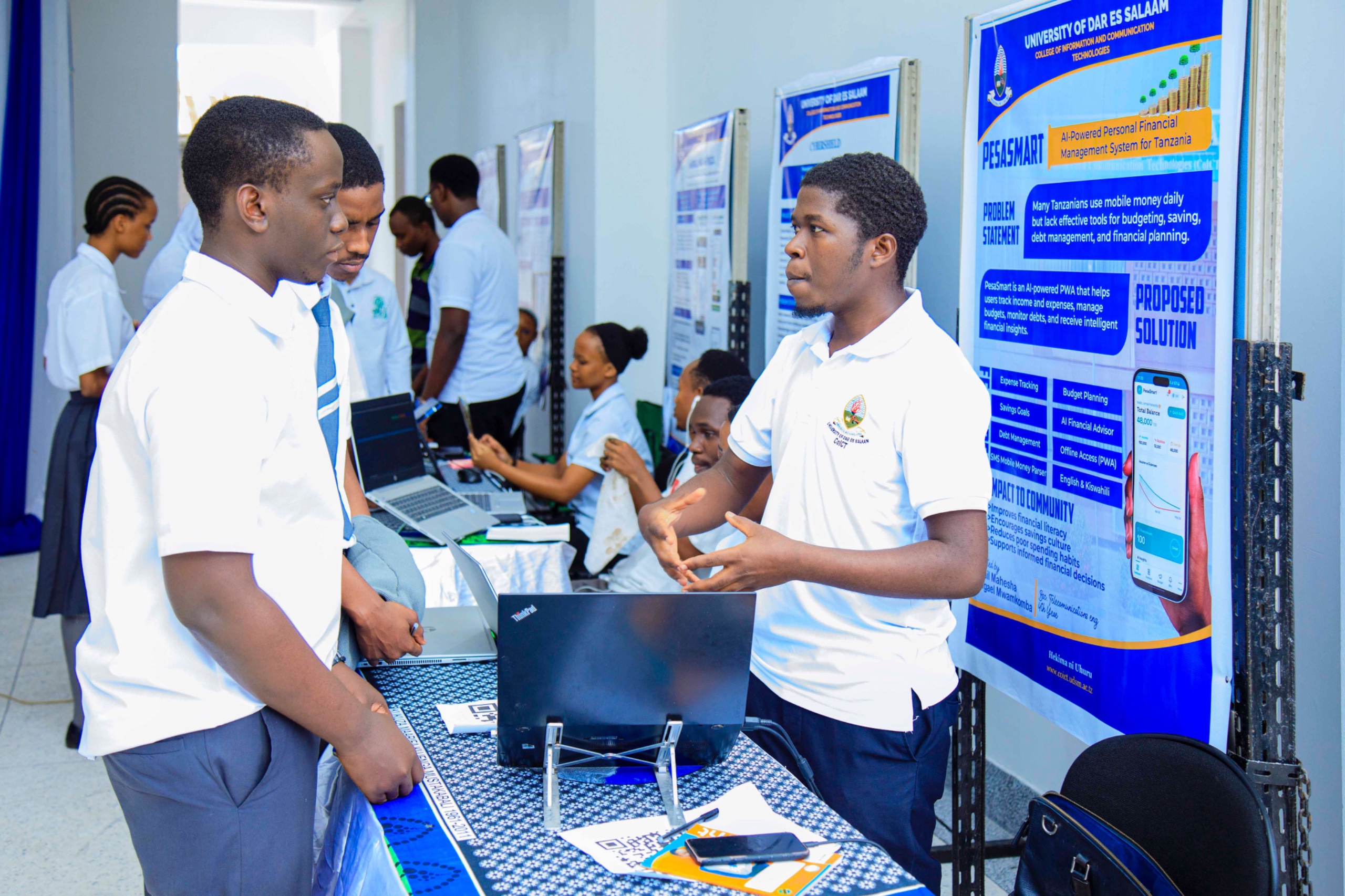
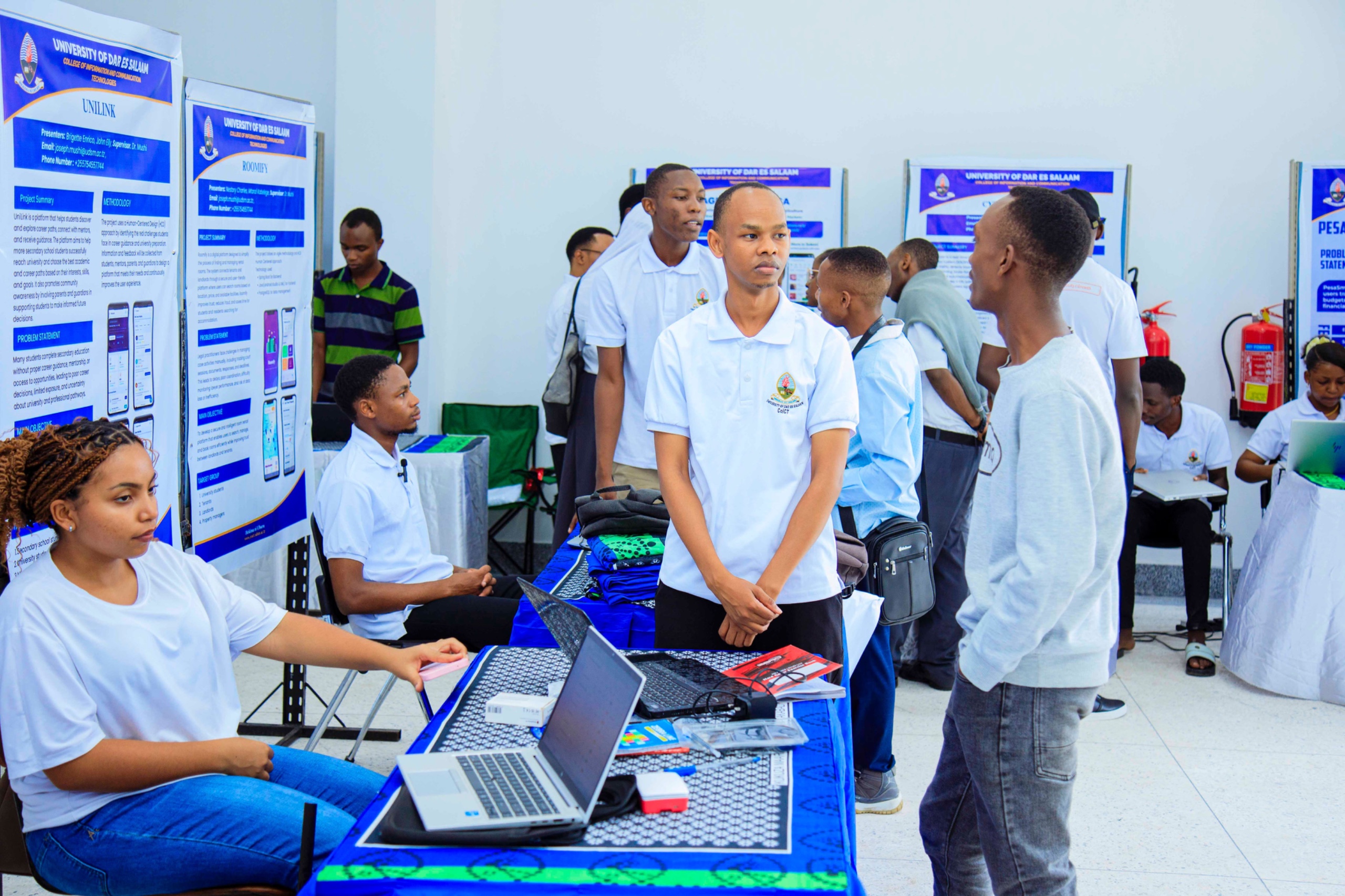
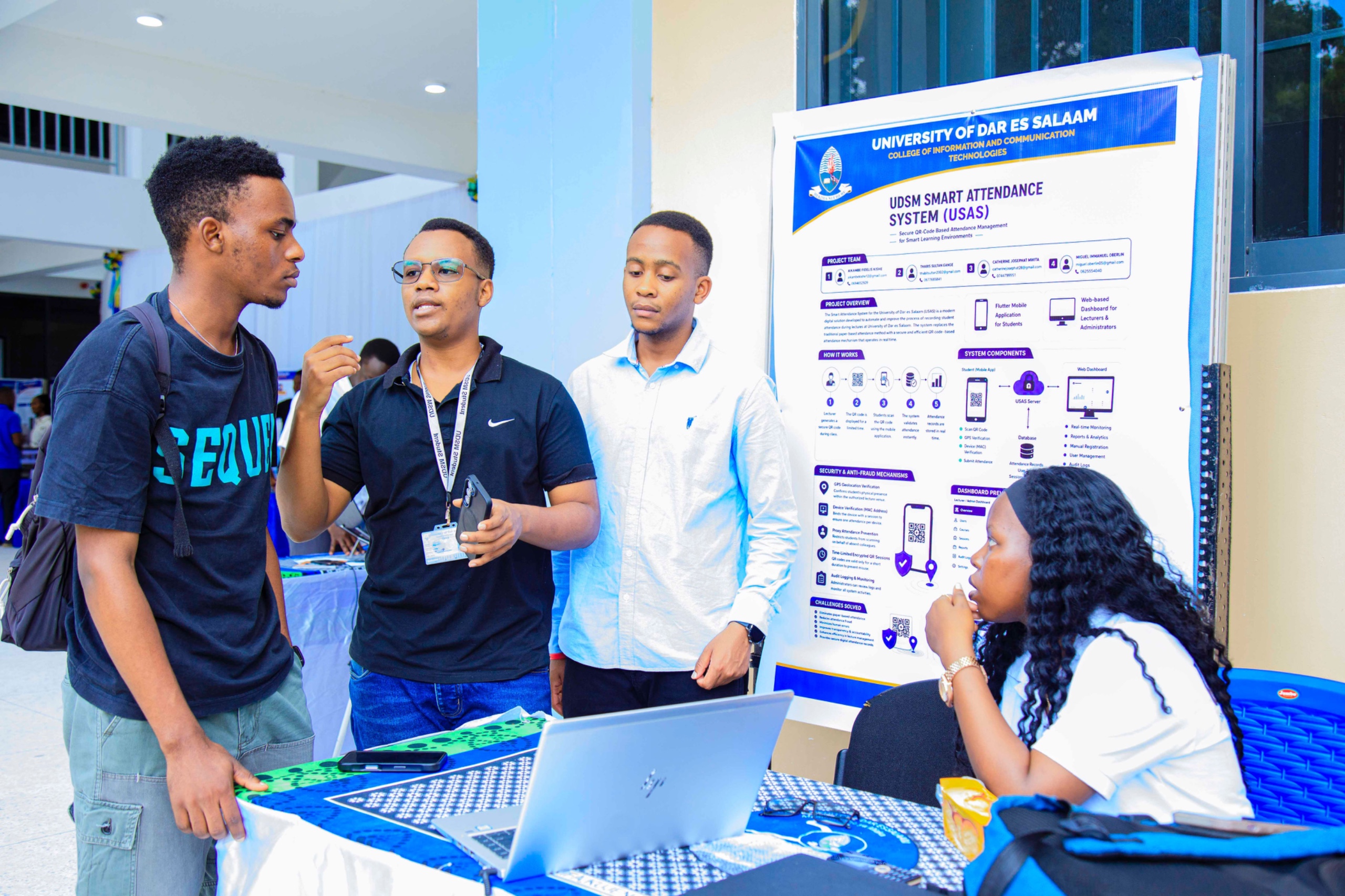
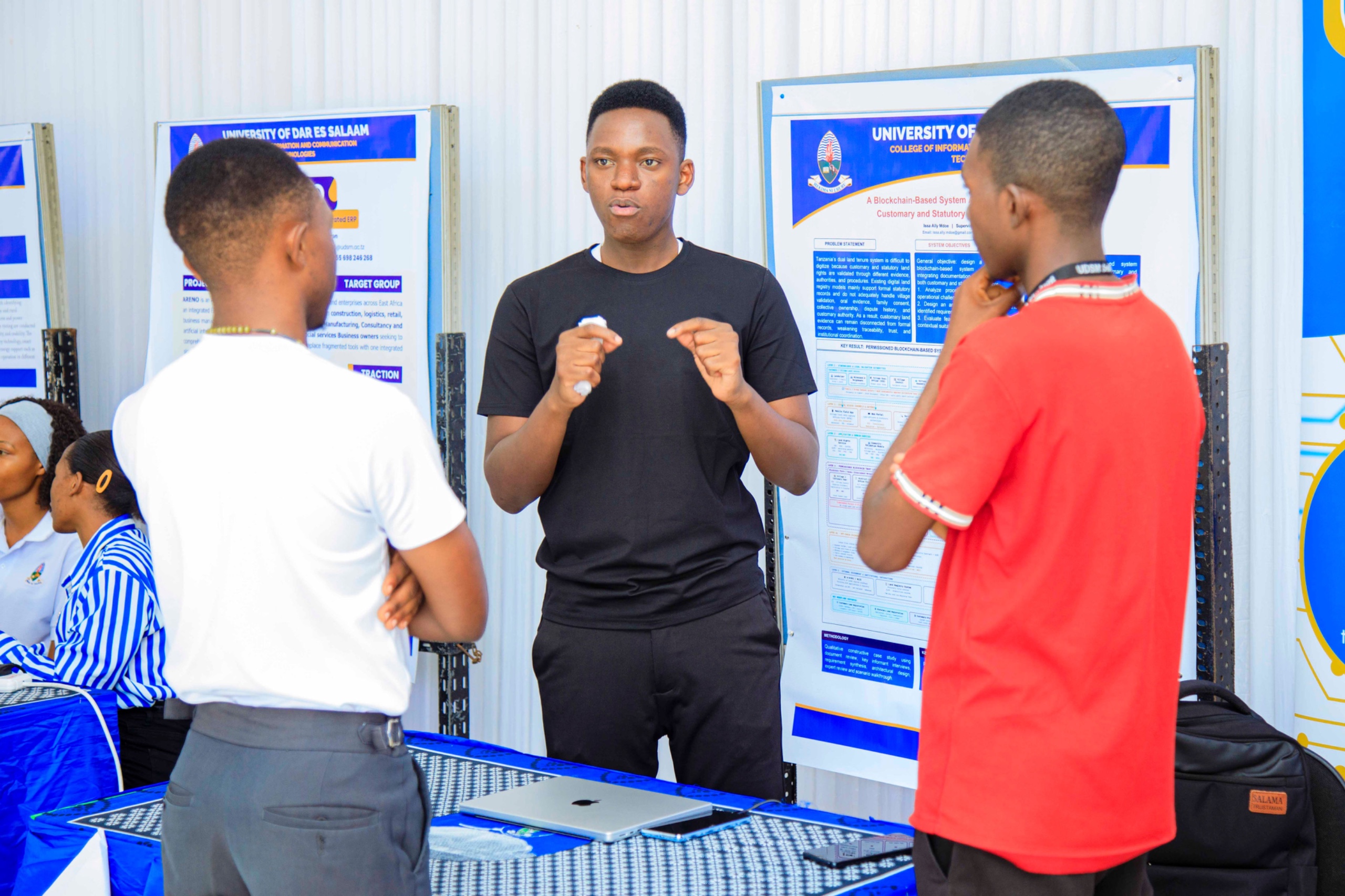
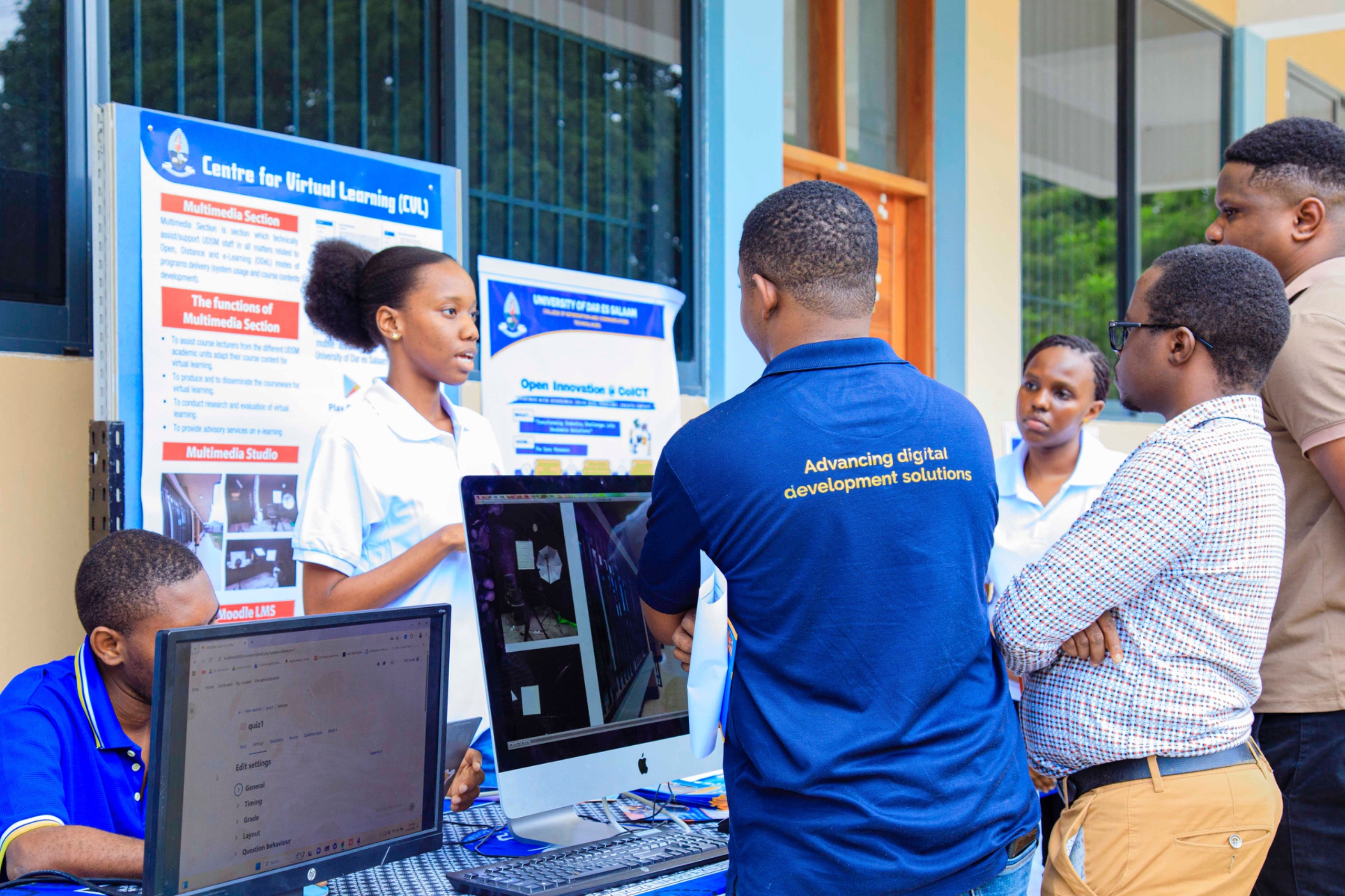
At the College of Information and Communication Technologies (CoICT), researchers and students displayed a wide range of digital systems and smart technologies designed to improve efficiency in health, education, agriculture, business and industry.
The Unit-Level Research Coordinator at CoICT, Dr. Jacqueline Damas, said digital innovation is increasingly becoming central to solving modern societal challenges.
“Technology is becoming essential in every sector, including health, agriculture, education and industry. These innovations demonstrate how digital systems can simplify services and accelerate national development,” said Dr. Damas.
Among the notable innovations presented at CoICT was AgriLink, a digital platform connecting farmers with markets, agricultural inputs, extension services and customers.
Project exhibitor Omary Hamis said the platform is designed to improve farmers’ productivity and profitability by increasing access to information, services and business opportunities.
The ongoing Research and Innovation Week continues to demonstrate the University of Dar es Salaam’s commitment to advancing research excellence, innovation and practical solutions capable of addressing emerging economic, technological and societal challenges in Tanzania and beyond.